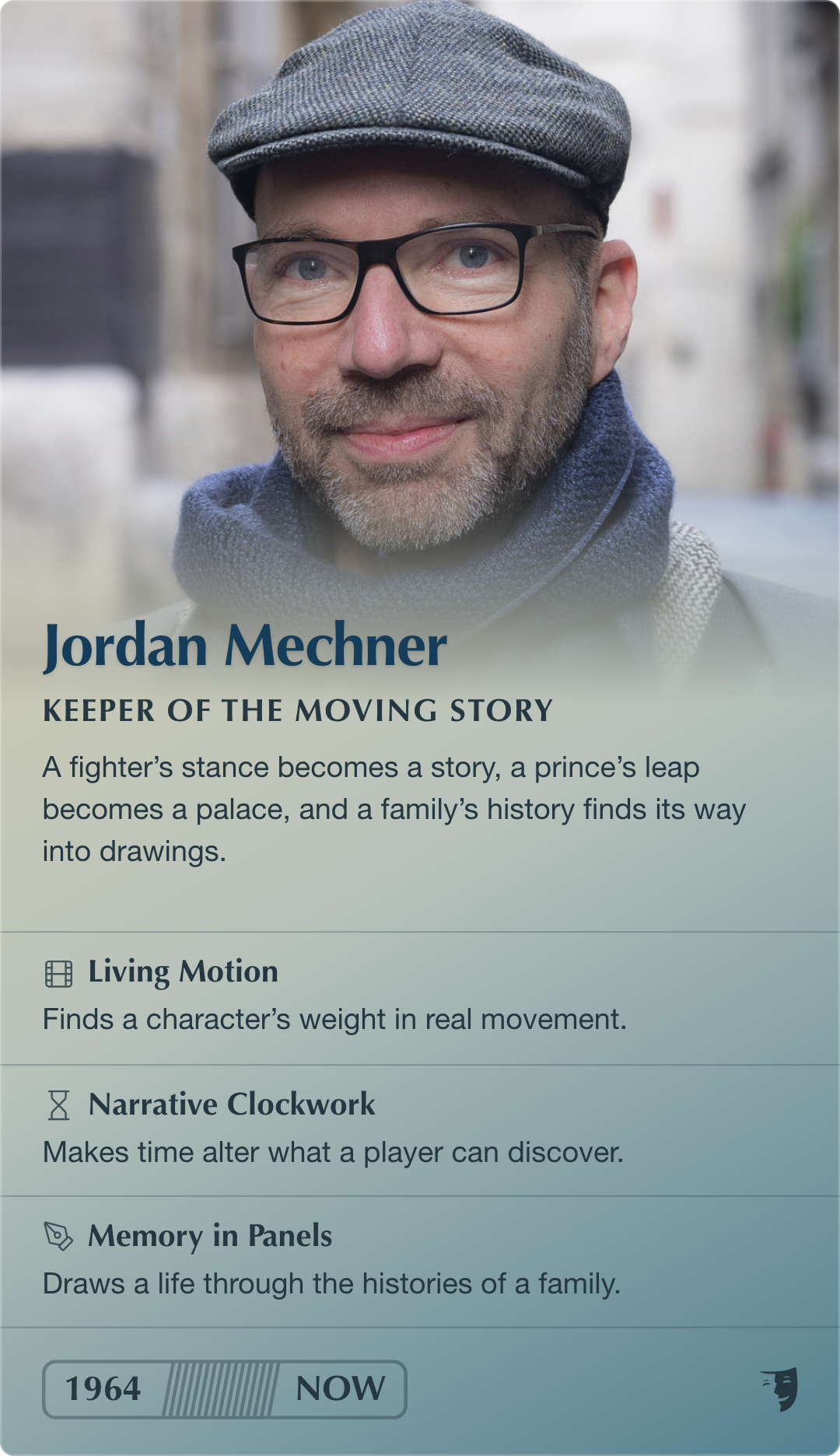
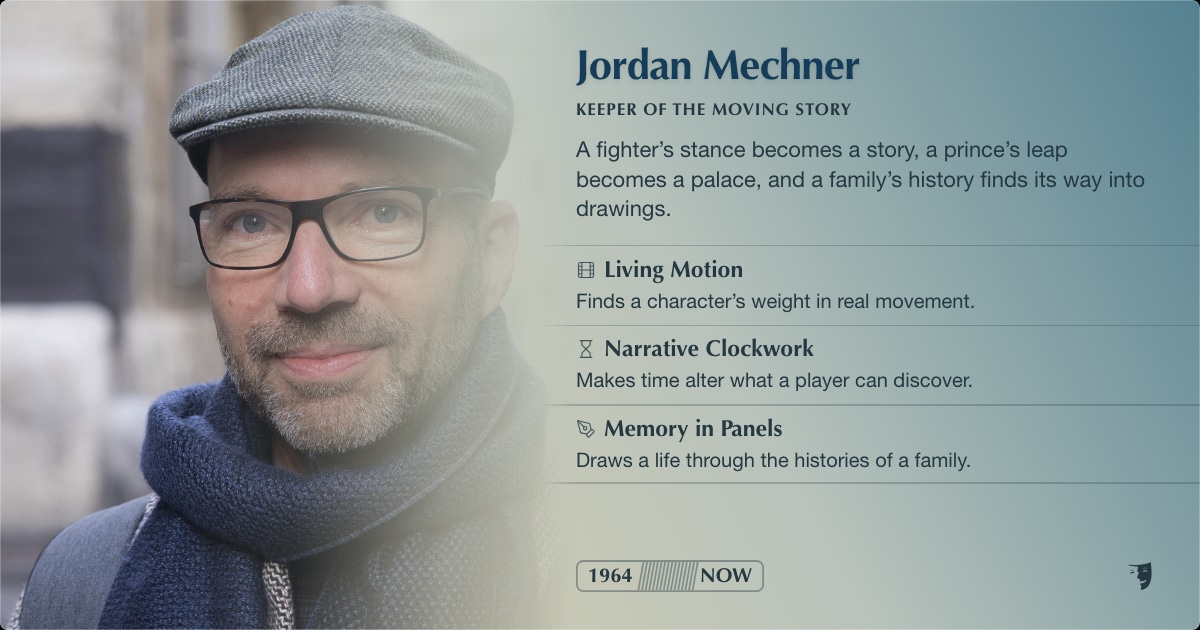
Jordan Mechner’s worlds begin with a person moving: a karate fighter finding his stance, a prince reaching for a ledge, a traveller listening outside a compartment. The drama depends on what happens between decisions. His journals and home movies let you inspect that craft at human scale; Replay places the same career inside a family history that games alone could never contain.
1982–1984
Cinema enters the Apple II
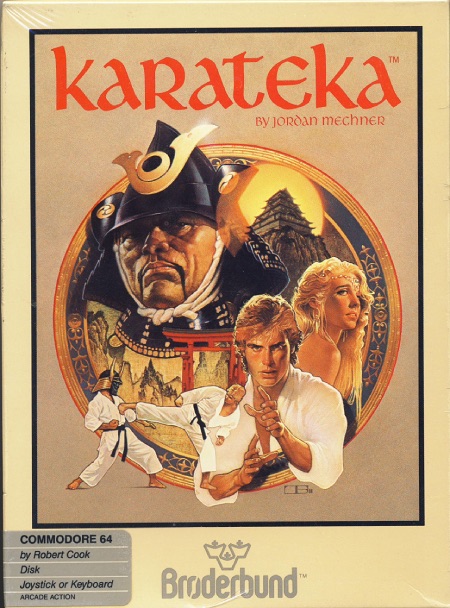
At Yale, Mechner’s interests in drawing, film and programming converged in Karateka. He adapted cinematic cuts and tracking shots to an Apple II, while filming real movement for animation. The result was unusually attentive to bodies: the fighter changes stance, approaches danger and can be hurt by a mistaken gesture. The rescue plot is simple, but its performance makes it intimate.
Francis Mechner composed the music and contributed suggestions as well as movement for reference footage. Mechner’s later accounts make that family collaboration visible. The journals also preserve the less picturesque work of choosing among competing ideas and getting a game finished. Karateka arrived in 1984; its apparent inevitability came from many choices that were anything but inevitable at the time.
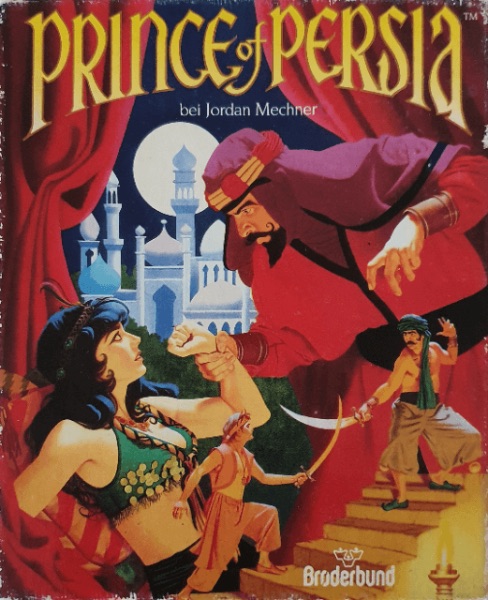
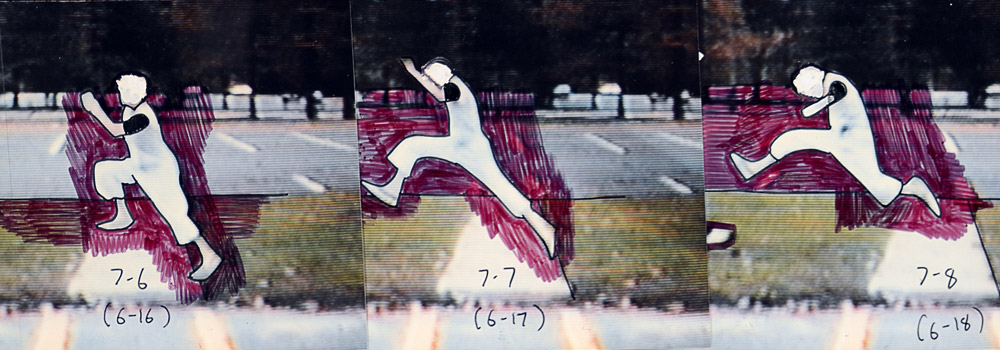
In October 1985, Mechner filmed his younger brother David jumping and running in their high school parking lot. Those ordinary movements became the extraordinary animation of Prince of Persia. A planted foot and a reaching hand make the player believe in distance. The palace’s cruel mechanisms matter because the prince already feels vulnerable.
The original Apple II game was released in 1989 after years of experiments recorded in the journals. Its hour-long deadline turns hesitation into pressure; its animation makes each attempted jump a commitment. The eventual publication of the source and technical notes offers another entrance to the work: a dramatic world can be examined as a very particular arrangement of code, frames and limited memory.
A move to Paris, intended as a break from games, led to The Last Express. Research in archives and old railway carriages helped Mechner and his collaborators build an Orient Express journey in July 1914. Tomi Pierce co-wrote the scenario. Smoking Car Productions developed a digital rotoscoping process that gave filmed actors the drawn appearance of an art nouveau world.
The train refuses to organise itself around its passenger. A conversation continues while you stand elsewhere; a missed moment can be recovered by rewinding. That design makes historical foreknowledge unusually poignant: you know Europe is approaching war, while these people still attend to private worries. Released on three CDs in 1997, the game gives mystery the texture of other lives continuing just beyond your view.
2001–2003
The fall can become another beginning
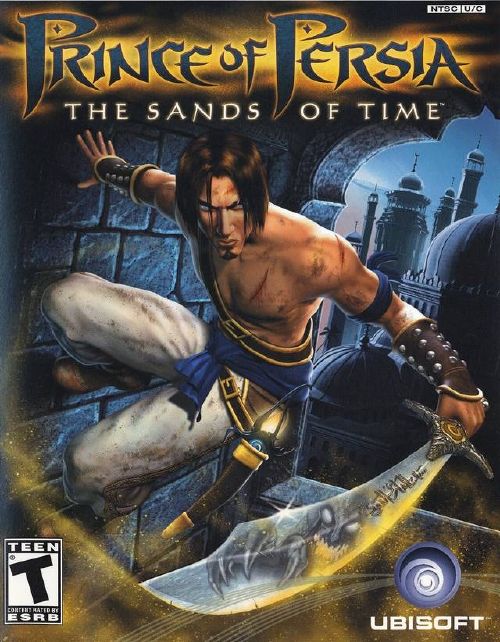
Ubisoft invited Mechner to revisit Prince of Persia for a new generation. He joined the Montreal team led by Yannis Mallat, progressing from creative consultation to writing, voice direction and full-time development work. The Sands of Time’s 2003 release made acrobatics and a rewind power speak the same language: a failed leap could become a moment of understanding.
His concurrent documentary Chavez Ravine approached memory from another direction. Photographs of a vanished Los Angeles community opened conversations with people whose lives had been displaced. Both projects examine what a return can reveal, but through very different forms. In July 2026, Mechner announced the recovery of the film’s original festival cut and made it available to watch.
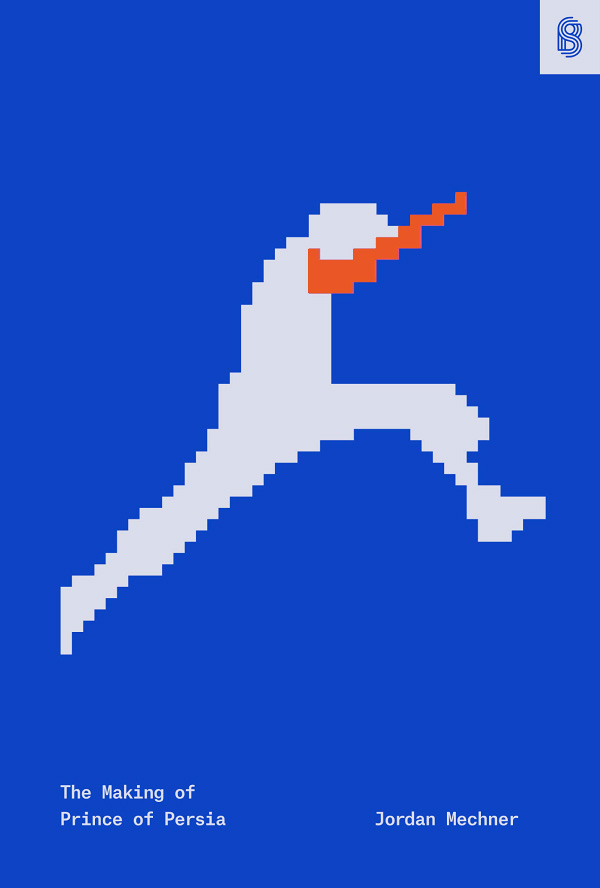
The rediscovery and release of the original Prince of Persia source in 2012 made the machine’s hidden decisions inspectable. The journals became books too: The Making of Karateka and, later, an illustrated Stripe Press edition of The Making of Prince of Persia. These records preserve uncertainty alongside the accomplished games, allowing a future maker to see experiments, delays and persistence without a retrospective polish.
Graphic novels offered a different kind of collaboration. Templar, published in 2013 with LeUyen Pham and Alex Puvilland, turns a medieval premise into a sprawling heist. Their freely shared making-of material shows writing and drawing negotiating the final scene. Mechner’s storytelling no longer requires a player to move the hero, but still cares intensely about timing, a page turn and the reader’s next discovery.
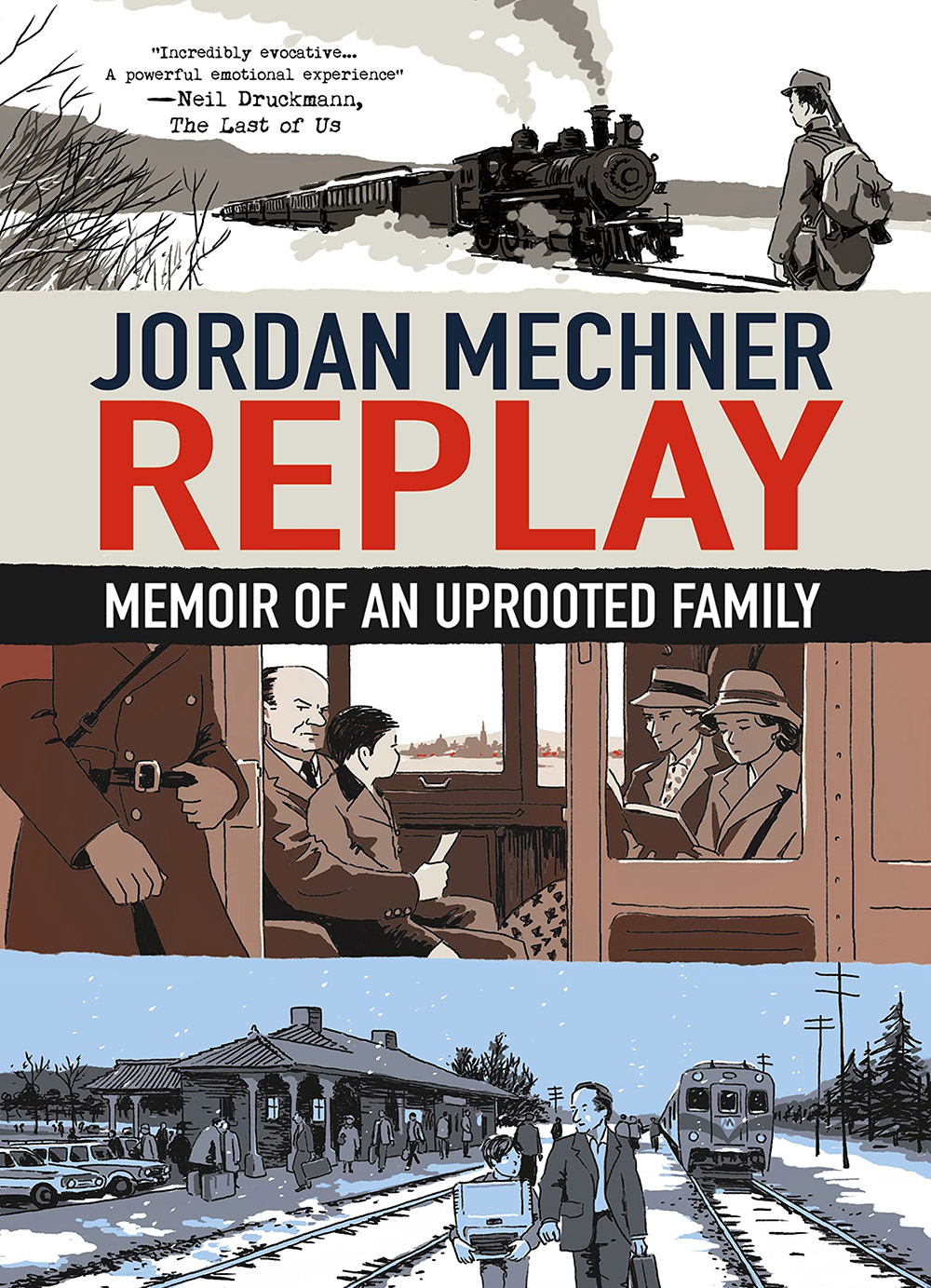
Replay appeared in French in 2023 and in English in 2024. Mechner drew as well as wrote this memoir, weaving his creative life through the experiences of a father escaping Nazi persecution and a grandfather whose youth was broken by the First World War. Separate colours keep generations legible without pretending their histories are separate.
The Making of Karateka, Digital Eclipse’s 2023 interactive documentary, similarly enlarges the story of a game by preserving its drafts, films and family contributions. Mechner continues to write, draw and open his archives; his current site includes the ongoing journals and graphic novel companions. What survives is more than a successful character: it is a way of making the traces of work available to someone else.