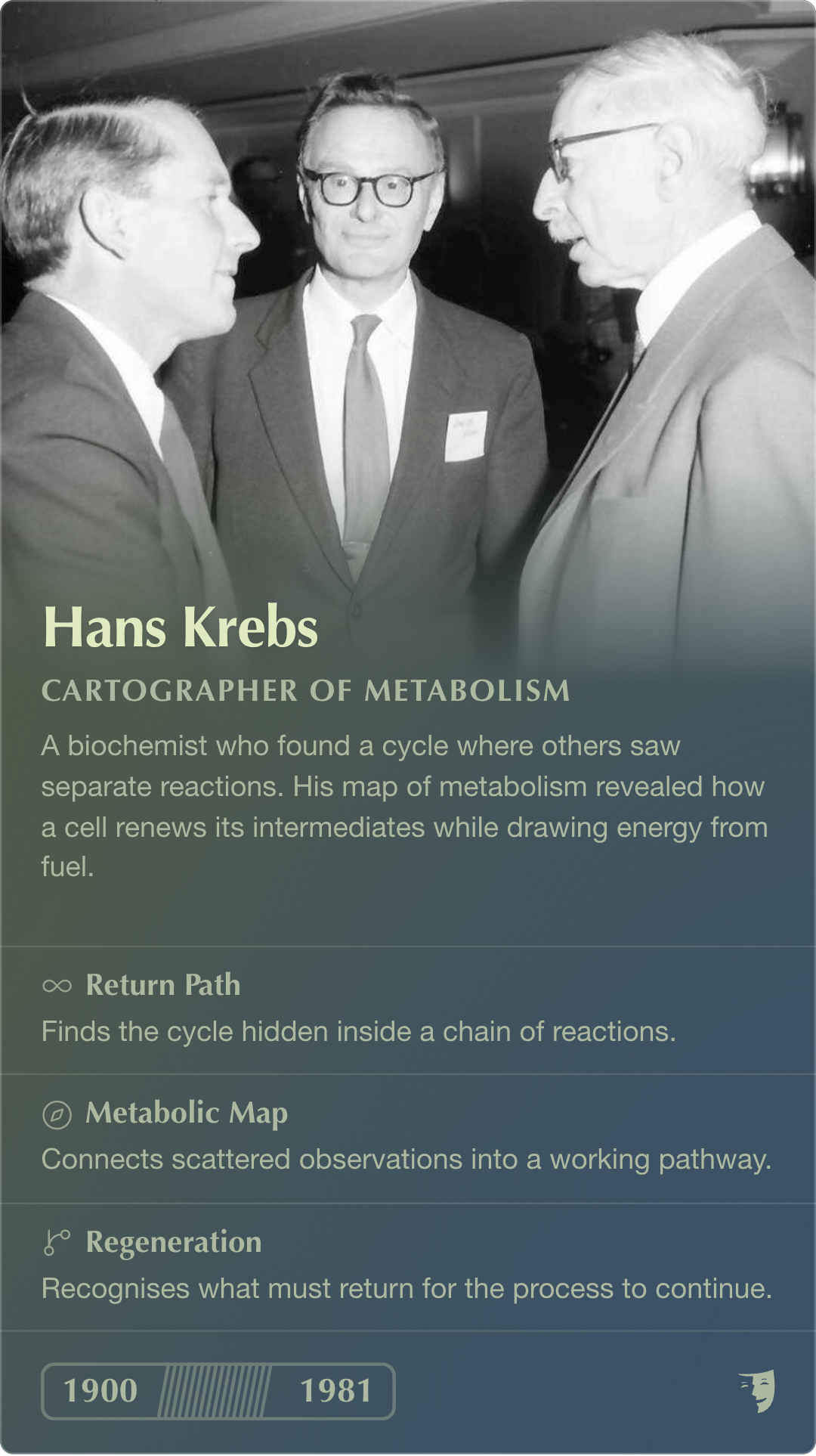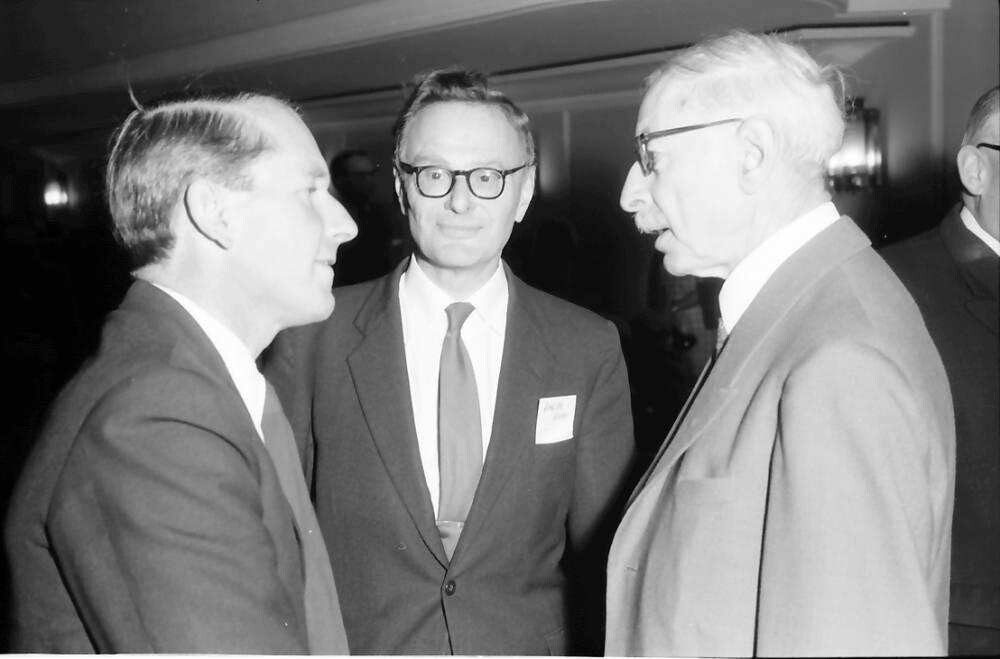
Hans Krebs, centre, in conversation with fellow Nobel laureates in 1960.

Hans Krebs

Cartographer of Metabolism

A biochemist who found a cycle where others saw separate reactions. His map of metabolism revealed how a cell renews its intermediates while drawing energy from fuel.

Return Path
Finds the cycle hidden inside a chain of reactions.
Metabolic Map
Connects scattered observations into a working pathway.
Regeneration
Recognises what must return for the process to continue.
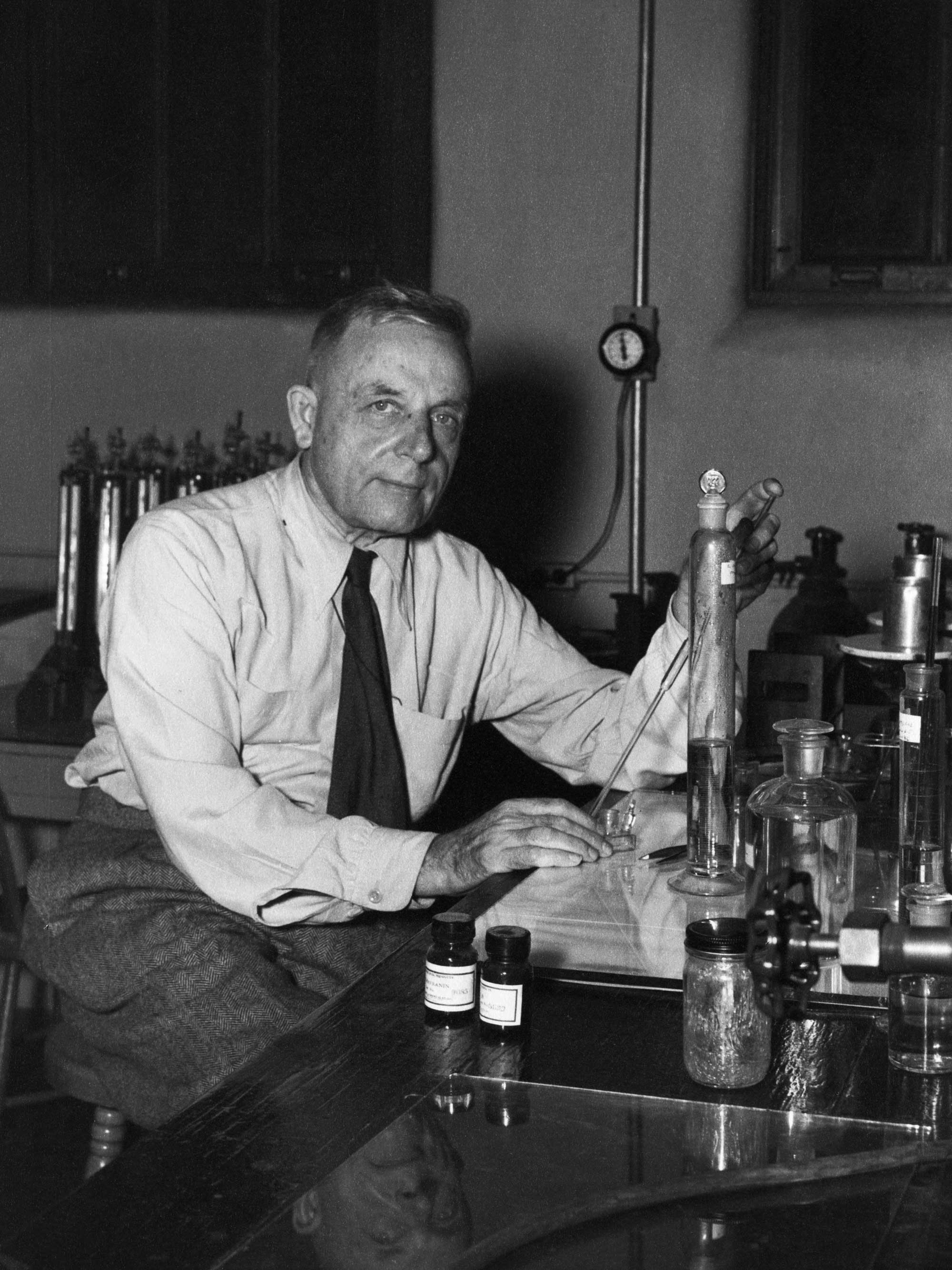
Hans Krebs

Cartographer of Metabolism

The Birth of Bioenergetics · Cycles and currency
1926–1930

Learning from Warburg

Krebs worked in Otto Warburg’s laboratory, learning the discipline of measuring metabolic reactions. He later described Warburg as his most important scientific teacher.

1937

The cycle takes shape

Working with William Arthur Johnson, Krebs brought evidence together for the citric acid cycle. Intermediates were regenerated as fuel was oxidised: a circular organisation that connected apparently separate reactions.

The original paper is a rewarding place to begin. It shows a pathway being inferred from experiments, before the familiar textbook diagram made it look inevitable.

1953

A shared recognition

Krebs and Fritz Lipmann shared the Nobel Prize for distinct discoveries: the citric acid cycle and coenzyme A. Together their work connected the routes of metabolism with the chemistry that carries reactions forward.