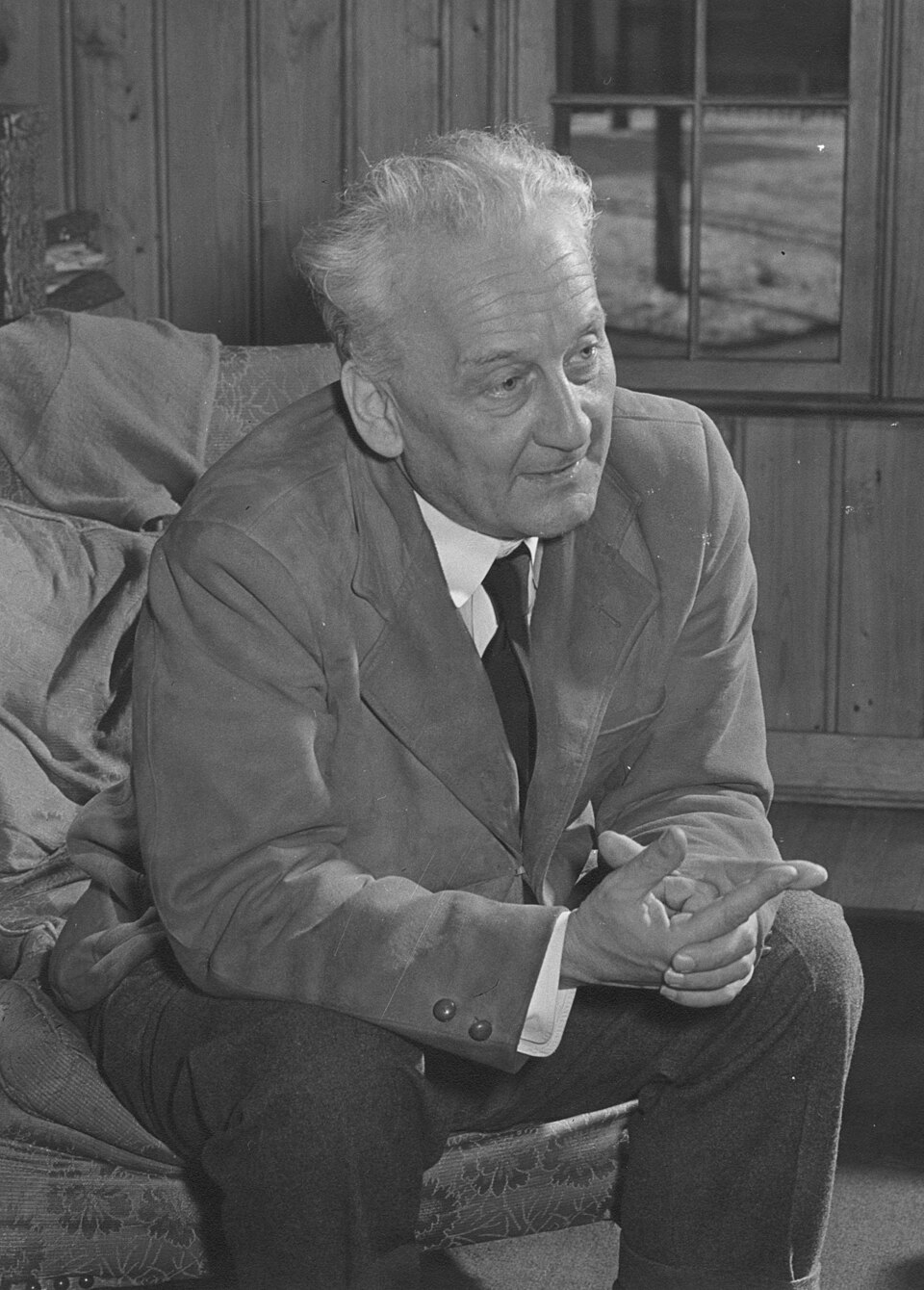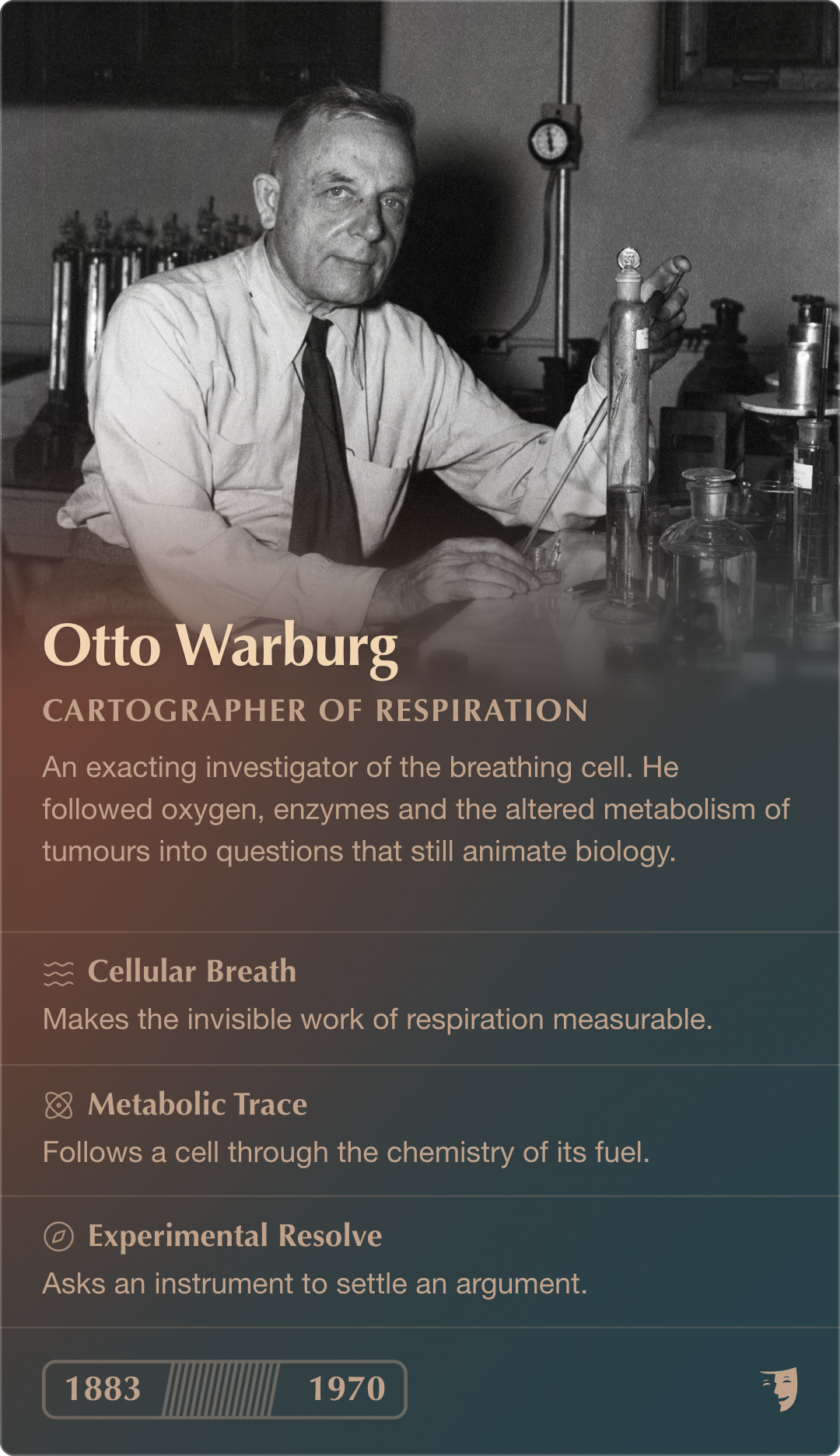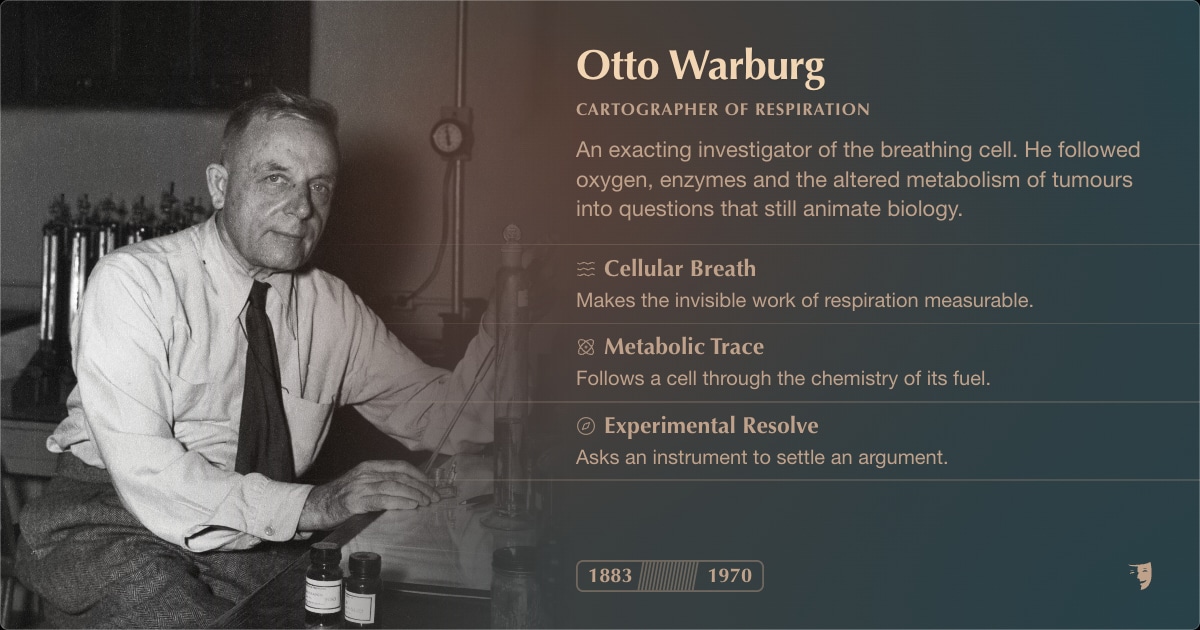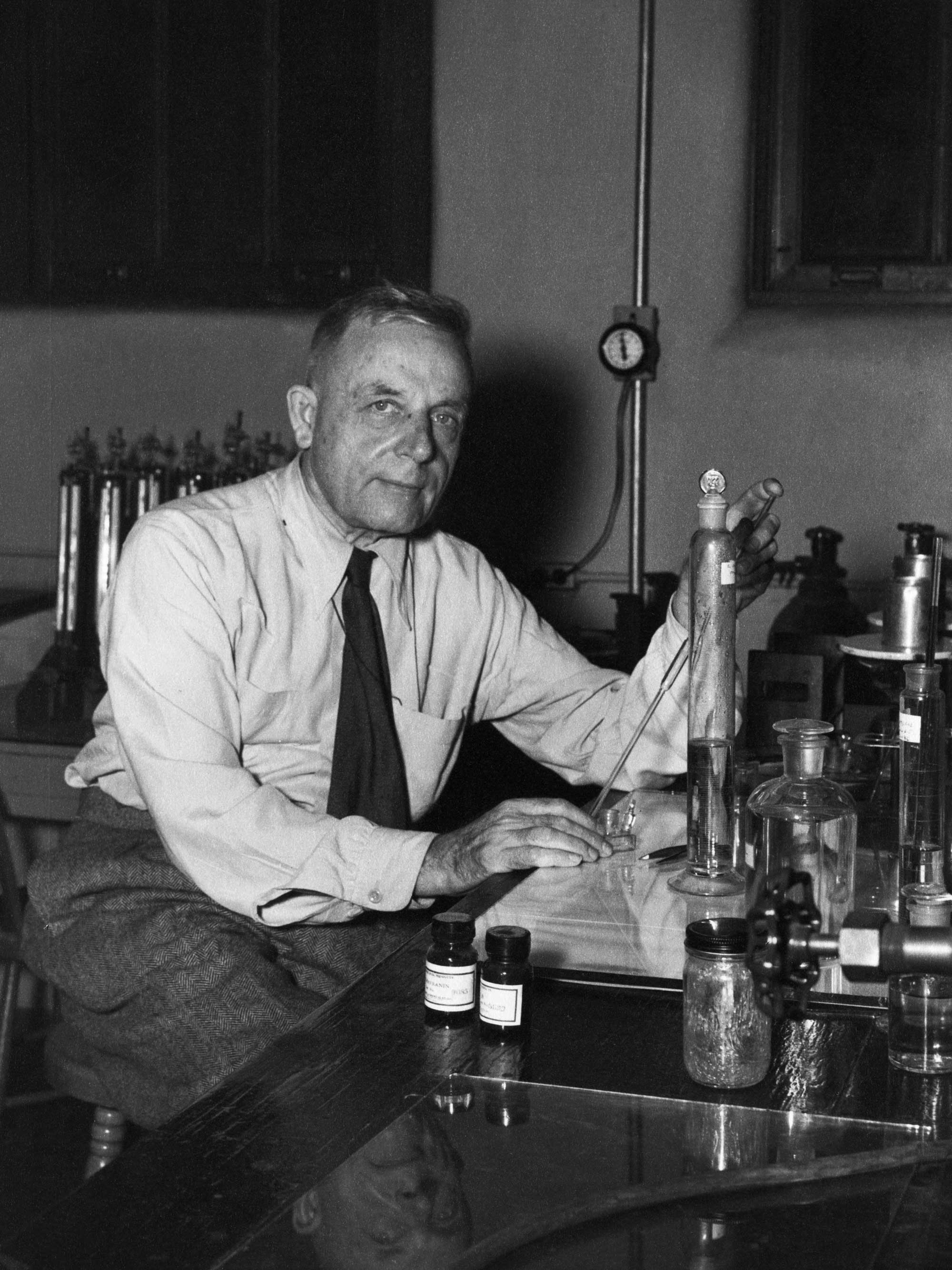
Portrait of Otto Warburg.

Otto Warburg

Cartographer of Respiration

An exacting investigator of the breathing cell. He followed oxygen, enzymes and the altered metabolism of tumours into questions that still animate biology.

Cellular Breath
Makes the invisible work of respiration measurable.
Metabolic Trace
Follows a cell through the chemistry of its fuel.
Experimental Resolve
Asks an instrument to settle an argument.
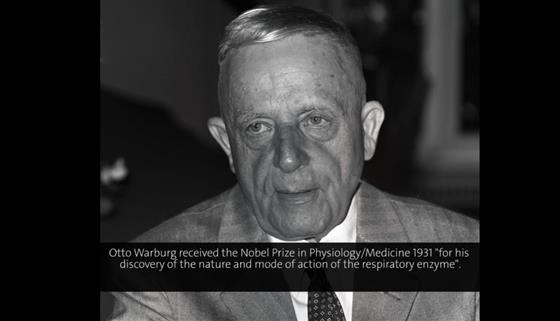
Otto Warburg

Biochemist & Physiologist

The Birth of Bioenergetics · The breathing cell Start hereThe Oxygen-Transferring Ferment of RespirationHis account of identifying the respiratory enzyme.Read the lecture · PDF
1883–1918

Chemistry becomes a way into life

Born in Freiburg in 1883, Warburg trained in both chemistry and medicine. His research brought physical measurement to living systems: gases consumed, products released, reactions made visible.

In Berlin-Dahlem, he built a career around the chemistry of respiration, photosynthesis and tumour tissue.

1920s–1931

Following oxygen

Warburg used carefully controlled experiments to investigate the respiratory enzyme. His Nobel Prize in 1931 recognised its nature and mode of action.

This work belongs to the larger discovery of how cells transfer electrons and use oxygen. It gave later researchers both questions and methods.

1920s–1956

A tumour’s altered metabolism

Warburg found unusually high conversion of glucose into lactate in tumour tissue, including when oxygen was present. The phenomenon became known as the Warburg effect.

He went further, arguing that damaged respiration was the primary cause of cancer. Keep the observation and the proposed cause separate: they are different scientific claims.

1966–1970

An argument that outlived its author

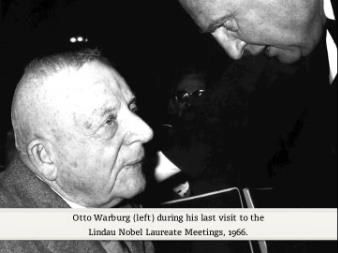
At Lindau in 1966, Warburg restated his cancer theory before an audience of scientists. The surviving recording lets us hear the argument in his own voice. He died in 1970.

Later measurements in human tumours have found active glucose oxidation alongside increased glycolysis. His legacy remains a living research question about the many ways cells obtain and use energy.

Papers & discoveries

In his own voice

Further into the archive