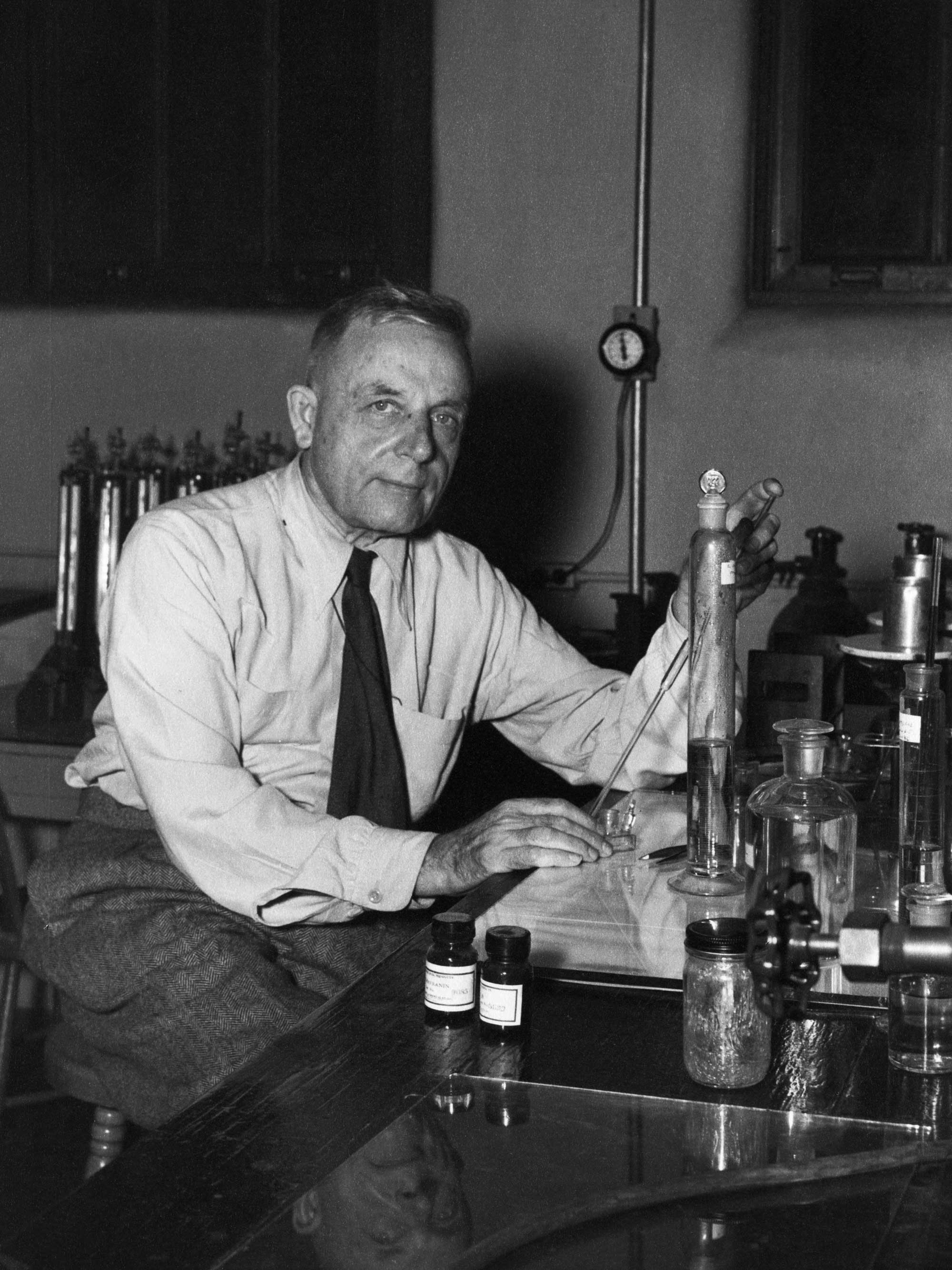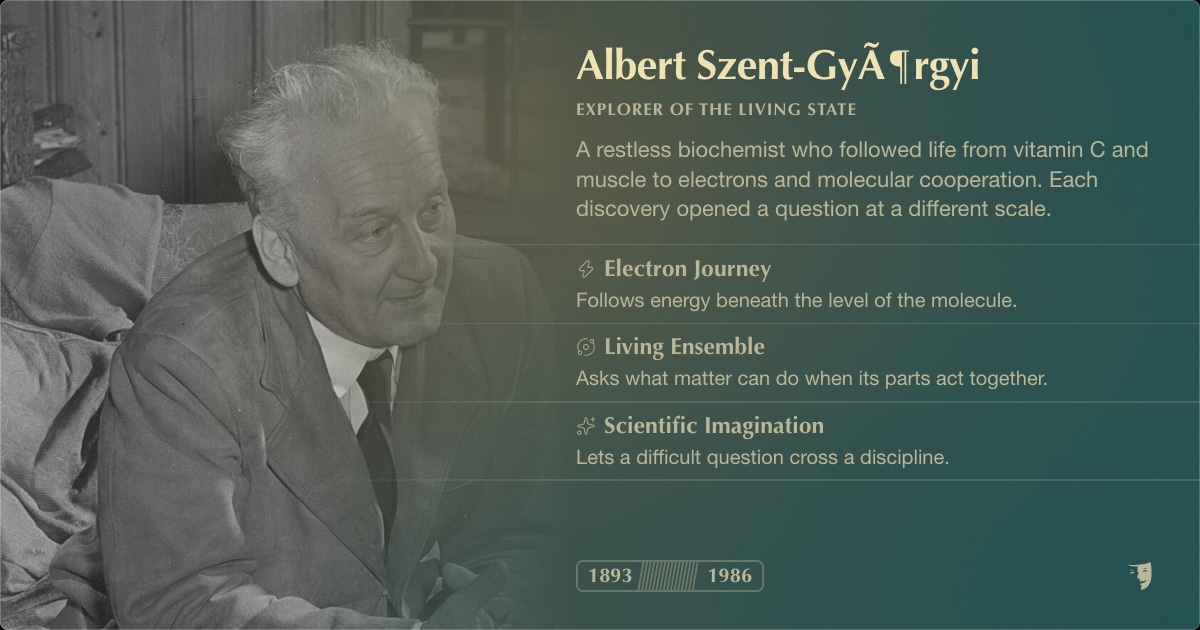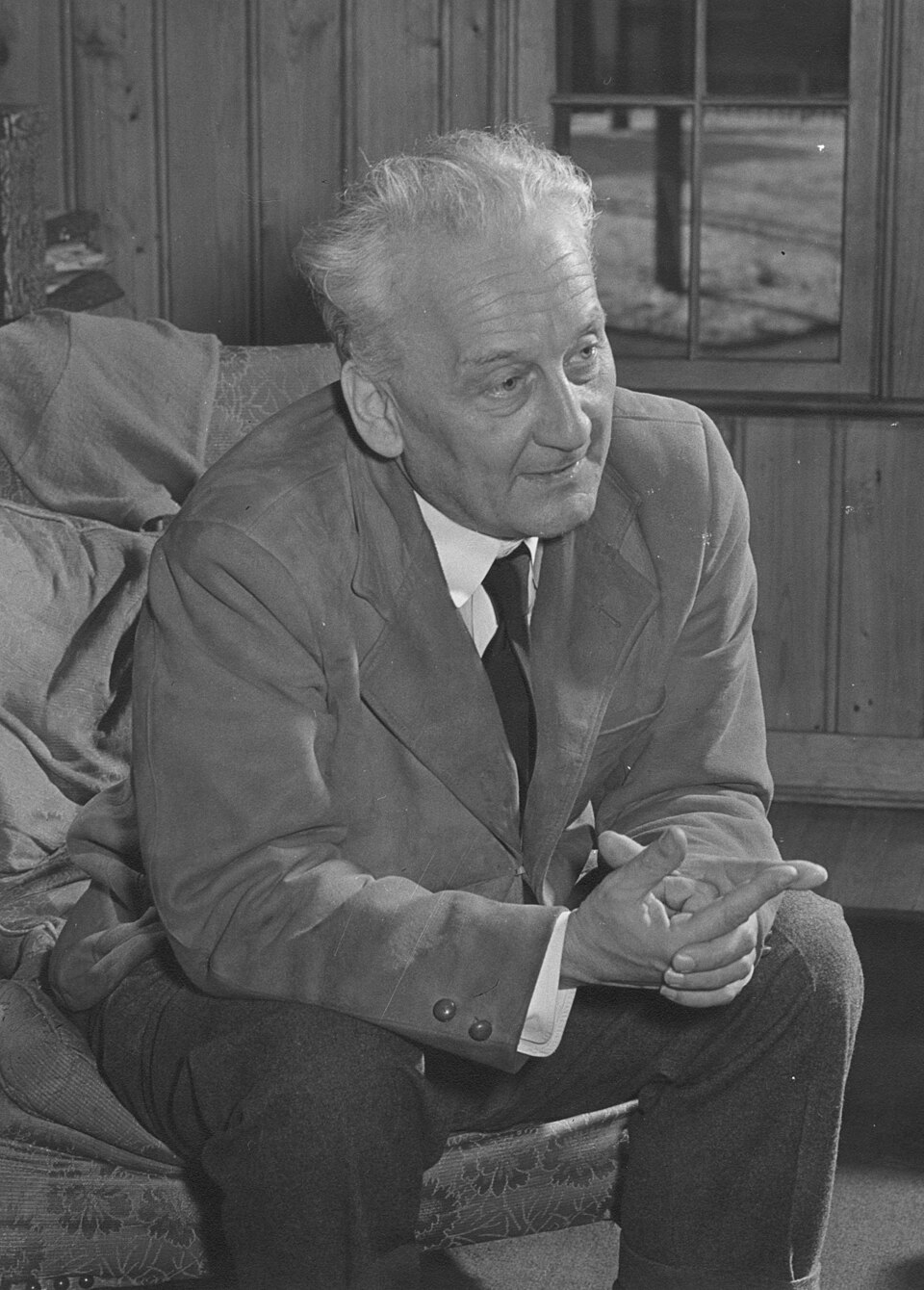
Portrait of Albert Szent-Györgyi.

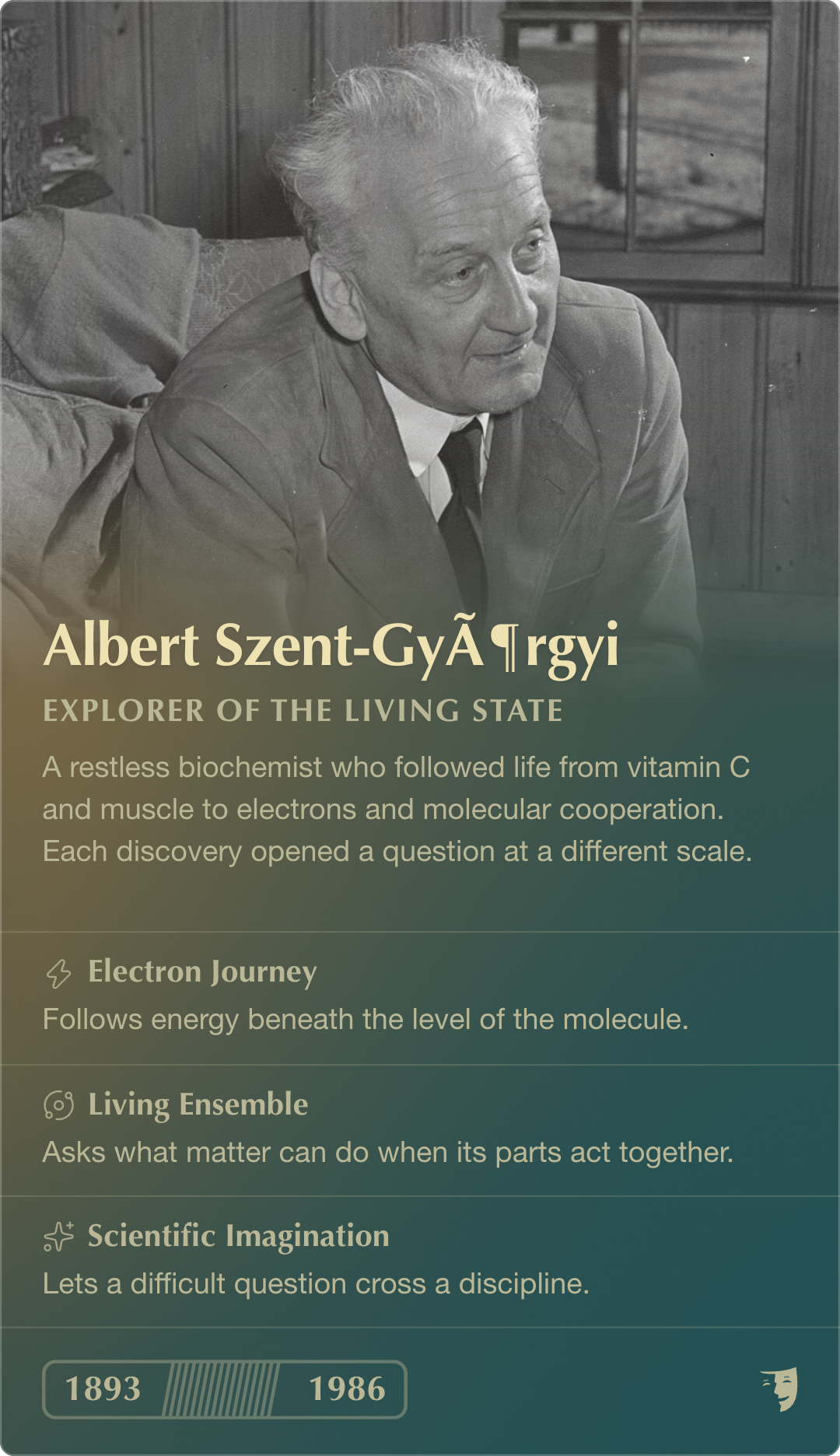
Albert Szent-Györgyi

Explorer of the Living State

A restless biochemist who followed life from vitamin C and muscle to electrons and molecular cooperation. Each discovery opened a question at a different scale.

Electron Journey
Follows energy beneath the level of the molecule.
Living Ensemble
Asks what matter can do when its parts act together.
Scientific Imagination
Lets a difficult question cross a discipline.
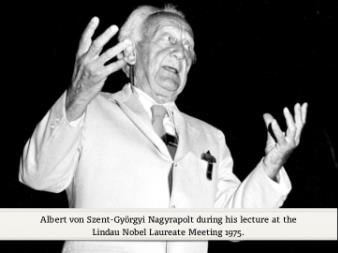
Albert Szent-Györgyi

Biochemist & Nobel Laureate

The Birth of Bioenergetics · The living state Start hereOxidation, Energy Transfer, and VitaminsThe Nobel lecture connecting biological oxidation with the chemistry of vitamins.Read the lecture · PDF
1893–1937

The chemistry of biological combustion

Born in Budapest in 1893, Szent-Györgyi pursued biological oxidation across laboratories in Europe. His work on vitamin C and the catalytic role of fumaric acid earned the 1937 Nobel Prize in Physiology or Medicine.

The familiar vitamin is one entrance to a much larger inquiry: how chemical reactions sustain a living organism.

1940s

From molecules to movement

With colleagues, Szent-Györgyi investigated the proteins and reactions behind muscle contraction. The question became tangible: how does chemical activity become movement?

His work on actin and myosin helped make muscle a system that could be studied experimentally, rather than simply observed as a whole.

1957–1960

Below the molecule

Bioenergetics and Introduction to a Submolecular Biology extend his investigation toward electronic interactions, charge transfer and molecular organisation.

The books invite a change of scale. A molecule has a structure, but it also exchanges energy and interacts with a surrounding world.

1960s–1986

An unfinished living state

At Woods Hole, his later interests included the electronic properties of proteins and theories of cancer. These proposals were more speculative than his established work on vitamins and muscle.

He continued to ask what distinguishes living matter from an inventory of its ingredients. Ray Peat found in that question a recurring source of inspiration.

Bookshelf

Lectures & original writings

At Lindau

Life & laboratory