Rudyard Kipling could make a road sound crowded, an engine argumentative and a bedtime story seem older than memory. His ear was trained in the short spaces of an Indian newspaper and sharpened through years of revision. Start with a ship whose parts learn to speak together; then follow the very different voices of Kim, the Jungle Books and the late stories.
1865–1882
Two childhoods
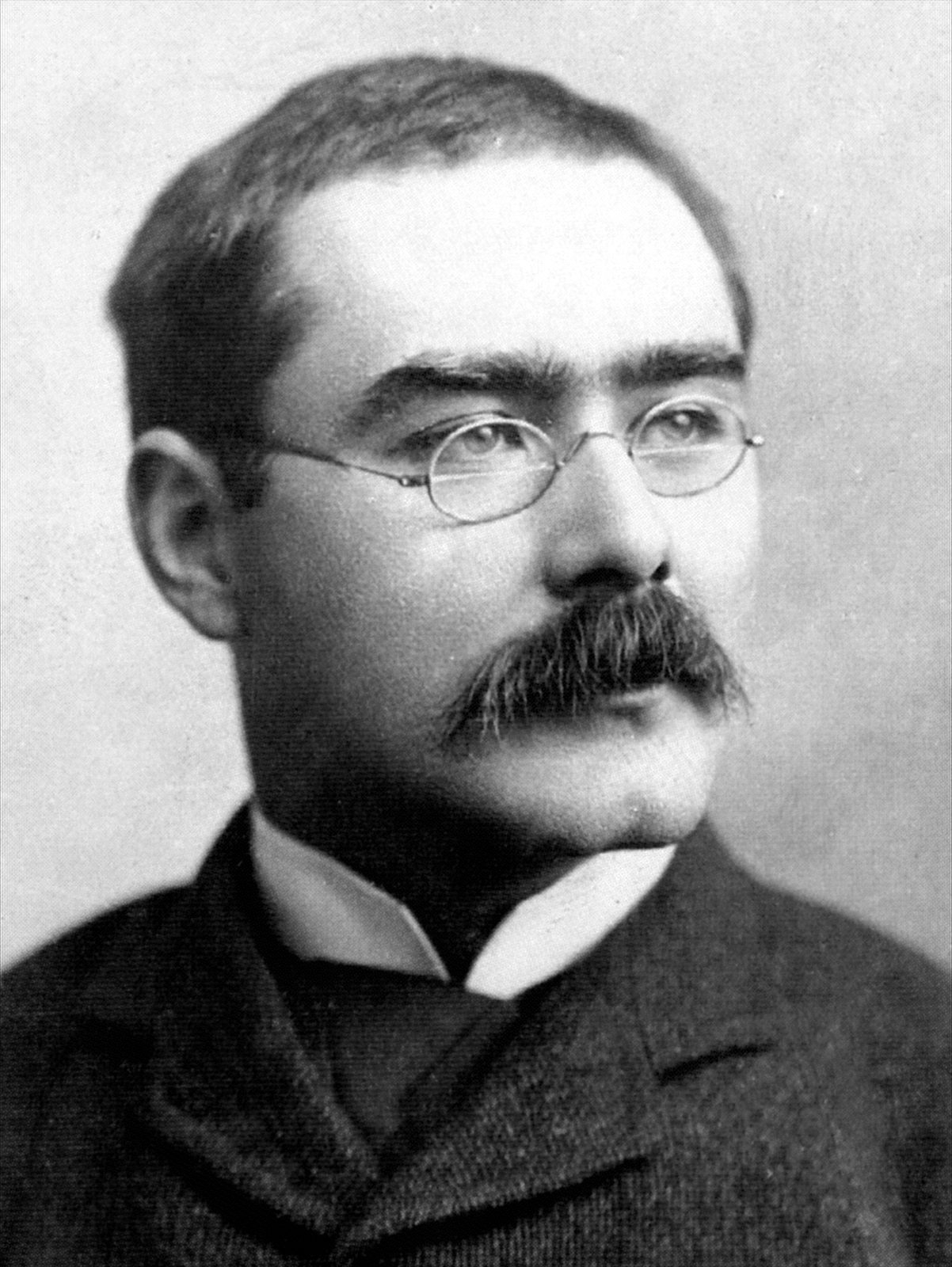
Kipling was born in Bombay to John Lockwood Kipling, an artist and teacher, and Alice Macdonald Kipling. His earliest years were spent in India; at five he and his sister Alice, called Trix, were sent to England for schooling. The unhappy years in a Southsea household later gave him material for “Baa Baa, Black Sheep.” The separation between those childhood worlds became a recurring imaginative resource: his characters move between communities, learning the signs of belonging and the cost of being outside.
At the United Services College in Westward Ho!, his poor eyesight set him apart from the ideal school athlete, while headmaster Cormell Price encouraged his writing. Years later Stalky & Co. remade the school into unruly fiction: its boys speak in codes, devise elaborate pranks and test authority. Its shared jokes and private codes make the reader listen like a newcomer trying to understand a close-knit group.
At sixteen he returned to his parents in Lahore and joined the Civil and Military Gazette, later working for the Pioneer in Allahabad. Reporting made him write to deadlines and fit a beginning, middle and end into a narrow column. In Something of Myself he credits that discipline, and his father’s advice to experiment, for teaching him to make detail do several jobs at once. John Lockwood Kipling’s work at the Lahore Museum also furnished a store of visual and cultural knowledge that would matter especially to Kim.
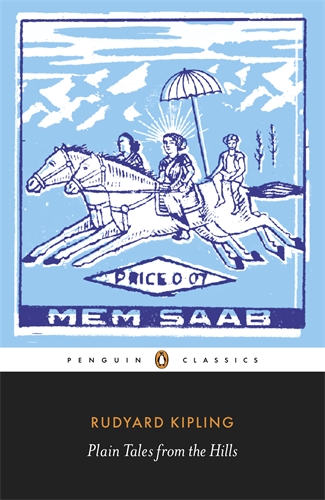
The stories that became Plain Tales from the Hills (1888) move among officials, soldiers, children and people excluded by colonial social rules. A small incident can turn on a shift of voice or a withheld fact. The speed and acuity are real; so are the limits of a young British journalist’s position within the Raj. Read “Lispeth” or “Beyond the Pale” for both the formal bite and the unequal power the plots reveal.
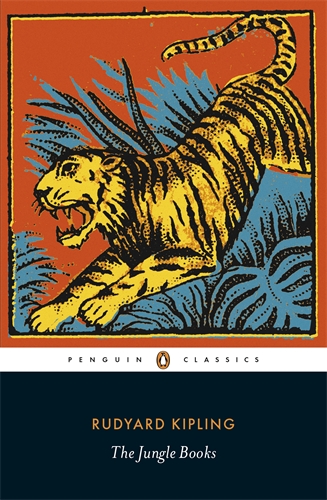
Success carried Kipling to London in 1889. He married Caroline “Carrie” Balestier in 1892, and they settled for a time near her family in Vermont. Their daughters Josephine and Elsie were born there; their son John followed after the family returned to England. The two Jungle Books (1894 and 1895) emerged from this American period, gathering Mowgli’s pack beside other animal tales. The stories build convincing communities by giving each creature laws, habits, rivalries and a way of speaking.
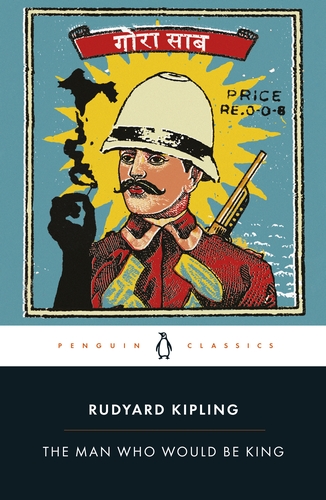
Kipling was just as curious about practical skill. Captains Courageous (1897) makes a spoiled boy learn the routines of a fishing schooner. In The Day’s Work (1898), “The Ship That Found Herself” gives the components of a freighter quarrelsome voices until an Atlantic crossing teaches them how to yield to one another. The tale turns technical cooperation into character and rhythm. Meanwhile his public voice grew more openly imperial: the 1899 poem “The White Man’s Burden” urged American rule in the Philippines and asserted a racial hierarchy. That advocacy belongs in any account of his imagination, alongside the variety and vitality of the fiction.
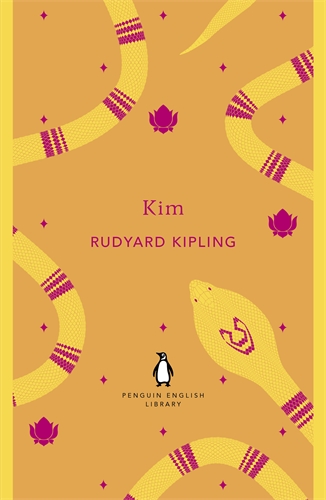
A visit to America in 1899 ended in catastrophe: Kipling became gravely ill and six-year-old Josephine died. Kim, begun years before and completed afterwards, was published in 1901. Its orphan and Tibetan lama move through a crowded India while British intelligence draws Kim into the Great Game. Kipling sets different kinds of knowledge beside one another: the lama’s quest, Kim’s changing speech and disguises, the trained eye of a spy. The road’s many voices give the book its abundance; the spy plot also keeps British power at the centre.
The surviving Kim manuscript shows substantial revision, and Lisa Lewis’s study traces John Lockwood Kipling’s contributions more carefully than Rudyard’s later memory alone can. In 1902, Just So Stories brought a different craft into print: stories first told aloud to Josephine, whose exact repetitions mattered, joined to Kipling’s own strange, funny drawings and captions. In “The Elephant’s Child,” sound and rhythm keep inviting a listener to anticipate the next turn. The original illustration is another part of the joke, not a decorative afterthought.
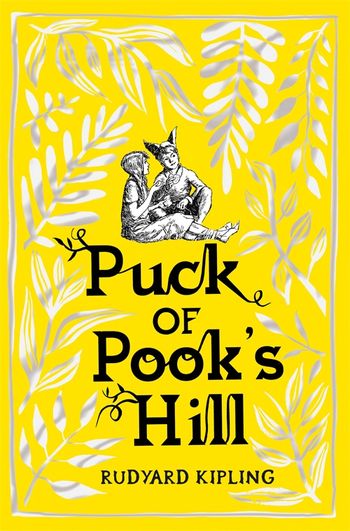
Rudyard and Carrie bought Bateman’s in Sussex in 1902. The house and nearby Pook’s Hill gave him a new way to join place, legend and historical research. In Puck of Pook’s Hill (1906), Dan and Una meet figures from Britain’s past; Rewards and Fairies (1910) returns to the children and Puck, with songs threaded between the encounters. Elsie and John were among the children for whom this imaginative landscape mattered, though Dan and Una are fictional figures, not simple portraits of them.
The Nobel Prize in Literature came in 1907, at the height of his fame. These Sussex books make history conversational: a Roman soldier, a Norman knight or a craftsman can tell the children what changed a place. Each encounter brings a different vocabulary and scale of time to the same paths and fields. Start with Puck, then let Rewards and Fairies lead into the poems, including “If—.”
Kipling supported Britain’s First World War effort. John joined the Irish Guards and was killed at Loos on 27 September 1915, aged eighteen. The family’s loss was private, but Kipling also worked in public remembrance: he wrote the regimental history of the Irish Guards and served as the Imperial War Graves Commission’s first literary adviser. His phrases for the unidentified dead became part of the language of Commonwealth cemeteries. They do not make his grief transparent, and the record does not require a single explanation for every later story.
His late fiction often lets meaning arrive indirectly. “The Gardener” leaves crucial knowledge in what its characters do not say; “Mary Postgate” is harsher and more difficult to settle. Jan Montefiore’s selected stories place these beside the early fiction, while Peter Keating’s poems carry the reader from brisk ballads into the war epitaphs. Kipling died in 1936. Something of Myself appeared the next year: an illuminating account of tools and work, deliberately selective about the life around them.


_(14782517864).jpg)
