Brussels, Le Mousquetaire, and Maquet in court
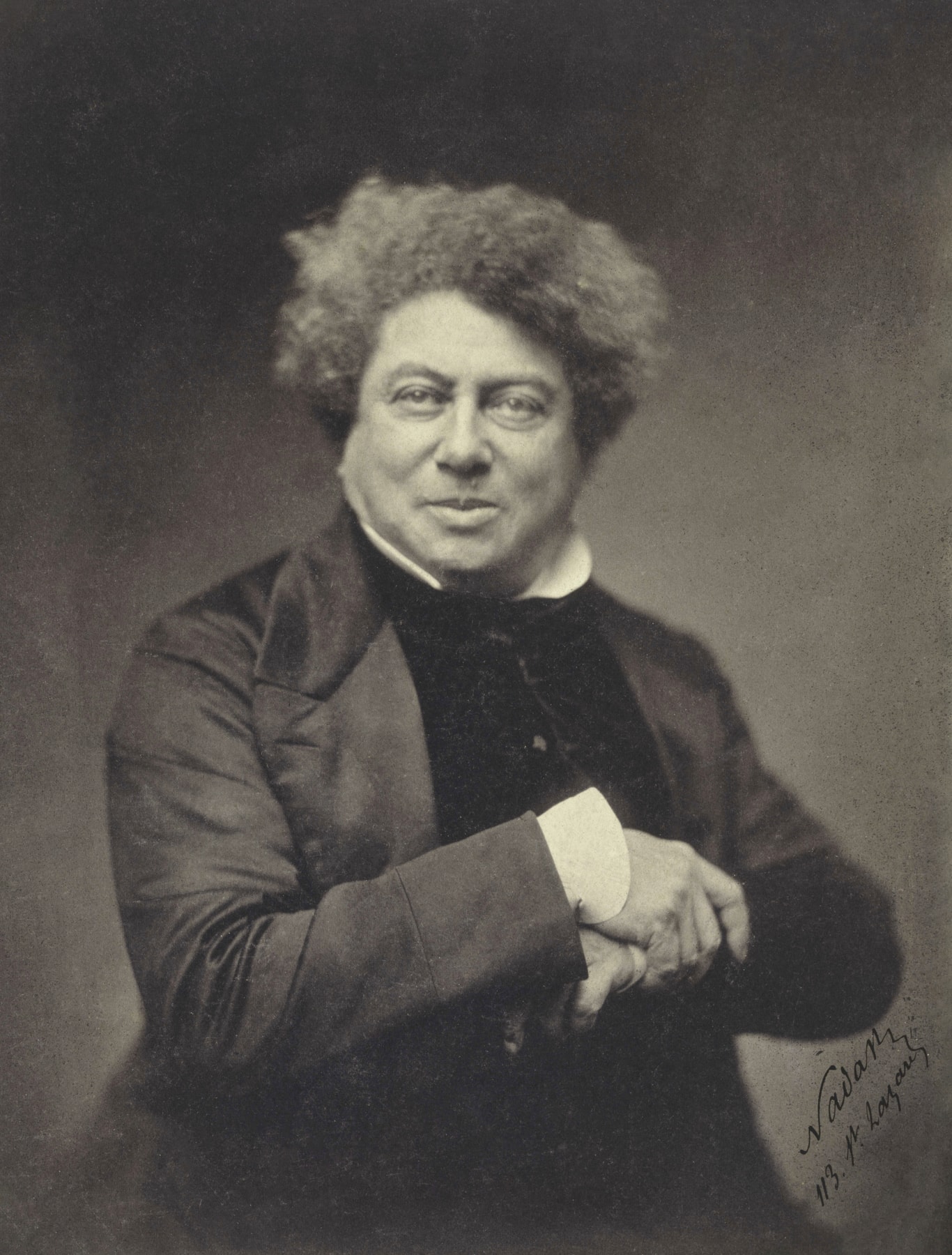
Maquet walked out in 1851. Dumas had fallen into arrears with him while other creditors had legal claims first. Charles Reade, quoted by Spurr, put what Maquet left behind at 130,000 francs. In December 1851, after Louis-Napoléon’s coup and with creditors closing in, Dumas went to Brussels, where Victor Hugo was already in exile. He lived at 73 rue de Waterloo until January 1853 and, he boasted, wrote fifty volumes there with no collaborator his enemies could name.
Back in Paris he founded a daily newspaper, Le Mousquetaire (1853–1857), and filled much of it himself. Visitors found the office as noisy as a factory. Henri Blaze de Bury remembered Dumas writing through the din: “Without pausing in his writing, he held out his left hand to you with a smile.” The paper was never run on business lines. When it died in 1857 he started another, Monte-Cristo, straight away.
In January 1858 Maquet went to court. He asked to be declared co-author of eighteen novels, the Musketeers cycle, Monte Cristo and La Reine Margot among them, with half the royalties, his name beside Dumas’s and 50,000 francs on account. On 3 February the court rejected every claim and ordered him to pay the costs. At the appeal in November 1859 the two advocates gave rival histories, which Claude Schopp has recently re-read. For Maquet, Me Marie said the first draft was always Maquet’s and that Dumas recopied it “non pas servilement”, taking over its ideas, scenes and dialogue and adding his own witticisms. For Dumas, Me Duverdy said Dumas planned each book aloud through whole days or nights; Maquet then researched and wrote a provisional version, which Dumas rewrote from the first word to the last.
Duverdy’s best exhibit was Maquet’s manuscript of a scene from The Black Tulip, set beside the printed text. In Maquet’s draft the guards burst in at once. In Dumas’s version the tulip-lover, entrusted with the de Witts’ dangerous papers, wastes precious minutes chasing his bulb and forgets the warning lying on his table. Then the guards arrive. Both briefs were partisan, and Schopp warns as much. Secondary accounts disagree about any later money settlement; none says Maquet ever got his name on the books.