The name “Lawrence of Arabia” hides several writers: a young excavator making measured drawings, a wartime officer trying to describe a collective campaign, a famous man remaking his own account, and an aircraftman writing about ordinary service. His strongest prose rewards reading beside Arab and other records of the same events.
1888–1914
A reader in the field
Born in Wales and raised in Oxford, Lawrence studied history at Jesus College. A long walking survey of medieval castles gave him practice linking a built site to evidence rather than to legend. His work at Carchemish in present-day Turkey and Syria then made drawing, photography, excavation and languages part of a daily discipline.
He worked within British Museum teams associated with D. G. Hogarth and Leonard Woolley, alongside local labourers and assistants. Salim Ahmed, known as Dahoum, became a close companion. The surviving sketches are precise artifacts of a collective excavation; they also belong to an era when European institutions controlled how local knowledge and finds entered the archive.
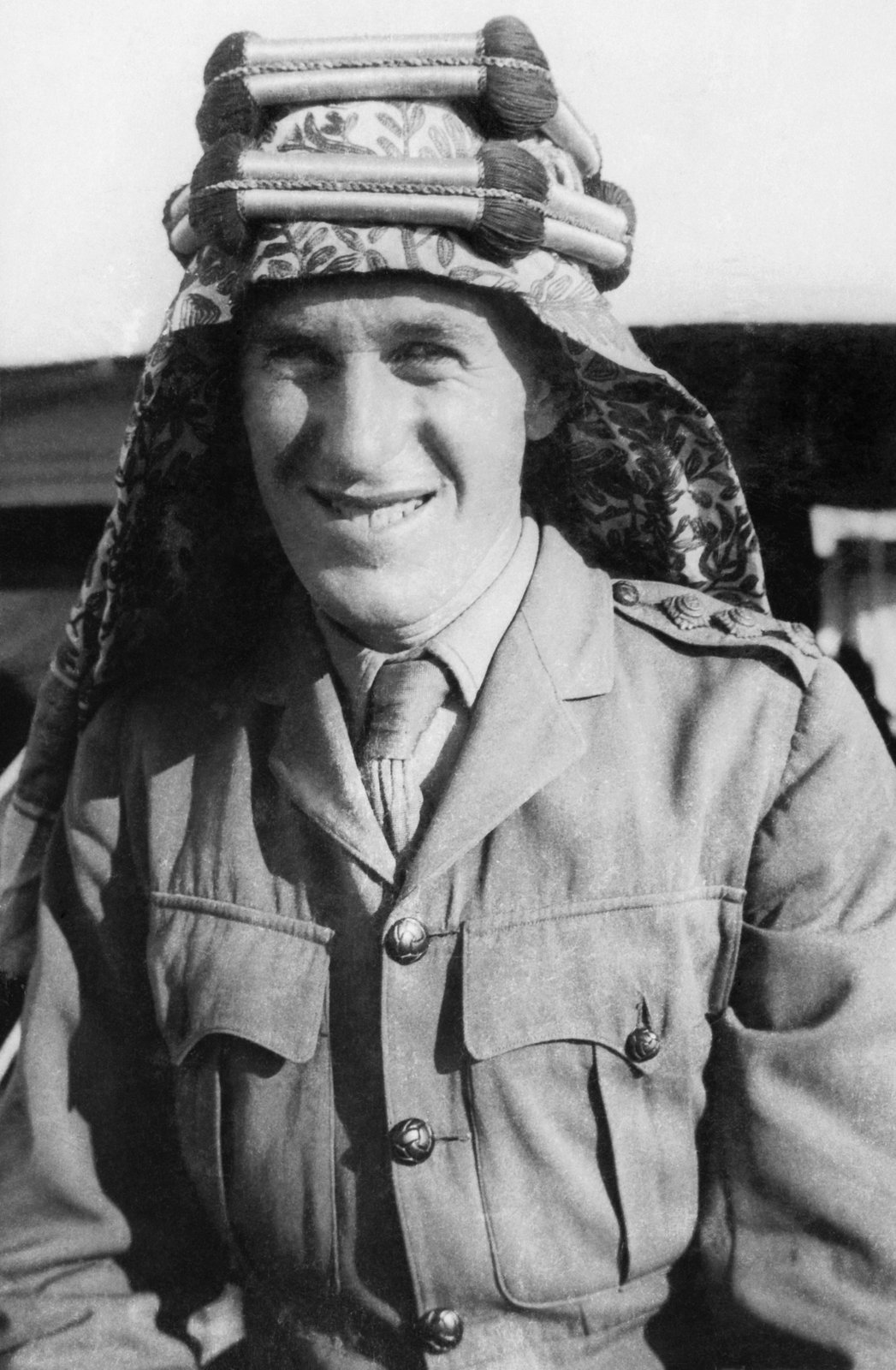
War moved Lawrence from archaeological work into the Arab Bureau in Cairo. His regional knowledge became useful to British intelligence, but the revolt against Ottoman rule was initiated and led by Arab actors, including Sherif Hussein and his sons. In 1916 Lawrence met Emir Feisal, whose force he would accompany as a liaison officer.
The role asked him to relay information, supplies and proposals between armies with different aims. Feisal’s leadership and the choices of tribal fighters cannot be compressed into the story of a British adventurer. Lawrence’s later memoir makes his intimacy with the campaign vivid, but its narrative voice is one participant’s construction of a larger war.
1917–1918
The railway and the price of promises
Arab forces captured Aqaba in July 1917 and repeatedly struck the Hejaz Railway, forcing Ottoman troops to defend a long line. Lawrence took part in planning and raids, while Feisal’s command, Arab fighters, other British officers and wider Allied operations shaped the outcome. The railway landscape still bears physical evidence of camps, earthworks and ambush sites.
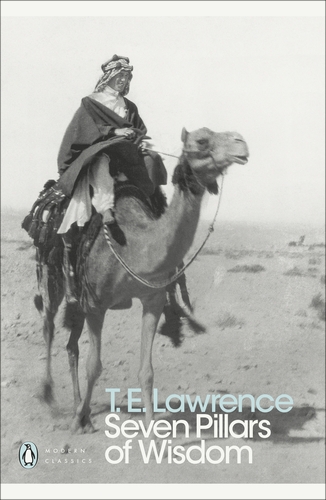
When the campaign reached Damascus in 1918, hopes for Arab independence met British and French imperial plans. Lawrence later wrote with shame about promises Britain had made. That moral conflict matters; so does the limit of his viewpoint. Seven Pillars of Wisdom is literature and testimony, never a neutral certified chronicle of an entire revolution.
Lowell Thomas’s lectures and images helped turn Lawrence into a celebrity. Lawrence worked in postwar Middle Eastern policy while struggling to turn the campaign into a book. An early manuscript was lost, then rewritten. A large 1922 “Oxford text” survives; he cut and revised it for a privately printed 1926 subscribers’ edition. The familiar 1935 trade text descends from that shorter version, so dates on different books do not name the same text.
In 1927 he published Revolt in the Desert, an even tighter abridgement intended to meet the cost of the lavish earlier printing. A letter to Robert Graves credits two fellow airmen, Miller and Knowles, with helping him make that abridgement. The successive versions reveal a writer arranging rhythm, portrait and omission—not simply depositing memory on a page.
Lawrence sought the routine of ordinary service under the names Ross and Shaw, chiefly in the Royal Air Force, with a period in the Tank Corps. The Mint records drill, noise, language and hierarchy from near the bottom of the ranks. Drafts survive in the British Library; the book did not reach a general readership until 1955, after his death. Its sharp detail should be read with the same attention to selection and literary shaping as Seven Pillars.
He also spent years translating Homer’s Odyssey into clear prose, working with designer Bruce Rogers on the 1932 publication. Later RAF marine-craft work and motorcycles kept his interest in machines practical. He died in 1935 after a motorcycle crash near his Dorset home. The writer who had wanted to escape a heroic image left several deliberately different ways to read a life.


.jpg)