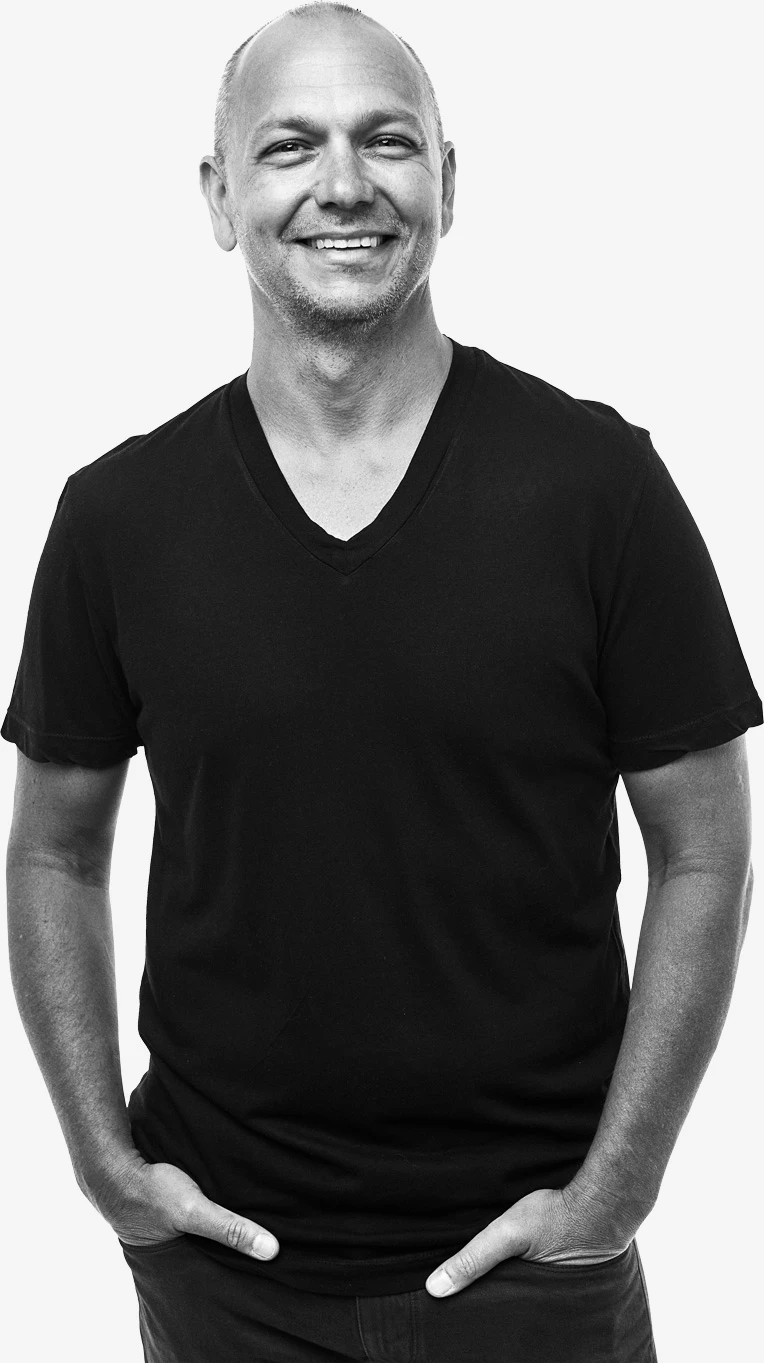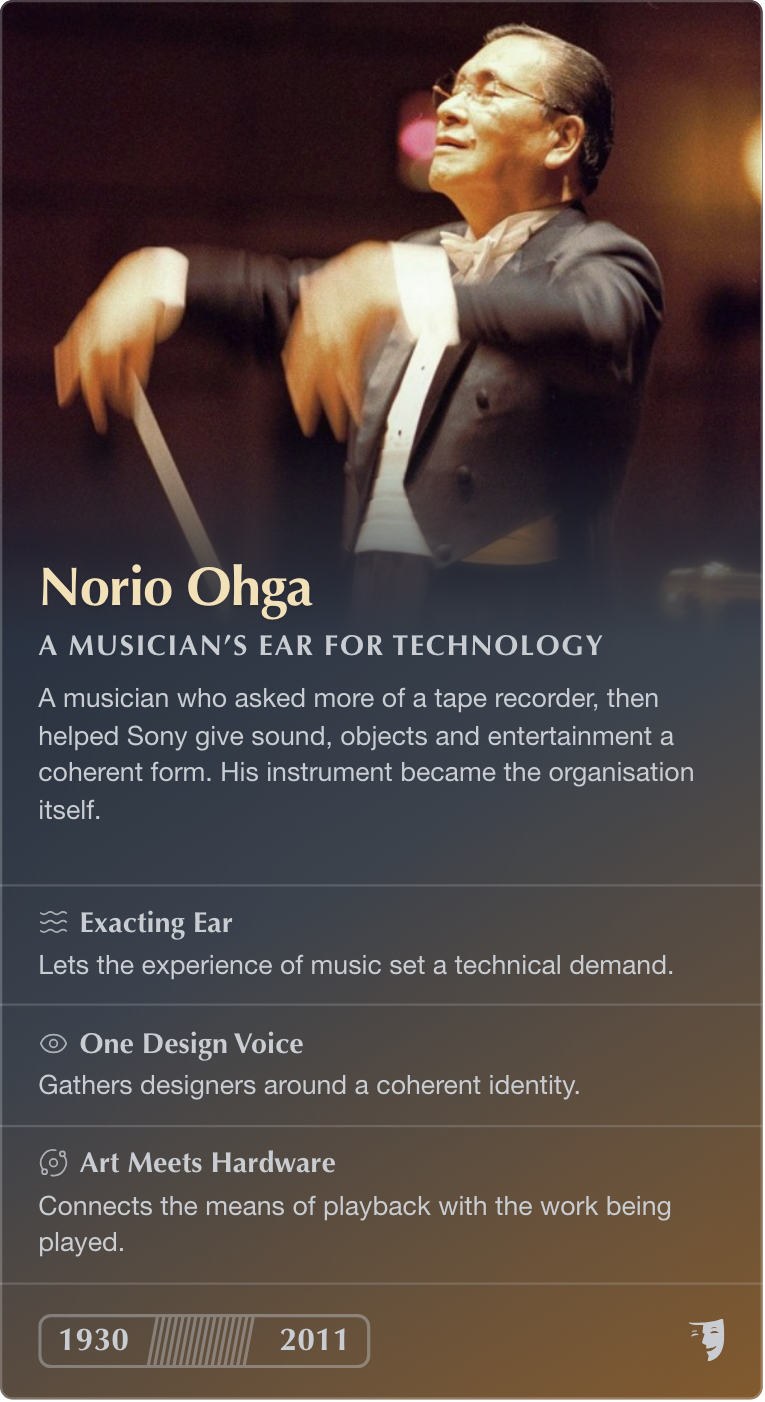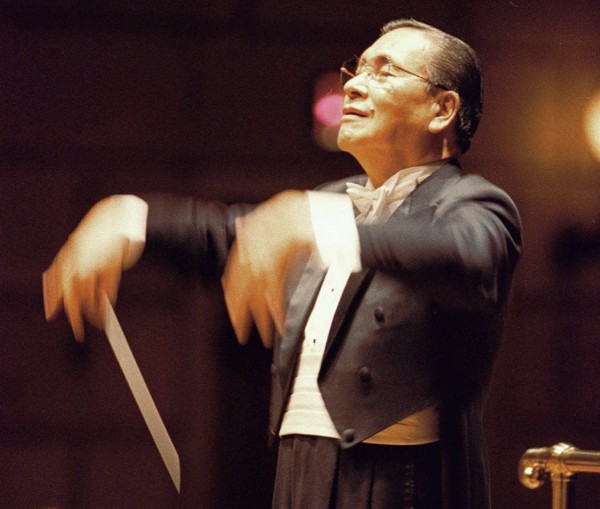
Norio Ohga conducting, in white tie with a baton.

Norio Ohga

A Musician’s Ear for Technology

A musician who asked more of a tape recorder, then helped Sony give sound, objects and entertainment a coherent form. His instrument became the organisation itself.

Exacting Ear
Lets the experience of music set a technical demand.
One Design Voice
Gathers designers around a coherent identity.
Art Meets Hardware
Connects the means of playback with the work being played.
Norio Ohga

Musician, Design Leader & Sony President

Start hereThe fearsome student and the G-Type recorderStart with the story behind the letter: a music student sends concrete improvements after using Totsuko’s tape recorder. This is Sony’s retrospective account, not a surviving facsimile of the original letter.Read the letter story

Begin with the music student who sent a tape recorder’s makers a list of improvements, then follow Norio Ohga into Sony’s design office, the Compact Disc and the meeting of technology with entertainment.

1950–1959

The listener writes back

Sony’s history begins the encounter in 1950. Norio Ohga, a music student, had used the G-Type tape recorder at his university and found it wanting. He visited Masaru Ibuka, questioned the equipment’s capabilities, and sent Totsuko a written list of improvements. A second meeting followed. The founders recognised someone who could hear a technical problem from the musician’s side of the machine.

The familiar letter story belongs here: a demanding user became an adviser, formally contracted in 1953 and a full employee in 1959. It was not an instant aesthetic transformation. Ohga first brought informed expectations about sound and the usefulness of recording. Sony’s own account also credits Sori Yanagi with the early H-Type recorder’s industrial design, a reminder that a company’s objects have several makers.

The fearsome student and the G-Type recorderStart with the story behind the letter: a music student sends concrete improvements after using Totsuko’s tape recorder. This is Sony’s retrospective account, not a surviving facsimile of the original letter.Read the letter story

A design language you can hold

Inside the organisation