He co-built Mosaic as an Illinois student, turned it into Netscape, became the venture capitalist who said software is eating the world, and in 2024 backed Donald Trump.
Pictures Inline
Puts images beside text so a web page reads like a magazine.
Ship and Listen
Reads newsgroup requests and pushes fixes fast.
Techno-Optimism
Publishes a manifesto for growth, markets and acceleration.
A browser can turn a network into a place people want to explore. Andreessen helped make that invitation tangible with Mosaic, carried it into commerce at Netscape, and later became an influential financier and advocate of technological change. His story moves between writing the tools and deciding which futures receive backing.
1971–1992
A browser on a university network
Raised in Wisconsin, Andreessen studied computer science at the University of Illinois. Work in a physics research laboratory introduced him to high-end computing and networks; placements at IBM brought experience of commercial development. In his 1995 oral history, he remembered being most interested in making programs that people could actually use.
At the National Center for Supercomputing Applications, he found the equipment, colleagues and freedom to try. Tim Berners-Lee had already created the Web at CERN, and browsers such as Viola and Midas were circulating. During the 1992 Christmas break, Andreessen roughed out a browser demonstration, then recruited Eric Bina to develop it. A public research institution gave the experiment room to become consequential.
1993
Mosaic makes the invitation legible
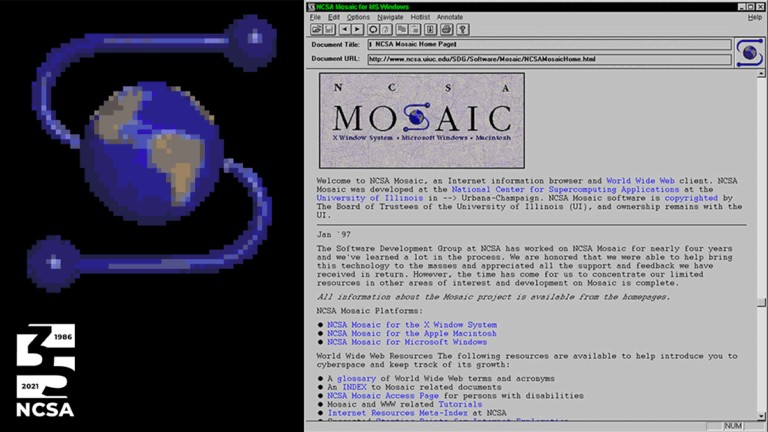
Released in 1993, Mosaic made installation and browsing less forbidding, displaying pictures beside text so that a page could feel like an illustrated publication. Bina’s engineering was crucial; Andreessen listened closely to requests on Web newsgroups and rapidly released improvements. Other NCSA teams brought the browser to Macintosh and Windows users.
The breakthrough was as much an invitation as a technical achievement. Follow a link and arrive at someone else’s work; put something online and strangers could find it. NCSA’s institutional support and the existing Web standards made that possible. Mosaic showed how much could change when an interface made a powerful system approachable.
After graduating, Andreessen moved to Silicon Valley and met Jim Clark, the founder of Silicon Graphics. They formed the company that became Netscape in 1994, recruiting several Mosaic developers. Navigator was newly written software, with speed, security and commercial support in mind. The browser would help establish an audience for a wider business in servers and network applications.
His 1995 Smithsonian interview catches the moment before the outcome felt inevitable: release quickly, let people build on the product, then keep up with what they wanted to do. The browser’s success made its maker a gatekeeper as well as a guide. In 1998 Netscape released Communicator source code through the Mozilla project; AOL completed its acquisition of Netscape in 1999. The company’s independent chapter ended, while the code and communities continued into another history.
Loudcloud, founded in 1999 with Ben Horowitz, Tim Howes and In Sik Rhee, addressed the less visible side of the Web: keeping large numbers of servers and applications running. Automation could spare companies from repeatedly assembling and tending the same infrastructure. It was an ambitious proposition at the height of the dot-com boom.
When that market collapsed, the company had to change shape. In 2002 it sold its managed-services business to EDS and continued as Opsware, selling the automation software developed within Loudcloud. In 2007 HP agreed to acquire Opsware for approximately $1.6 billion. Andreessen’s announcement, preserved in an SEC filing, tells an eight-year story of survival and reinvention behind the headline price.
Andreessen and Horowitz founded their venture firm in 2009, bringing their experience of building companies to the work of financing them. Alongside investment, a16z built services around founders, including recruiting, marketing and operational support. Andreessen’s influence now reached across companies rather than through one product.
Why Software Is Eating the World, his 2011 essay, connected businesses such as Amazon and Netflix through a larger argument: software and network distribution were reorganising whole industries. The 2023 Techno-Optimist Manifesto widened that conviction into a philosophy of growth, markets and accelerated technological development. The programmer had become a public advocate for a particular account of progress.
That advocacy turned partisan. Having voted for Democratic presidential candidates from Bill Clinton to Hillary Clinton, Andreessen said on The Ben & Marc Show in July 2024 that he was backing Donald Trump, citing crypto policy, AI regulation and the proposed tax on unrealised capital gains; he and Horowitz said they would donate significantly to pro-Trump political action committees. In March 2026 Trump named him to the President’s Council of Advisors on Science and Technology.
Read the essays as forceful arguments by someone whose investments and beliefs are intertwined. Then return to Mosaic, made with colleagues inside a publicly supported institution. The contrast leaves a fruitful question for the reader: what kinds of support let people build, and who should have the power to decide what happens next?
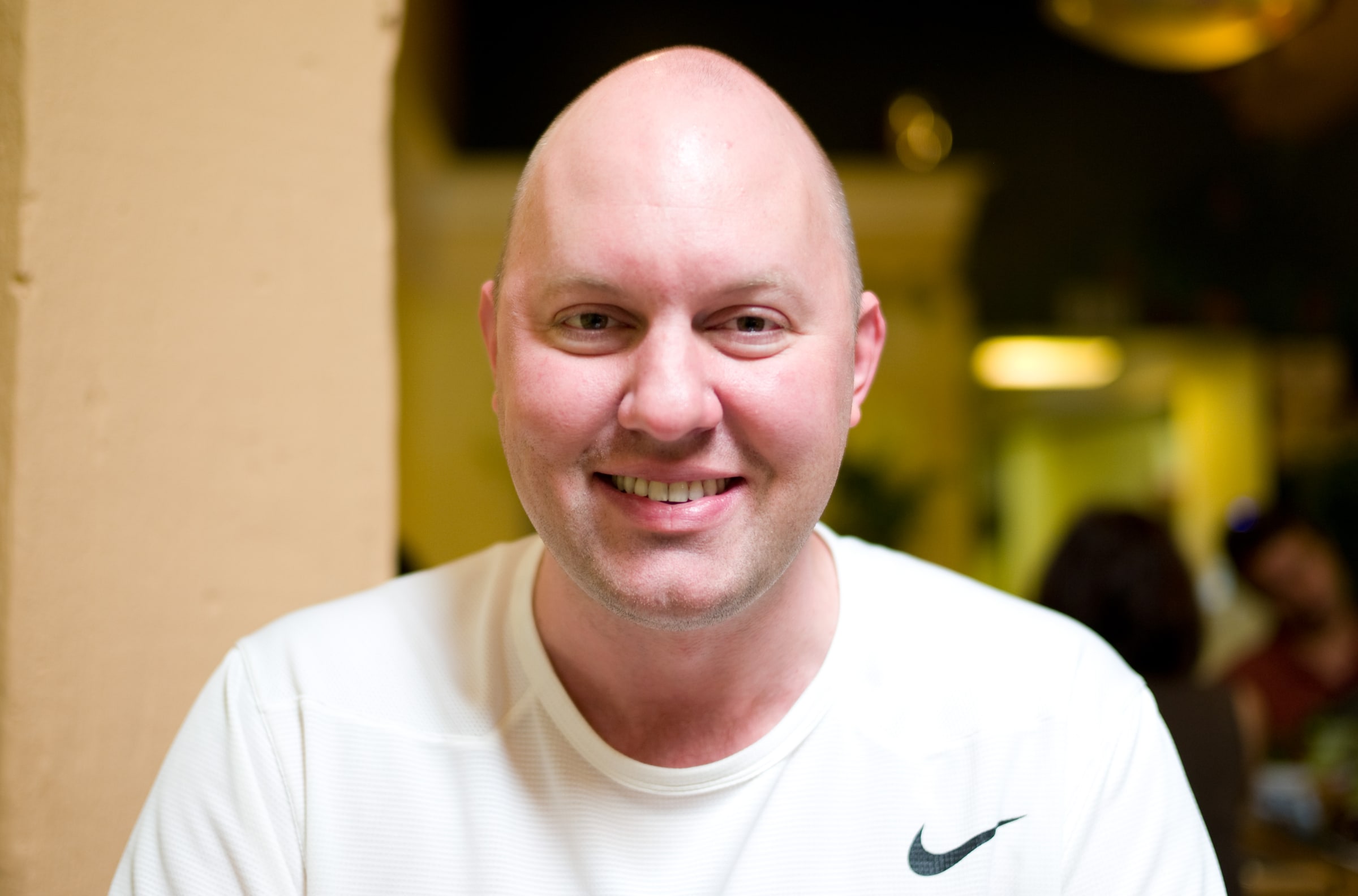
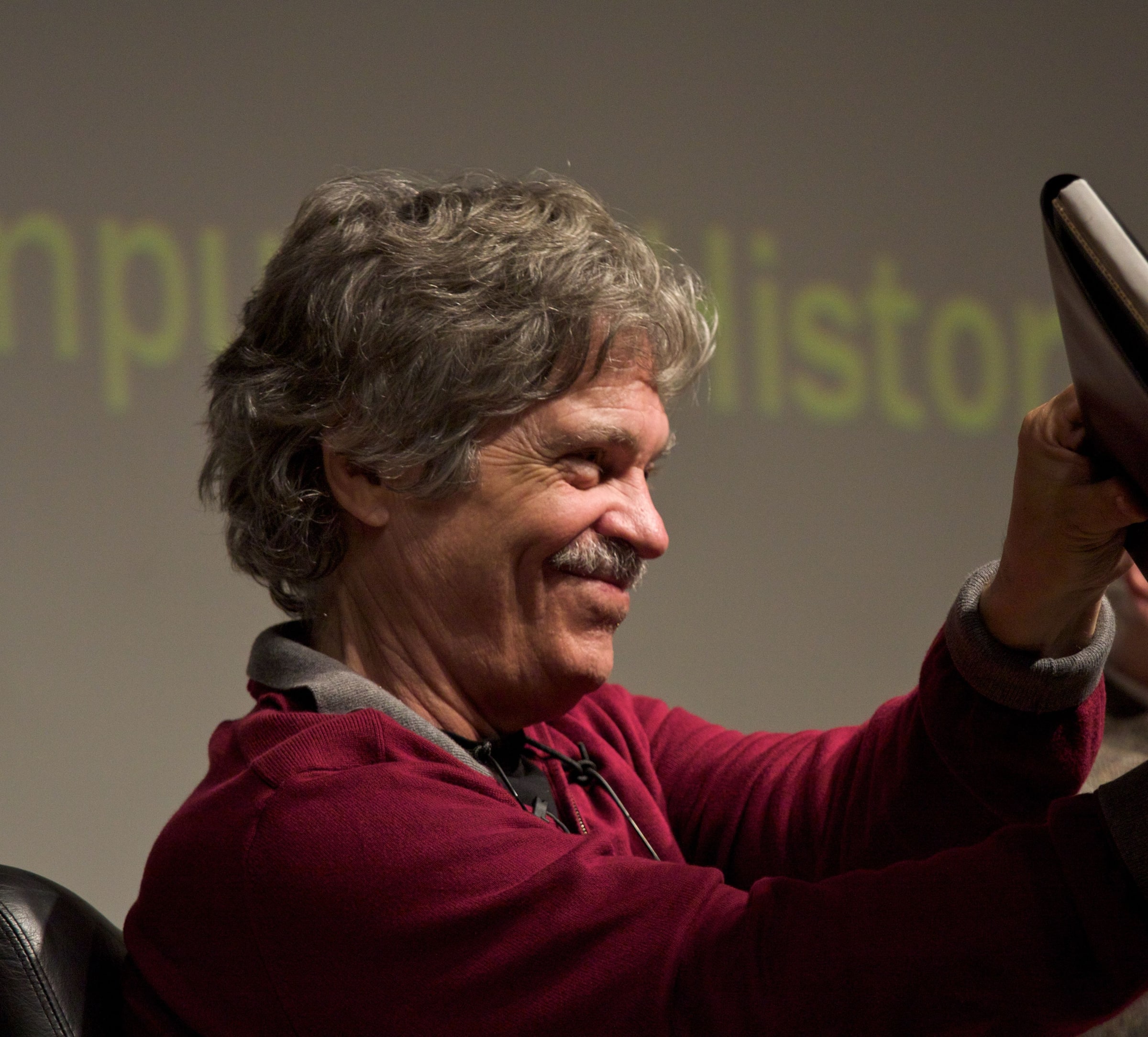
Andreessen onstage at TechCrunch Disrupt SF, Pier 48, San Francisco, 13 September 2016. This documented appearance belongs to his venture-capital years; it does not stand in for the NCSA team’s earlier work on Mosaic.
Source & credits
Steve Jennings/Getty Images for TechCrunch · CC BY 2.0 · https://creativecommons.org/licenses/by/2.0 · Full frame; WebP conversion; resized.