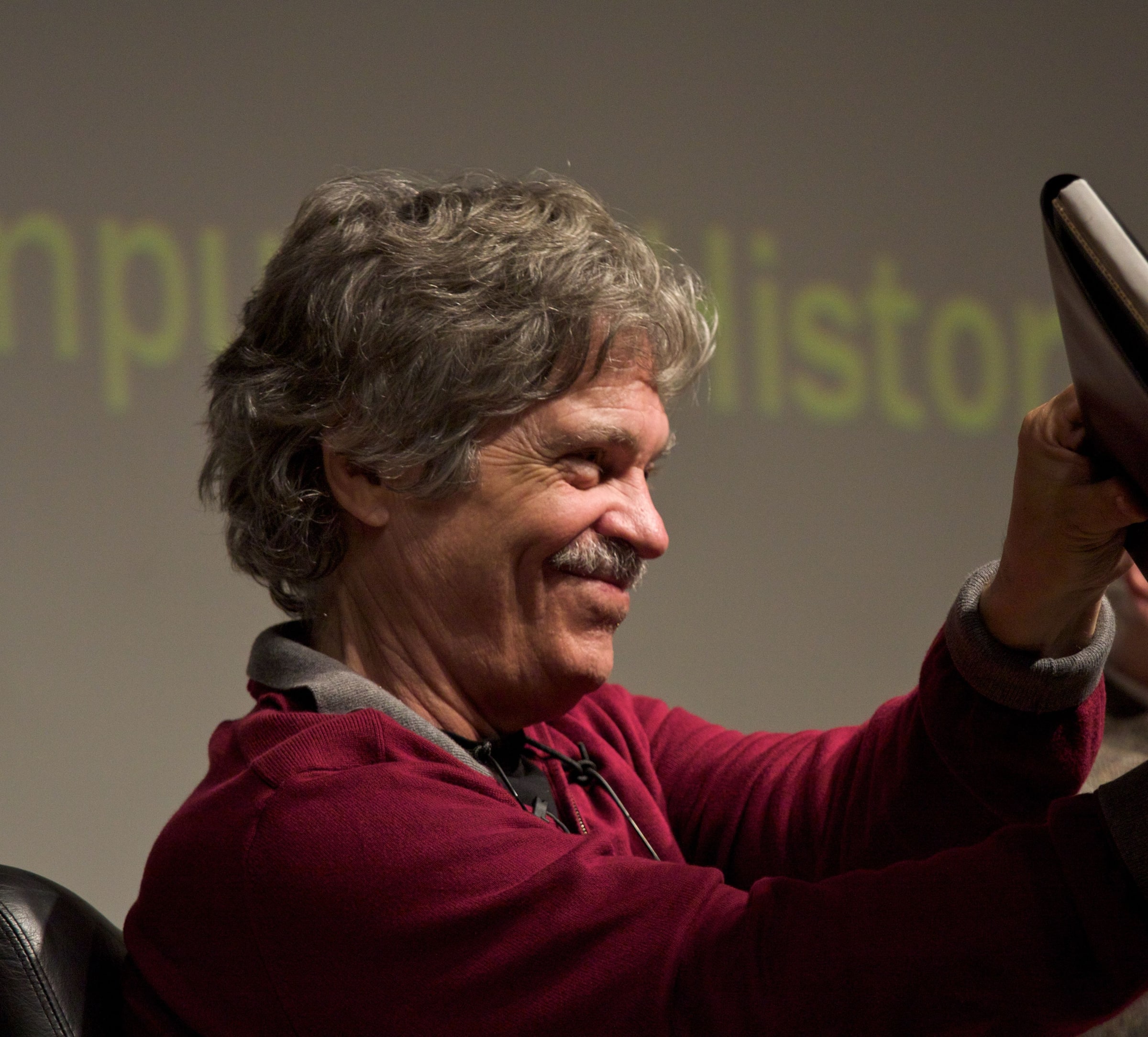
Alan Kay smiling as he lifts the Dynabook prototype at the Computer History Museum, November 2008.

Alan Kay

Smalltalk & Dynabook Instigator

In 1968 he mocked up a notebook computer for children, then helped build Smalltalk at Xerox PARC. He has spent decades asking why computers still make deep ideas hard.

Dynabook
Mocks up a personal computer for kids decades before the tablet.
Message Passing
Builds software from objects that only talk by sending messages.
Etoys
Lets kids script simulations by handling the objects on screen.
Alan Kay

Computer Scientist & Pioneer of Personal Dynamic Media

History of computing · Learning by making Start hereA Personal Computer for Children of All AgesStart here for the Dynabook in its educational setting: children read, draw, compose and simulate on one personal medium. The examples reveal that user authorship mattered more than the tablet-shaped mockup.Read the paper

Explore Alan Kay’s Dynabook, Smalltalk, and the computer as a medium for learning and expression.

1968

A computer to grow with

Kay’s Dynabook concept gave personal computing an educational ambition. The Computer History Museum connects his early mockup to the learning theories of Jerome Bruner and Seymour Papert.

The imagined machine would be something a person could learn through and create with. Its importance lay in the possibilities of the medium as much as its portable form.

1972

Children of all ages

A Personal Computer for Children of All Ages presents Dynabook through scenarios: learners read, draw, compose music, program simulations and change the representations they use. The proposed hardware keeps the medium personal, but authorship is the deeper design.

At Xerox PARC, the Learning Research Group made that ambition tangible through Smalltalk. Dan Ingalls implemented successive systems; Adele Goldberg developed educational work and documentation; Ted Kaehler, Diana Merry and many other colleagues shaped the environment.

A Personal Computer for Children of All AgesStart here for the Dynabook in its educational setting: children read, draw, compose and simulate on one personal medium. The examples reveal that user authorship mattered more than the tablet-shaped mockup.Read the paper
A Xerox Alto with its portrait display, keyboard, mouse and chorded keyset.
1990s

A medium that children can change

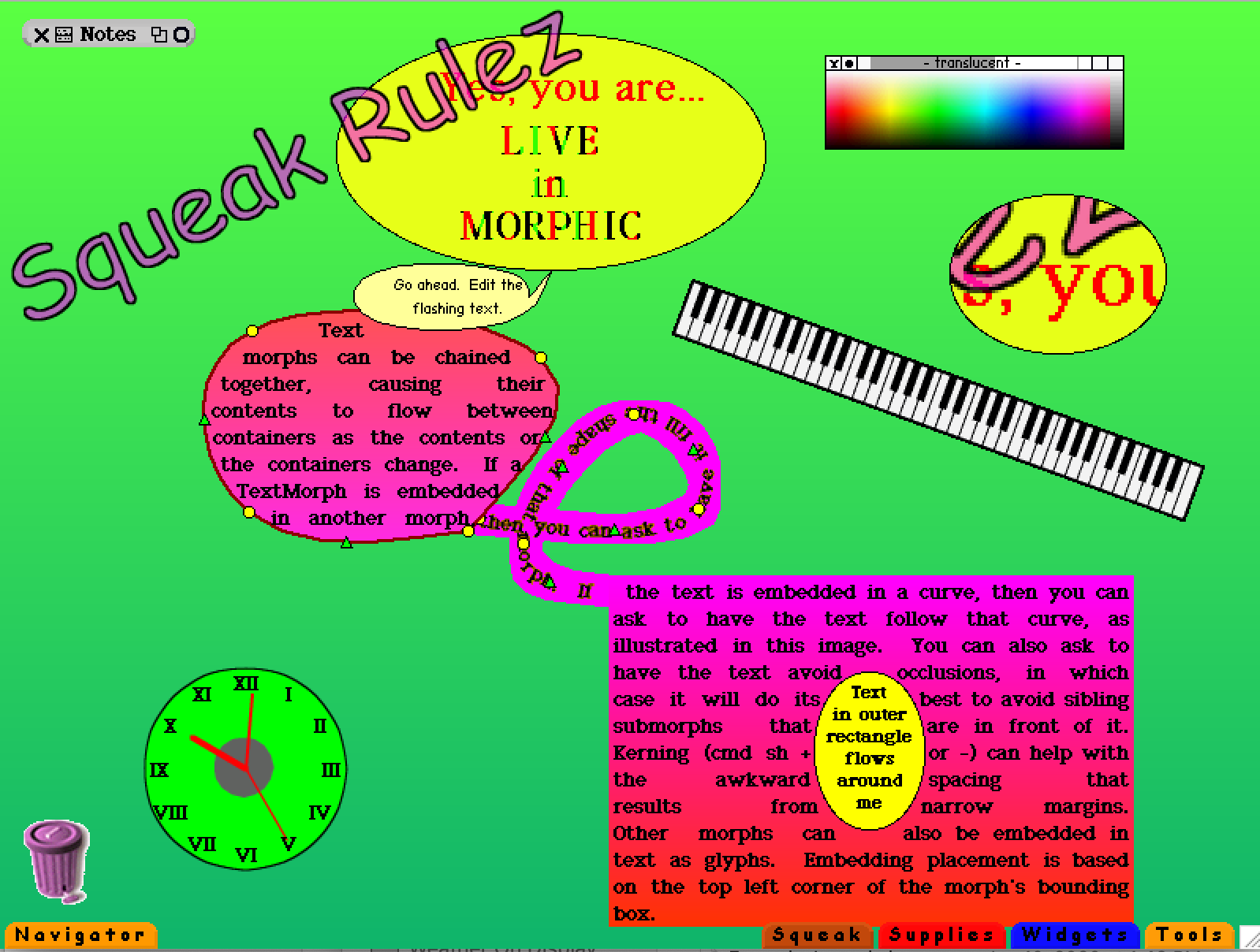
Squeak carried Smalltalk into an open, portable environment. Etoys brought scripting to pictures, simulations and other objects that learners could manipulate directly. These were collective projects: Kay’s educational vision met the engineering and teaching work of a much wider community.

The point was to make a model and test an idea. A child could explore movement, number or a story by changing the world on the screen, rather than merely consuming a finished presentation.

2001–2007

A new research home

Kay founded Viewpoints Research Institute to pursue education, expressive interfaces and more understandable computing systems. The work carried the Dynabook question into new language designs, children’s modelling environments and attempts to simplify whole software systems.

2008

Return to the questions

In his Computer History Museum oral history, Kay reconstructs the ARPA research culture, Dynabook’s influences and the many people behind Smalltalk. Because it is retrospective and strongly argued, it is most useful beside contemporary papers and collaborators’ accounts.

Read the early paper beside that recollection. What can today’s personal computers make easy to express, and what kinds of thought do they still make unnecessarily difficult?

Oral History of Alan KayKay looks back on the people and research that shaped his work.Read the transcript
Alan Kay holds a thin black Dynabook mockup in both hands.
2009–2018

Keep the research question open

Viewpoints continued its work until concluding operations in early 2018. Its papers and talks preserve an unfinished challenge: how might computers help people develop deeper fluency in difficult ideas, instead of simply accelerating familiar tasks?

Papers & recollections

Ideas & artefacts

Living systems

Talks & demonstrations