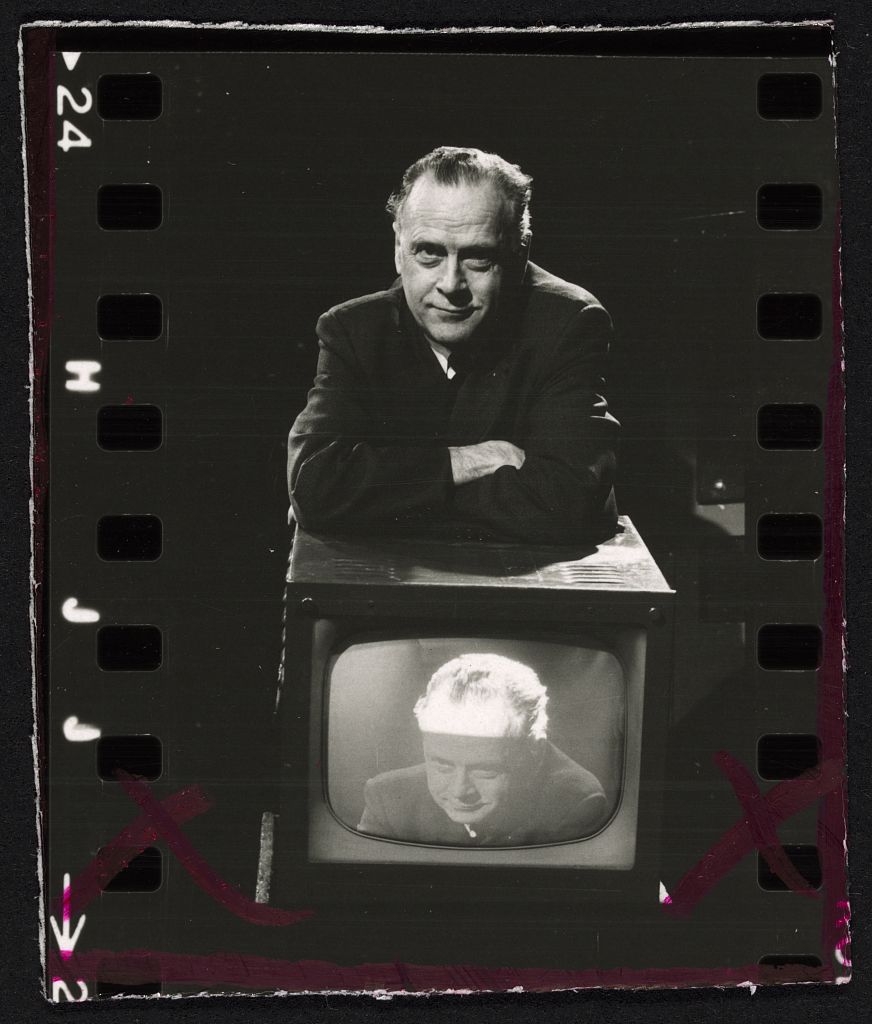
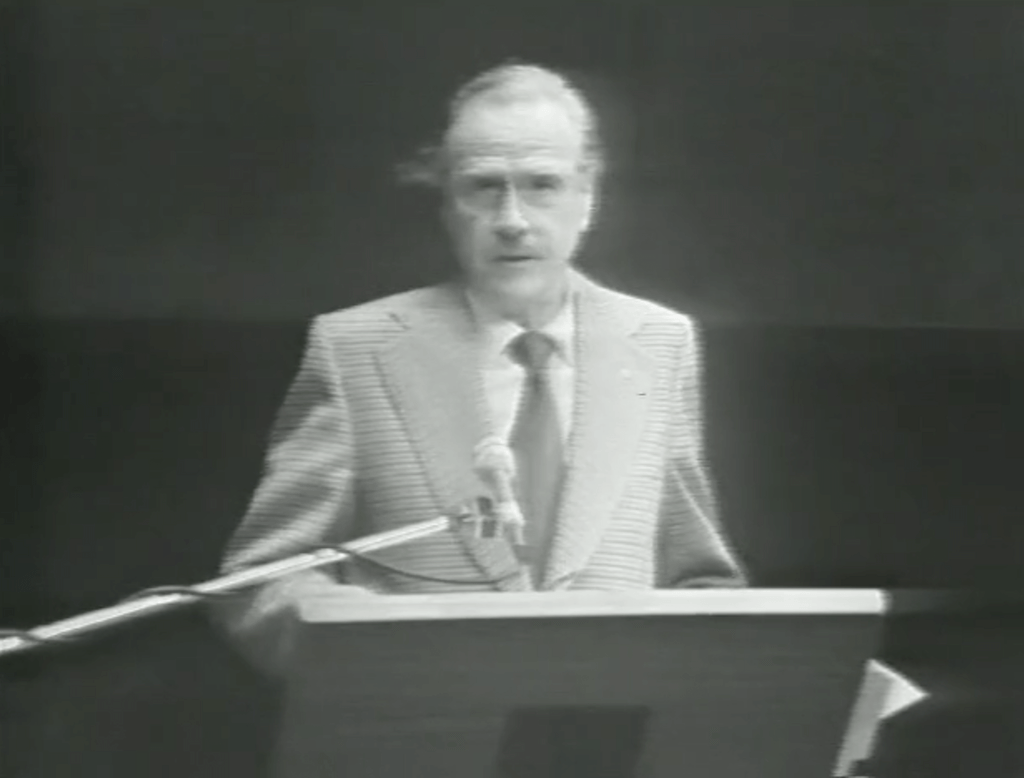
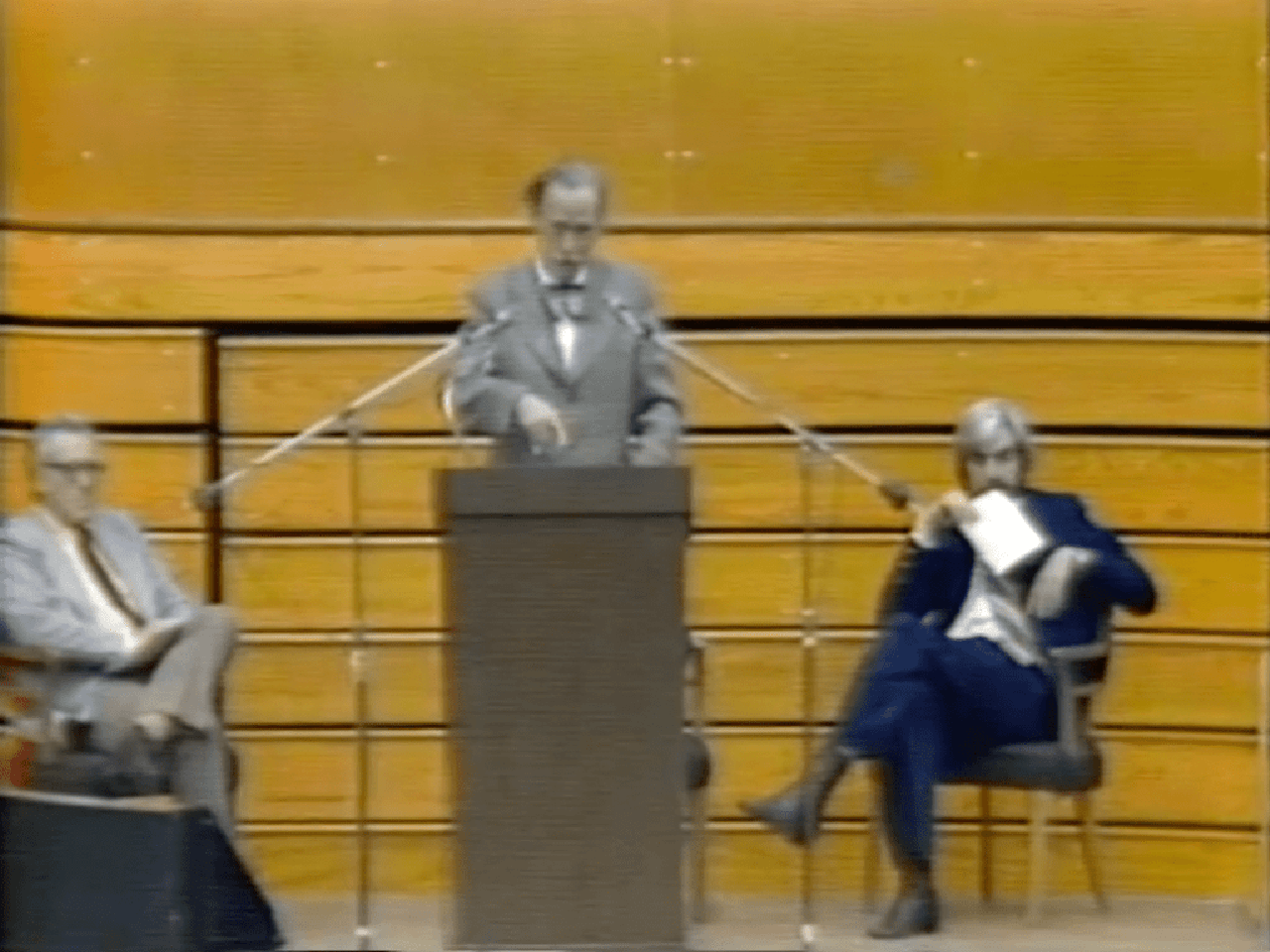
A Catholic English professor the counterculture adopted as its oracle. He said the medium is the message, then let a book called The Medium Is the Massage prove it.
Figure & Ground
Ignores what the TV says and studies what it does to you.
Massage
Lays out a book with Quentin Fiore so the page turns make his argument.
Probe
Fires aphorisms as experiments to test, not forecasts to believe.
Start with one familiar device and ask what habits it quietly reorganises. McLuhan’s books turn that question into a method, while his collaborations with designers, poets and researchers make the form of each argument part of its meaning.
1911
The reader before the theorist
Born in Edmonton, McLuhan studied English at Manitoba and Cambridge, where I. A. Richards and the practice of close reading taught him to examine effects before declaring meanings. He carried that training from poems to advertisements, radio and television.
His Catholic conversion in 1937 also matters to the record: the theorist adopted by the counterculture remained a religious literary scholar whose account of media was concerned with bodies, senses and moral consequence.
1946–1951
Reading the everyday
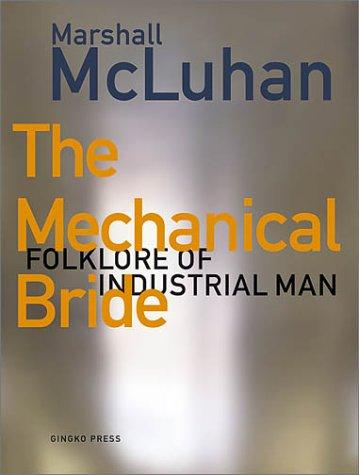
At St. Michael’s College in Toronto, he brought literary criticism to advertisements and popular entertainment. The Mechanical Bride arranged commercial images as exhibits to be inspected, asking readers to recognise the desires and social assumptions manufactured around commodities.
The Toronto seminars and the journal Explorations were collaborative laboratories. Anthropologist Edmund Carpenter and other participants helped move the inquiry across disciplines and beyond the image of a solitary oracle.
What changes when a society adopts print, radio or television? McLuhan treats media as extensions of human capacities, asking how each rearranges perception and social life.
Begin with a medium you use every day. His questions may make its familiar effects newly visible.
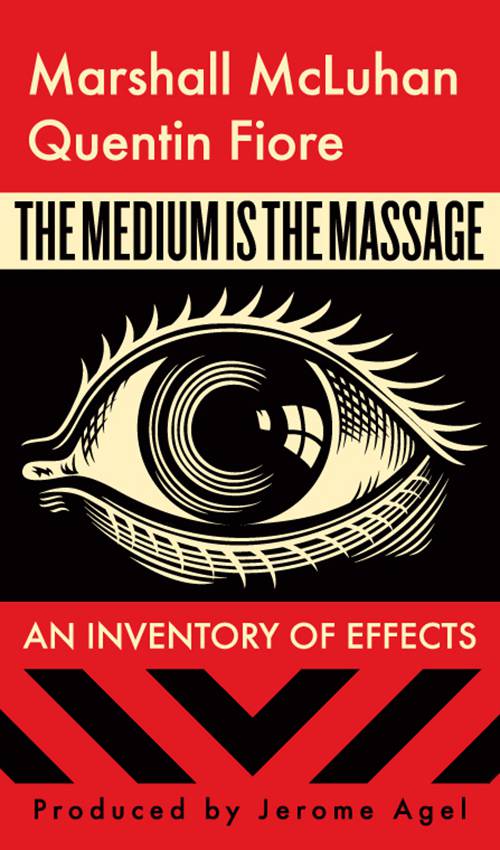
With designer Quentin Fiore and producer Jerome Agel, The Medium Is the Massage made typography, images and page turns part of the argument. The title’s apparent error became a compact demonstration: a medium handles, soothes and reshapes its audience while carrying content.
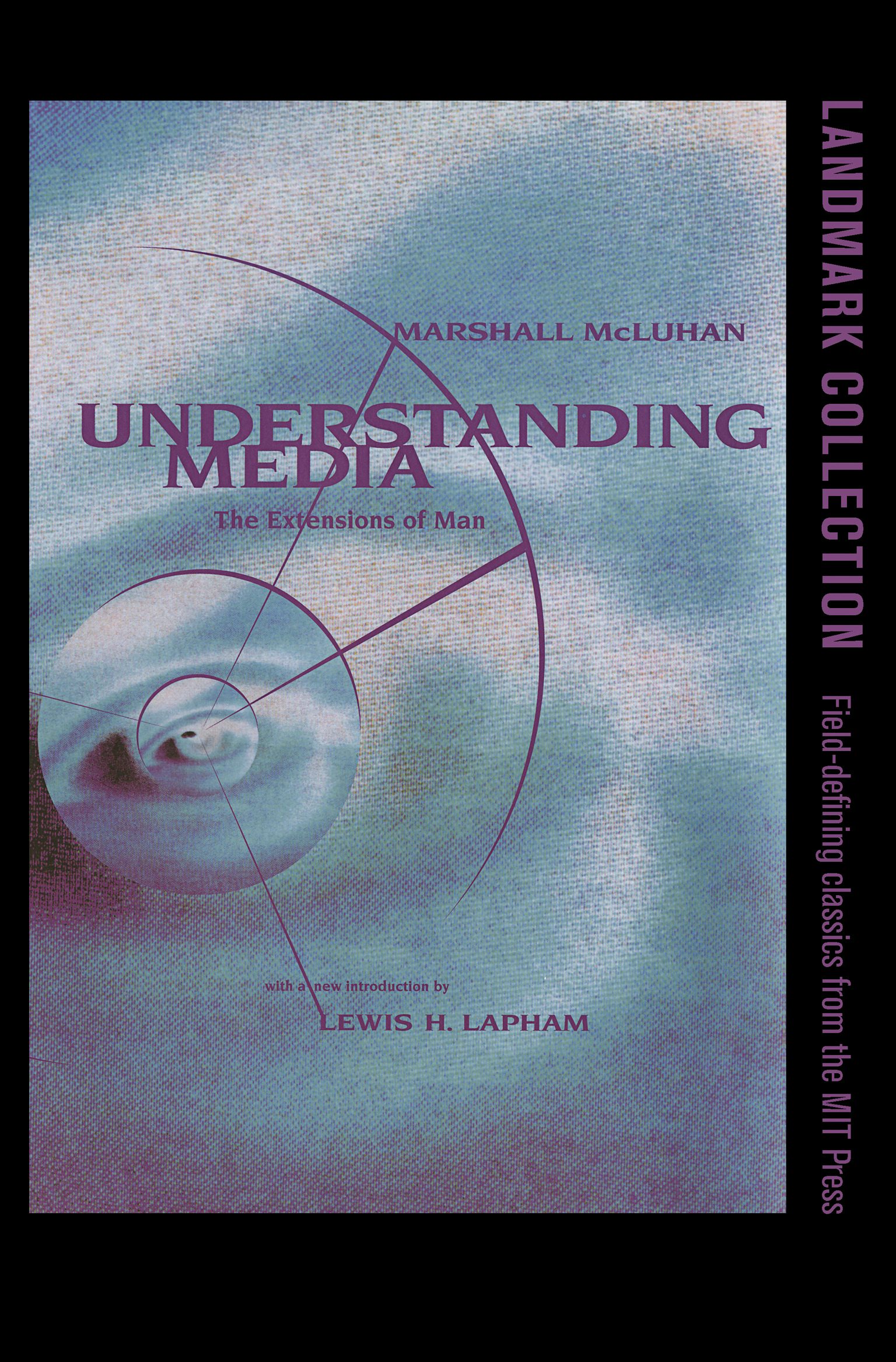
Read it beside Understanding Media rather than as a summary. Fiore’s visual sequence tests whether a book can enact McLuhan’s probes instead of merely explaining them.
A stroke in 1979 impaired McLuhan’s speech; he died in Toronto in 1980. Later books assembled with Eric McLuhan and Bruce Powers extended unfinished work, so their co-authorship and editorial history matter.
His aphorisms are invitations to investigate, not predictions that become true by repetition. The deeper route is to compare a probe with a concrete medium, its users and institutions, and ask where the claimed sensory or social change can actually be observed.
The Coach House28 May 2023
The Coach House at the University of Toronto, photographed on 28 May 2023. McLuhan worked and held seminars here from 1968 until 1980. The later banner belongs to the continuing centre, making the image a view of a living institution rather than his original office arrangement.
Source & credits
Rhododendrites · CC BY-SA 4.0 · https://creativecommons.org/licenses/by-sa/4.0 · Full frame; WebP conversion; resized.