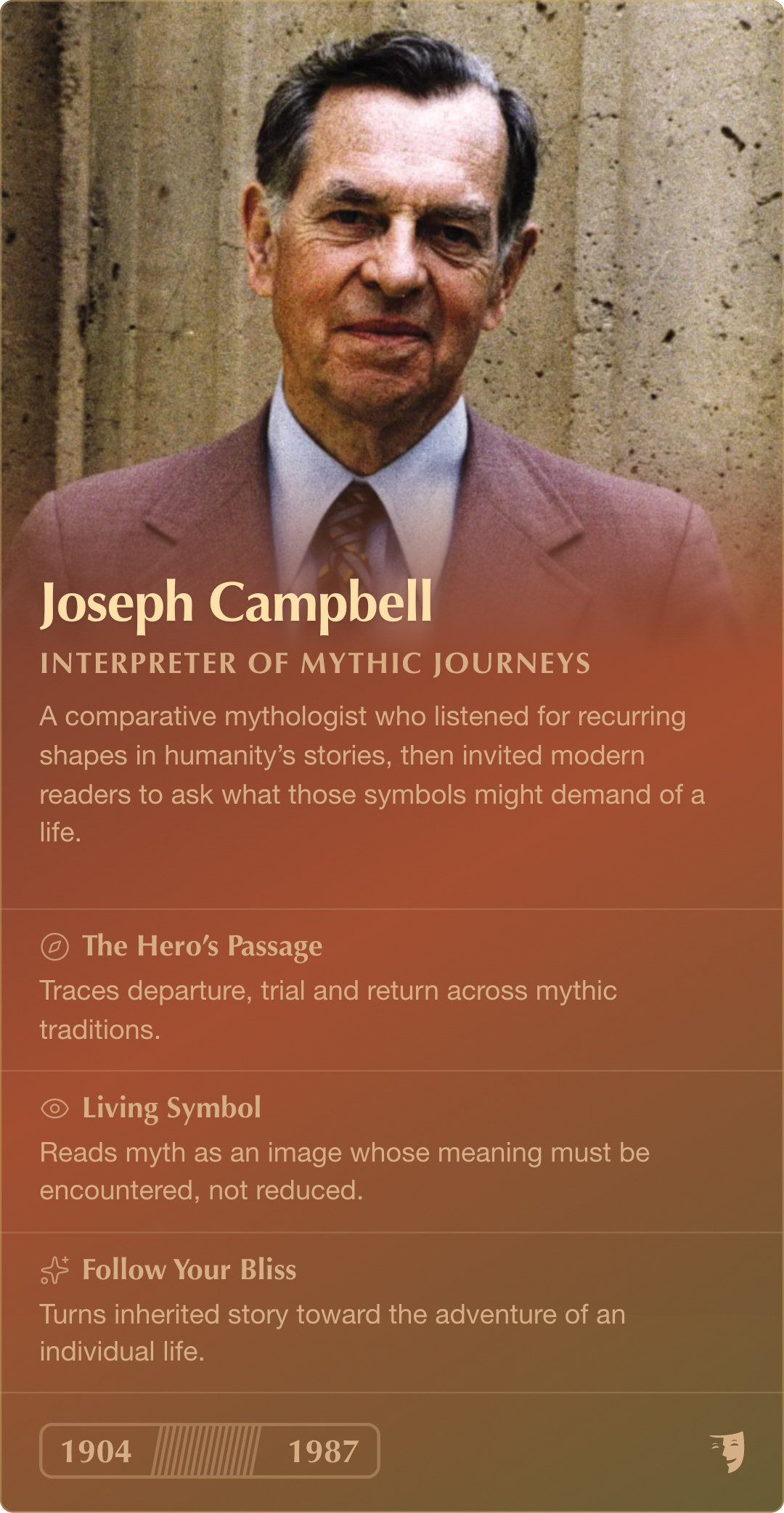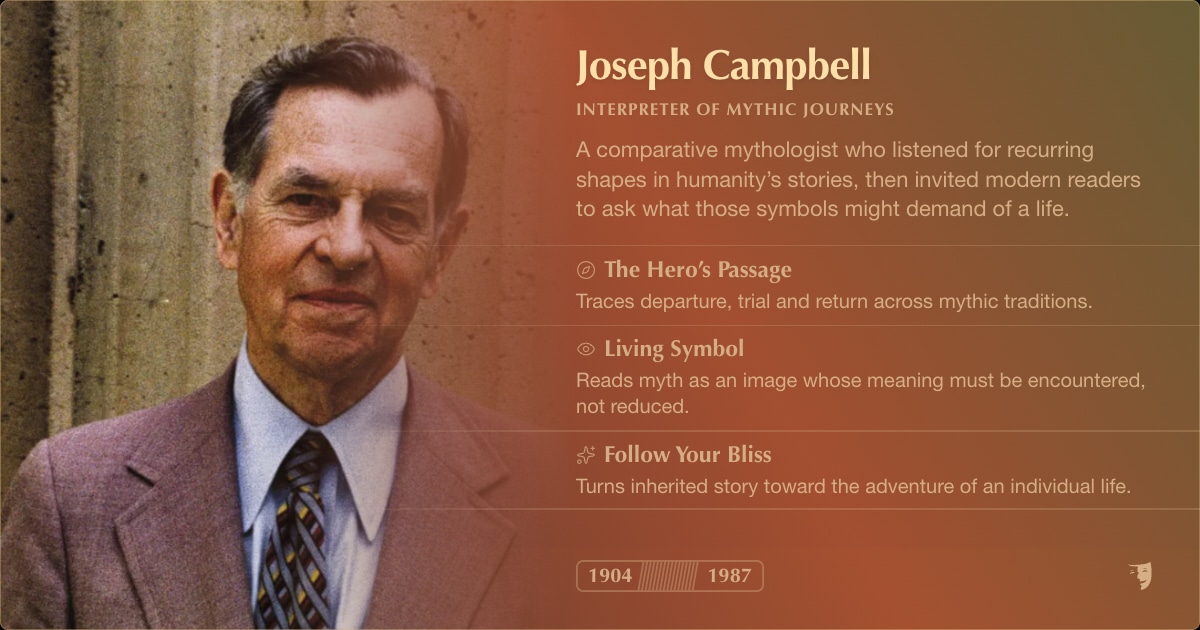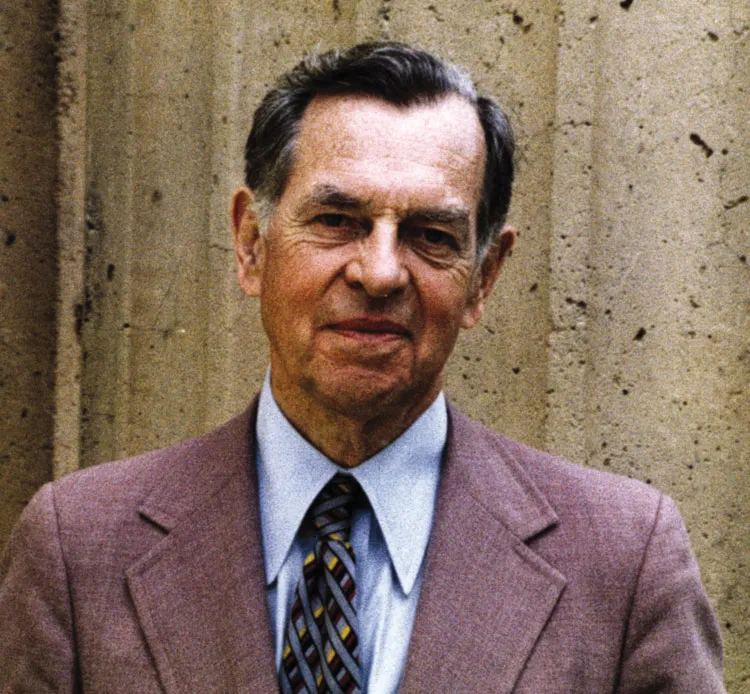
Portrait of Joseph Campbell.

Joseph Campbell

Interpreter of Mythic Journeys

A comparative mythologist who listened for recurring shapes in humanity’s stories, then invited modern readers to ask what those symbols might demand of a life.

The Hero’s Passage
Traces departure, trial and return across mythic traditions.
Living Symbol
Reads myth as an image whose meaning must be encountered, not reduced.
Follow Your Bliss
Turns inherited story toward the adventure of an individual life.
Joseph Campbell

Comparative Mythologist & Teacher

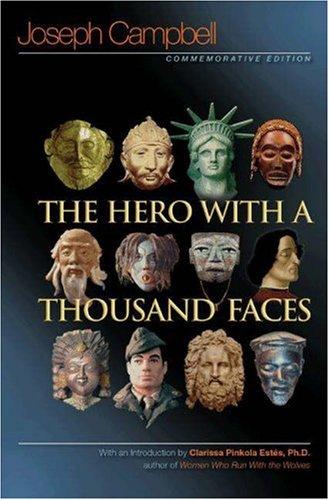
Start hereThe Hero with a Thousand FacesA comparative account of departure, ordeal and return that made Campbell’s “monomyth” widely known.Explore the edition
1904–1927

A reader crosses traditions

Born in New York, Campbell encountered Native American traditions as a child, studied medieval literature at Columbia, and continued in Paris and Munich. The breadth of those encounters became both the strength and the risk of his later comparative method.

1934

Teaching mythology as a living art

Campbell joined Sarah Lawrence College, where he taught literature for nearly four decades. With Henry Morton Robinson he published A Skeleton Key to Finnegans Wake, signalling how seriously he took modern art as a continuation of mythic invention.

1959–1968

Four masks, many worlds

The four-volume Masks of God expanded the inquiry across ritual, religion, art and literature. Campbell sought common human questions without treating myths as merely interchangeable plots.

1988

A conversation reaches millions

Campbell died in 1987. The following year, his conversations with Bill Moyers in The Power of Myth brought his voice and storytelling to a vast television audience.

Principal works

In his own voice