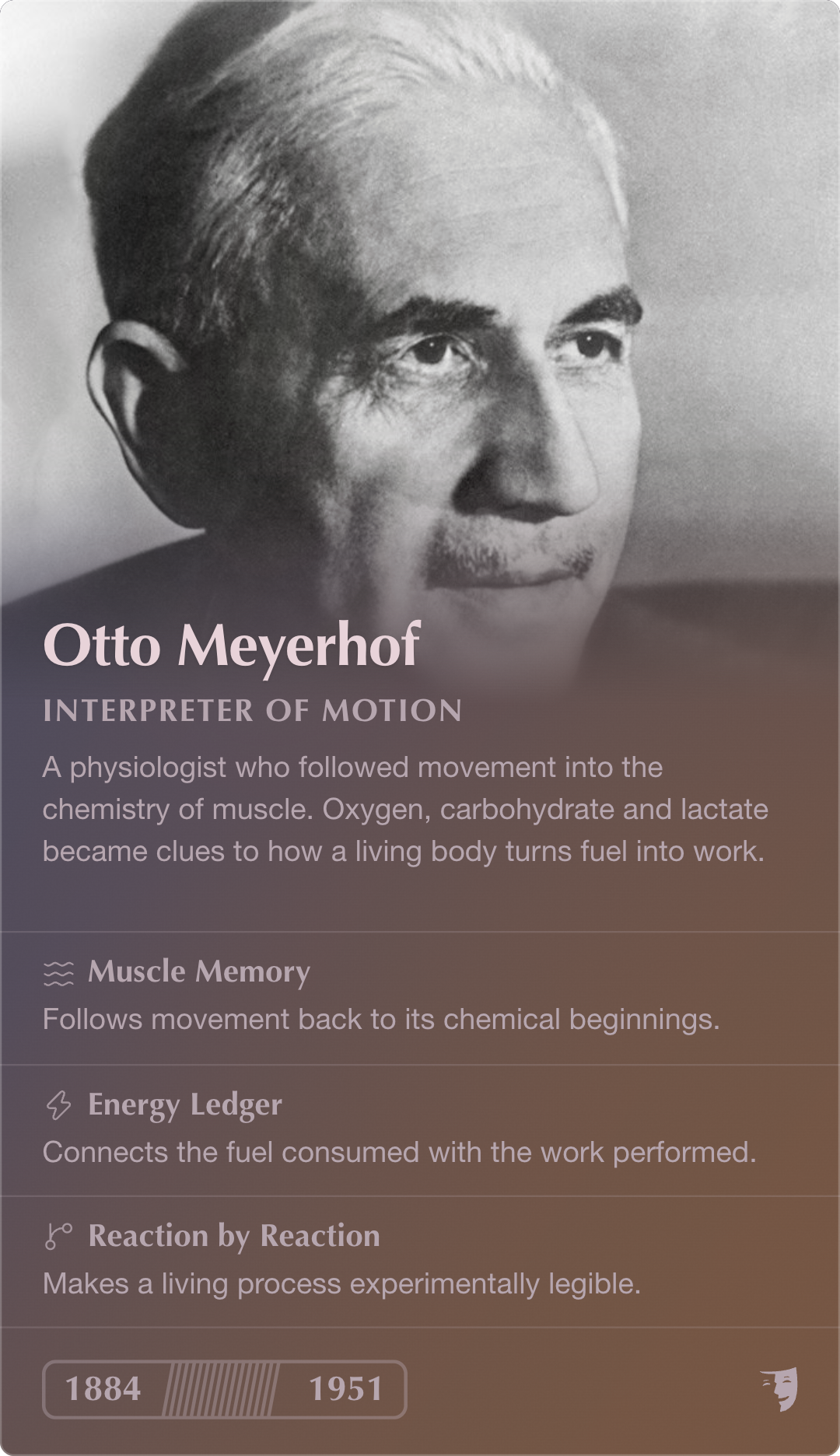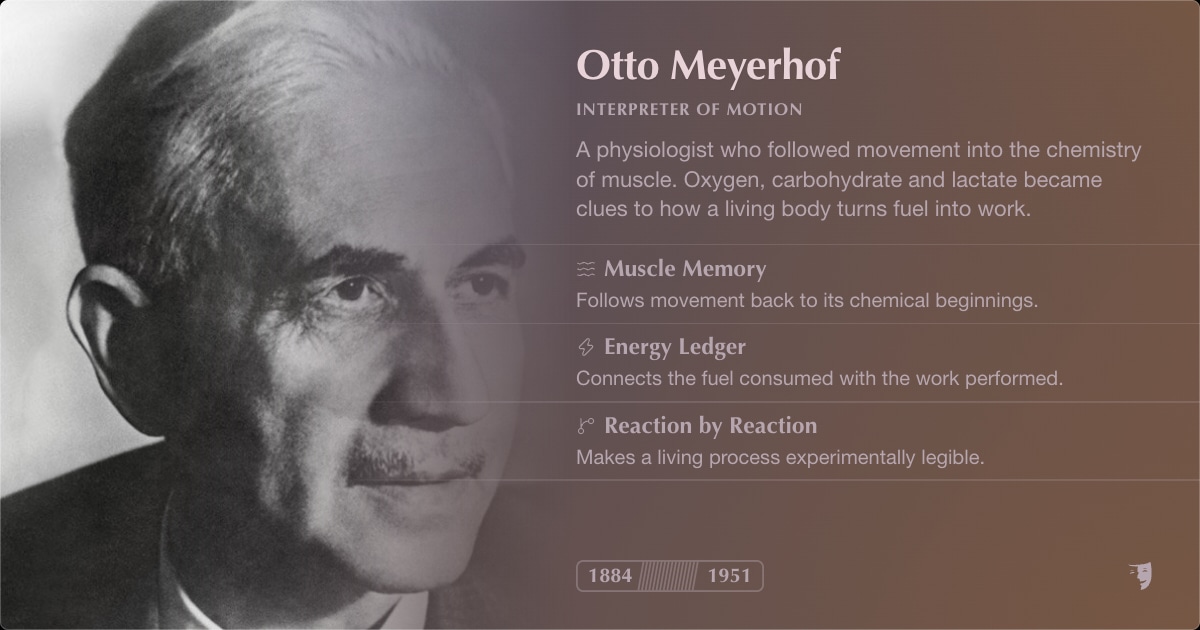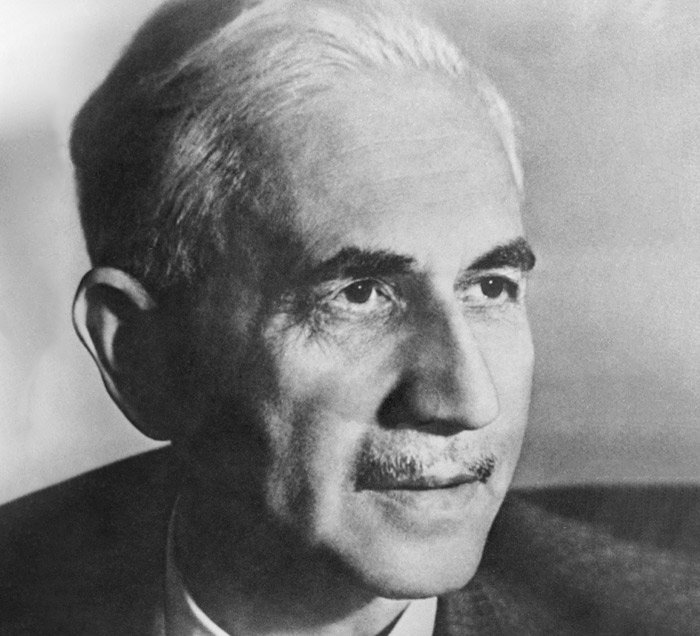
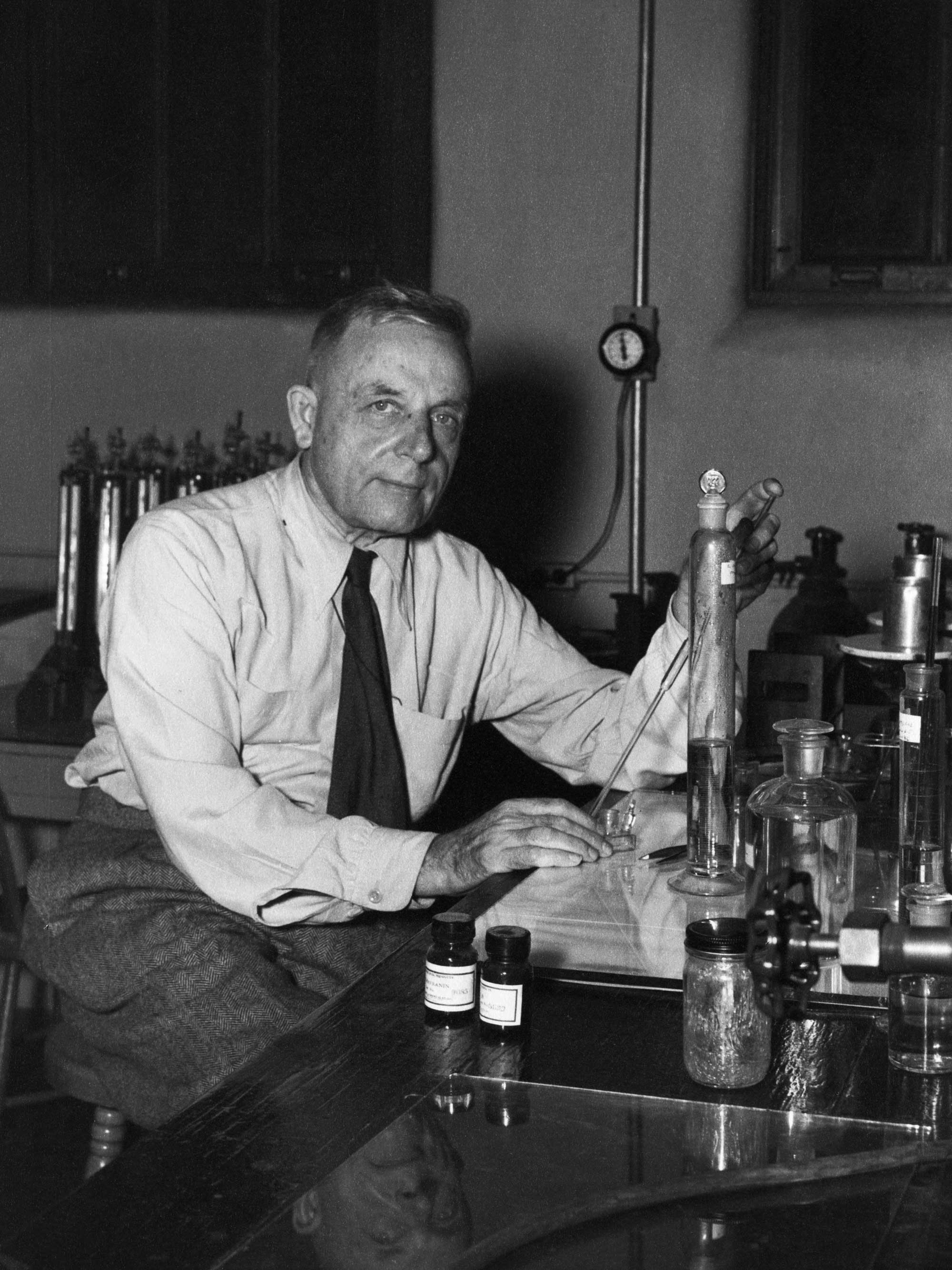
Portrait of Otto Meyerhof.

Otto Meyerhof

Interpreter of Motion

A physiologist who followed movement into the chemistry of muscle. Oxygen, carbohydrate and lactate became clues to how a living body turns fuel into work.

Muscle Memory
Follows movement back to its chemical beginnings.
Energy Ledger
Connects the fuel consumed with the work performed.
Reaction by Reaction
Makes a living process experimentally legible.
Otto Meyerhof

Interpreter of Motion

The Birth of Bioenergetics · The breathing cell
1884–1922

The chemistry of movement

Meyerhof made the working muscle a way into metabolism. His experiments connected oxygen consumption with the breakdown and recovery of carbohydrate in muscle.

He shared the 1922 Nobel Prize with A. V. Hill. Hill approached muscular work through heat; Meyerhof pursued its chemical transformations.

1923

An account of energy

In his Nobel lecture, delivered in 1923, Meyerhof assembled experiments on lactate, oxygen and muscular activity into an account of energy conversion. Read it as a working scientific argument, including the questions later research would revise.

1920s–1930s

A laboratory becomes a lineage

The Physiology Institute brought together researchers who would help establish modern biochemistry. Fritz Lipmann was among the scientists who worked with Meyerhof. The story of cellular energy emerges here as a shared experimental undertaking.