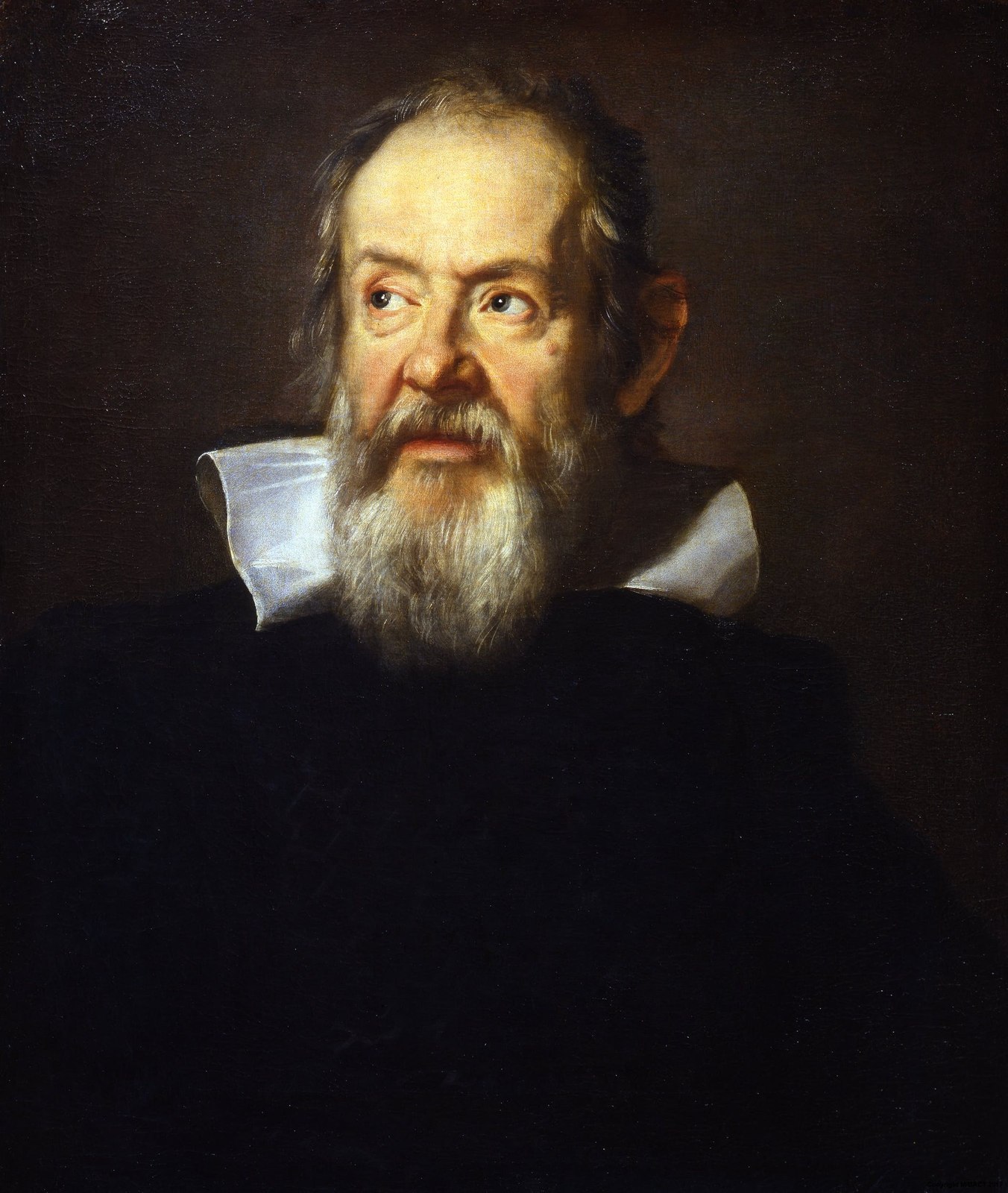
Late sixteenth-century Toruń portrait traditionally identified as Nicolaus Copernicus, wearing a red robe.

Nicolaus Copernicus

Rearranger of the Heavens

A canon and mathematician asked what the sky would look like if Earth, too, moved.

Moving Earth
Makes Earth’s rotation explain the daily turning of the sky.
Orbital Order
Places the planets in a coherent order around the Sun.
Patient Reckoning
Tests an astronomical arrangement against inherited observations.

Nicolaus Copernicus

Astronomer, Canon & Administrator

Start hereOn the Revolutions: selections in EnglishBegin with the dedication and Book I’s account of Earth’s movement. This selection pairs the historical argument with an English translation; the complete Latin edition remains alongside it.Read translated selections

Copernicus changed the question an astronomer could ask. Instead of assuming a still Earth and adding motions to explain what observers saw, he tried moving the observer. The result was a demanding mathematical proposal, made in a cathedral chapter and circulated through students, printers and critics.

1473–1503

A scholar formed across borders

Born in Toruń in Royal Prussia, Copernicus studied at Kraków, then in Italy at Bologna, Padua and Ferrara. Mathematics and astronomy travelled with law and medicine in this education. His uncle Lucas Watzenrode, bishop of Warmia, helped secure his position as a cathedral canon; the office supplied income and obligations rather than a modern research appointment.

At Bologna he worked in the orbit of astronomer Domenico Maria Novara, observing and questioning inherited planetary schemes. The problem was not simply that Ptolemy put Earth at the centre. Astronomers already used elaborate geometric devices to fit changing planetary brightness and retrograde motion, and Copernicus wanted an ordering that made those appearances hang together.
c. 1510–1514

The small commentary

Copernicus set down the main postulates of a Sun-centred arrangement in the manuscript later called the Commentariolus. Earth rotates daily, circles the Sun yearly, and carries the Moon with it. A planet can seem to reverse against the stars when Earth overtakes it; this is an effect of relative positions, not a planet literally turning backward.

The short text circulated in manuscript among a small learned network. Its reach matters: the proposal was neither a sudden deathbed revelation nor a printed revolution in one step. Copernicus still used circles and geometrical constructions, and his system did not yet deliver the simple ellipses Kepler would later find.

Commentariolus (Little Commentary)A concise statement of the moving-Earth proposal before the major book; the linked biography discusses the manuscript rather than presenting a facsimile.Explore manuscript context
1516–1530s

A chapter’s work and a planet’s path

Copernicus administered Warmian estates, practised medicine for chapter colleagues and served during regional conflict. He also composed arguments on monetary reform. These duties help explain the long gestation of his astronomical book without turning his biography into a tale of a lone scholar hiding from the world.

In De revolutionibus he retained mathematical circles and epicycles, but changed the reference frame. The sequence Mercury, Venus, Earth, Mars, Jupiter and Saturn explains why Mercury and Venus stay near the Sun in our sky. The varying apparent speed of outer planets follows from Earth’s own movement. His tables and geometry gave readers something to calculate and contest.

Autograph of De revolutionibusThe manuscript’s later route through Rheticus and other scholars is part of the book’s history.Trace the manuscript
1539–1543

Rheticus carries the argument to print

Georg Joachim Rheticus arrived in 1539, studied the manuscript, and published the Narratio prima in 1540, the first printed explanation of the theory. He urged publication and initially oversaw the printing in Nuremberg. When he left, Andreas Osiander took over and inserted an unsigned preface treating astronomical hypotheses as calculation rather than claims about physical reality. It should not be confused with Copernicus’s own dedication and argument.

De revolutionibus appeared in 1543, the year Copernicus died. Read Book I as an act of rearrangement: a moving Earth makes the daily sky and planetary ordering intelligible, while leaving hard observational and physical questions open. The manuscript and early editions show a work made through intellectual and material collaboration.

Narratio primaRead this as Rheticus’s advocacy and explanation, not as a book authored by Copernicus.Explore museum copy
1543 onward

A proposal others had to remake

The book offered a strong mathematical alternative, not immediate proof that Earth moved. The absence of detectable stellar parallax and the physics of a moving Earth were serious questions for contemporaries. Tycho Brahe’s later geoheliocentric system could accommodate many observed appearances while keeping Earth still.

Kepler replaced circular planetary routes with ellipses, Galileo supplied telescopic evidence against old celestial assumptions, and Newton later explained orbital motion dynamically. Their work was not already contained in Copernicus’s pages. His lasting invitation was to let a changed vantage point reorganise a stubborn problem.

On the Revolutions of the Heavenly SpheresBegin with Book I: the apparent daily turning of the sky can be described as Earth’s rotation. The scan is a historical document, not a modern translation.View historical edition