Kepler wanted mathematical harmony in the heavens, yet he repeatedly let awkward numbers correct his preferred shapes. The orbit of Mars became the test case: a tiny mismatch with Tycho Brahe’s observations led him away from perfect circles and toward an ellipse.
1571–1596
Theological training, astronomical appetite
Kepler grew up in Württemberg and studied at Tübingen, preparing for Lutheran ministry. Michael Maestlin taught him astronomy and introduced the Copernican arrangement. Kepler’s religious commitments and mathematical curiosity were intertwined, although confessional conflict repeatedly disrupted his employment.
At Graz he taught mathematics and published Mysterium cosmographicum in 1596. It placed the five regular solids between planetary spheres to explain their spacing. That construction did not survive as a physical account, but it brought him to the attention of Tycho Brahe and revealed the question that drove his later work: what mathematical order could the planets actually sustain?
1600–1604
Tycho’s numbers and a difficult inheritance
Religious pressure forced Kepler from Graz. In Prague he joined Tycho Brahe, whose carefully measured observations were unmatched in scope. Tycho assigned him the difficult case of Mars; after Tycho’s death in 1601, Kepler became imperial mathematician and negotiated access to the observational legacy. The data were Tycho’s work, and Kepler’s mathematical treatment depended on them.
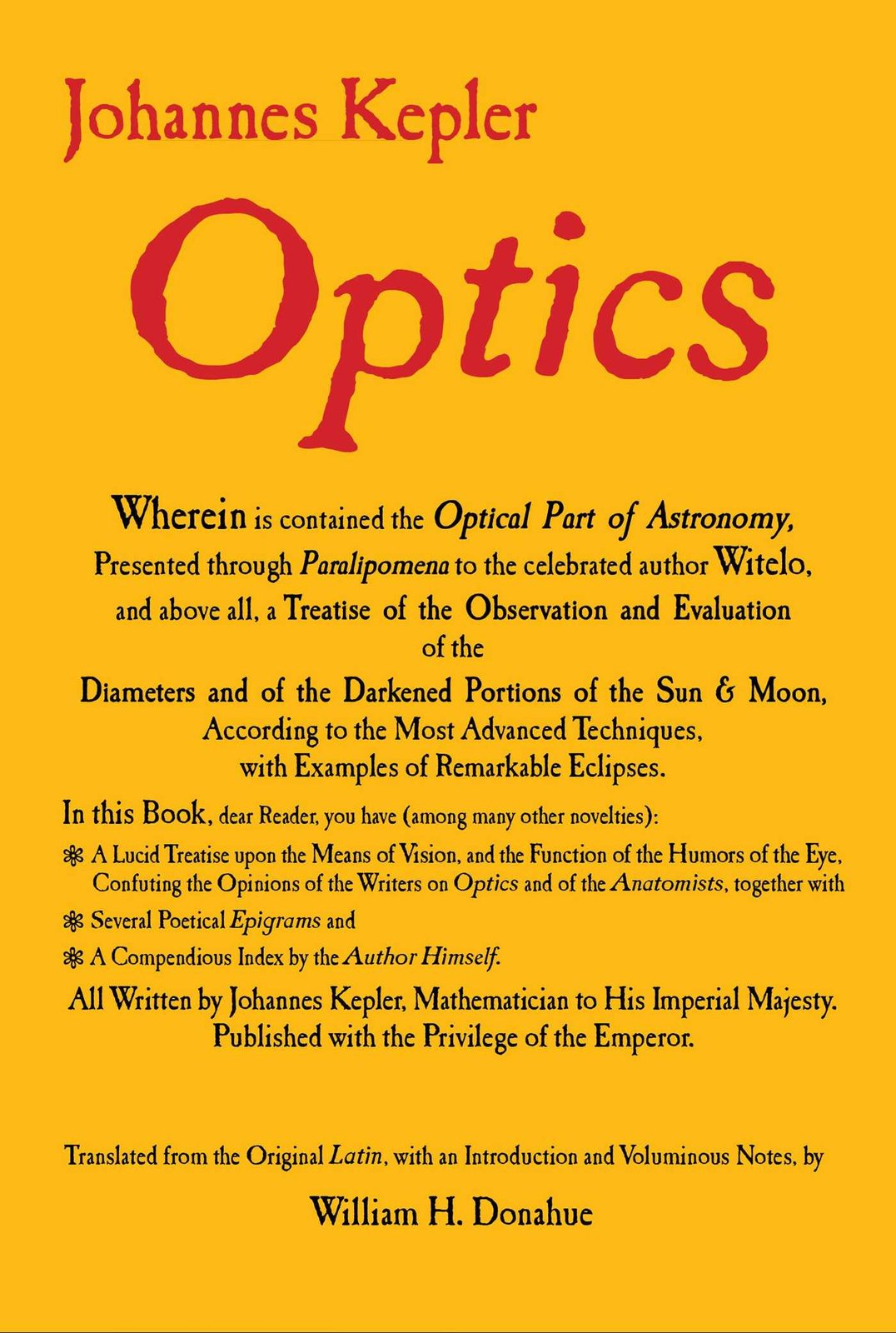
Kepler also studied optics. In Astronomiae pars optica he examined how light forms images and understood the eye as receiving an inverted image on the retina. This work was part of a practical astronomer’s need to know what observation itself could show.
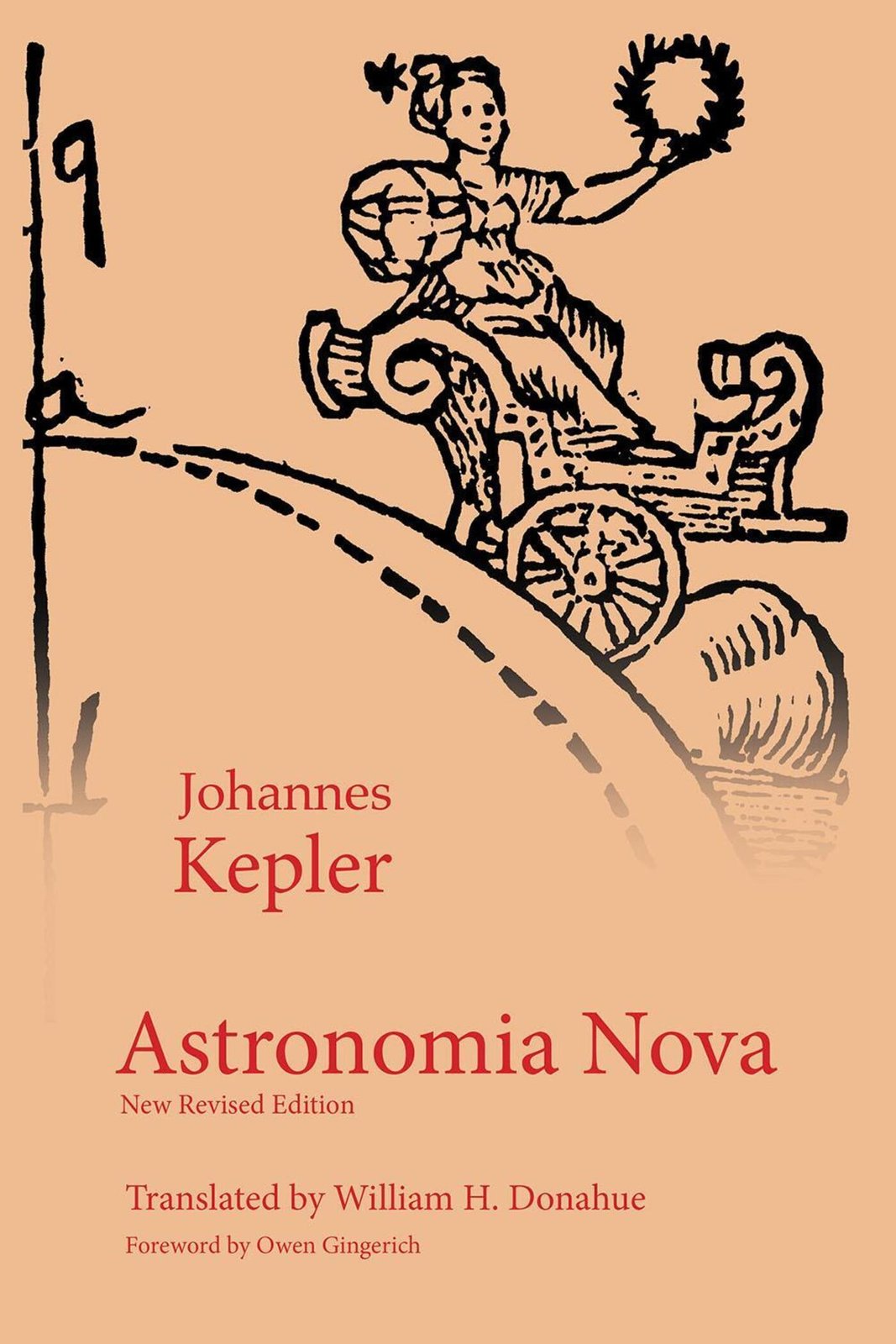
Kepler tried circular models of Mars and found a residual difference of about eight arcminutes against Tycho’s measurements. He treated that small discrepancy as evidence to answer, not noise to set aside. Astronomia nova traces the long search, including discarded attempts, and replaces the circle with an ellipse with the Sun at one focus.
The book also gives the area law: an imaginary line from Sun to planet sweeps equal areas in equal times, so a planet moves faster when nearer the Sun. These are descriptions of observed motion and part of Kepler’s attempt at a physical cause, not Newton’s later theory of gravity in disguise.
Kepler corresponded with Galileo about the telescope and wrote on the optics of lenses. Meanwhile court service, moves and the Thirty Years’ War made research precarious. His mother Katharina faced a witchcraft accusation; Kepler undertook a sustained legal defence, a reminder that his mathematical life unfolded amid intimate danger and institutional conflict.
In Harmonices mundi he found a system-wide numerical relation: the square of a planet’s orbital period varies with the cube of its average distance from the Sun. He embedded it in a much broader search for geometric and musical harmony. The law endured, while many of the surrounding analogies did not.
The Rudolphine Tables of 1627 converted the observational inheritance and Kepler’s planetary theory into predictions of celestial positions. They were a working tool, not merely a summary of his ideas. Their accuracy helped later astronomers test what an elliptical astronomy could do.
Kepler never separated astronomy from theology, astrology and court patronage in the neat way a modern disciplinary history might wish. His example is more interesting with those commitments visible: he pursued an ordered cosmos and allowed measured positions to challenge his own most beautiful conjectures.