Galileo’s telescope did not make him the first person to look upward. It gave him an instrument whose repeated sights could challenge what a perfect, unchanging heaven was supposed to be. He then made motion on Earth a second field of argument, combining measurement, geometry and prose that others could answer.
1564–1592
Mathematics in a musical household
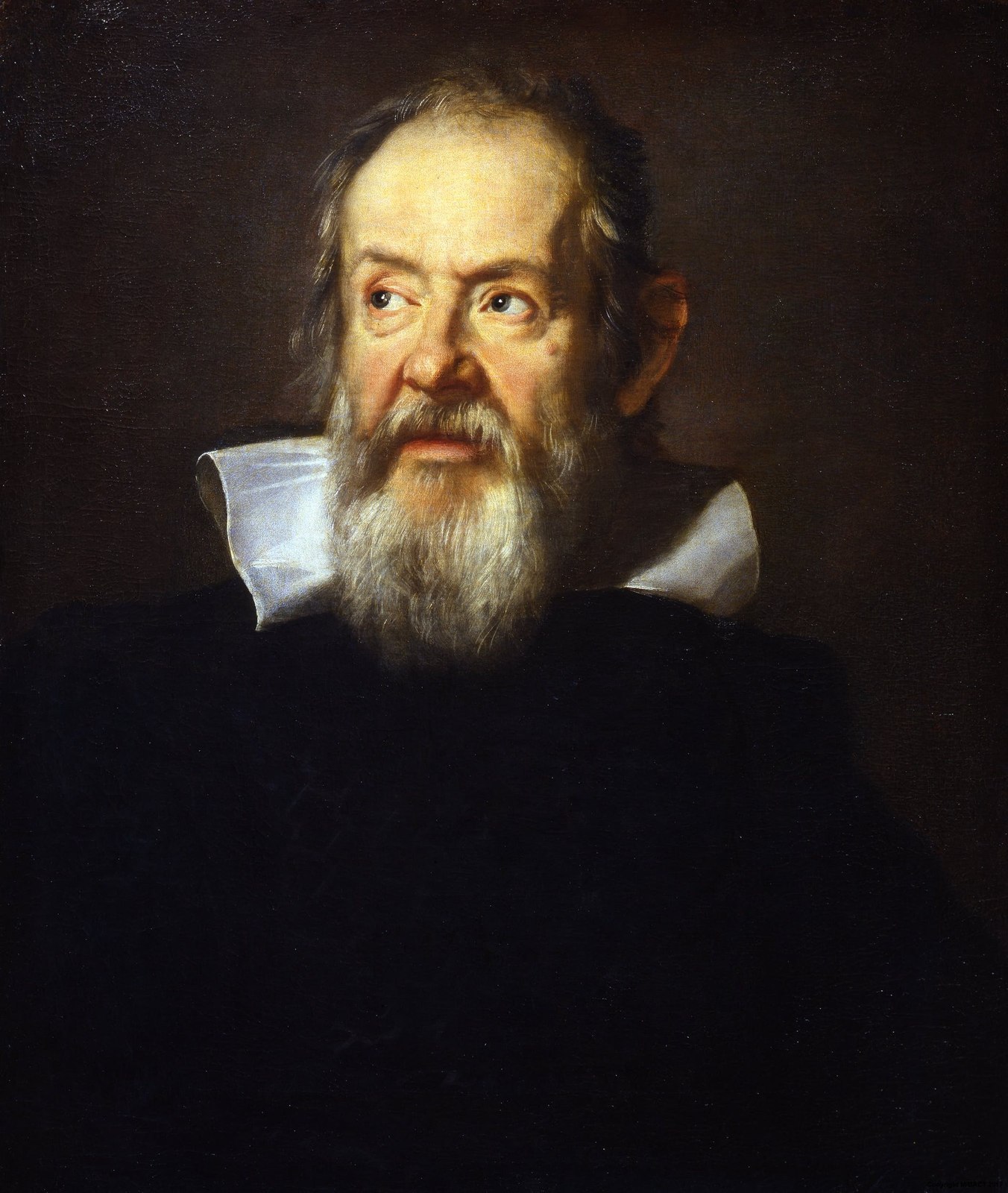
Galileo was born in Pisa; his father Vincenzo was a musician who investigated tuning and proportion. Galileo began university study in medicine but turned toward mathematics, taught in Pisa and questioned standard accounts of falling bodies. The famous demonstration from the Leaning Tower is not needed to see his real practice: geometrical argument and experiments developed over years.
In 1592 he took a mathematics post at Padua. Teaching, instrument making and private pupils supported his household. His geometric and military compass answered practical problems of measurement, and his workshop linked him to artisans as well as university readers.
1609–1610
A telescope becomes a research instrument
Hearing of the Dutch spyglass, Galileo improved its magnification and trained it on the Moon, the Milky Way and Jupiter. Mountains and shadows made the Moon look less like a flawless sphere. Four points of light near Jupiter changed position night after night; mapping their pattern showed bodies orbiting something other than Earth.
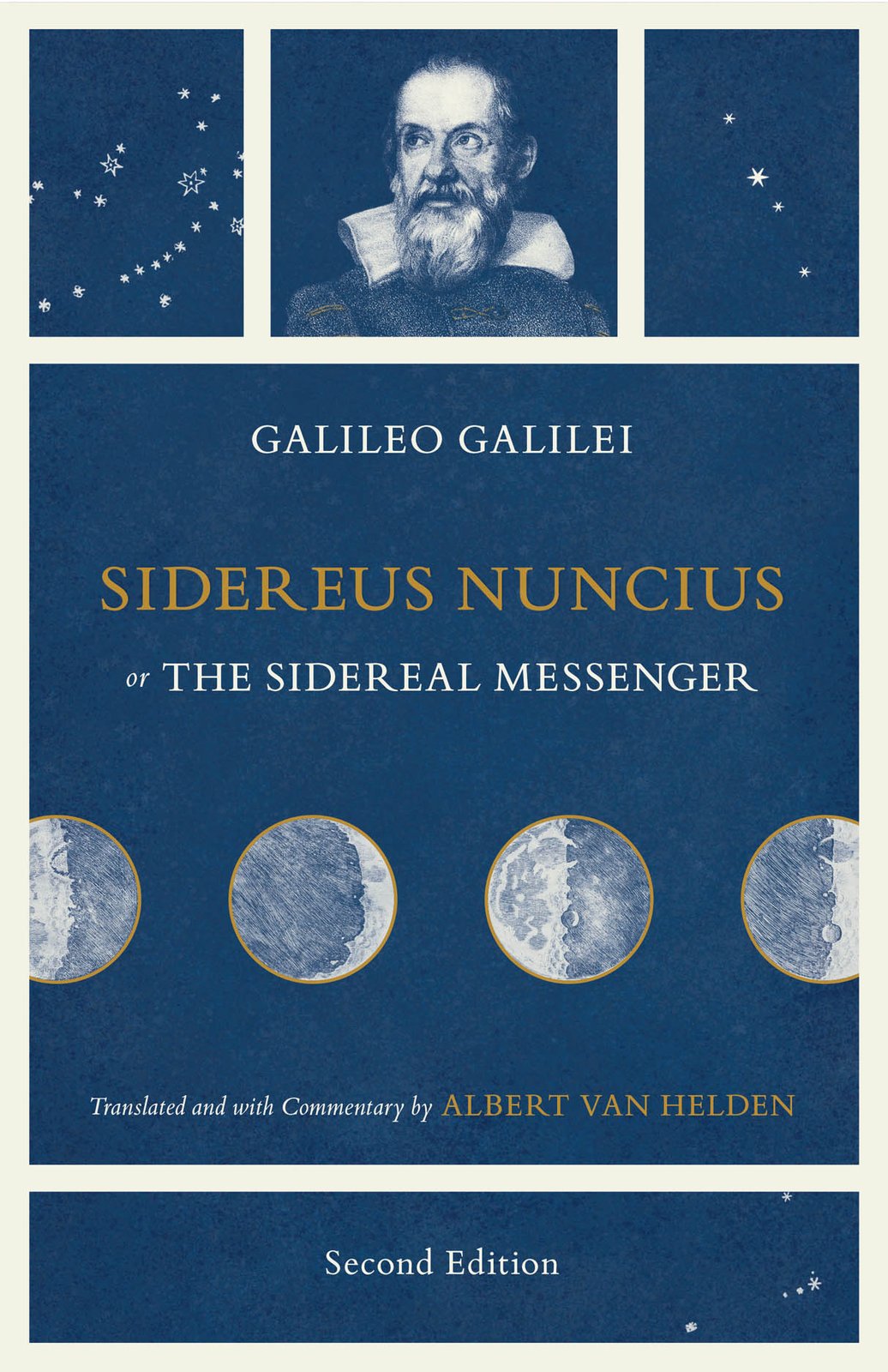
Sidereus Nuncius published the observations in 1610, with dated sequences and engravings. The instrument required skill to make and use, and others needed to repeat the sights. Galileo named the Jovian moons for the Medici in a bid for court patronage. The book records both a scientific argument and the social means by which it travelled.
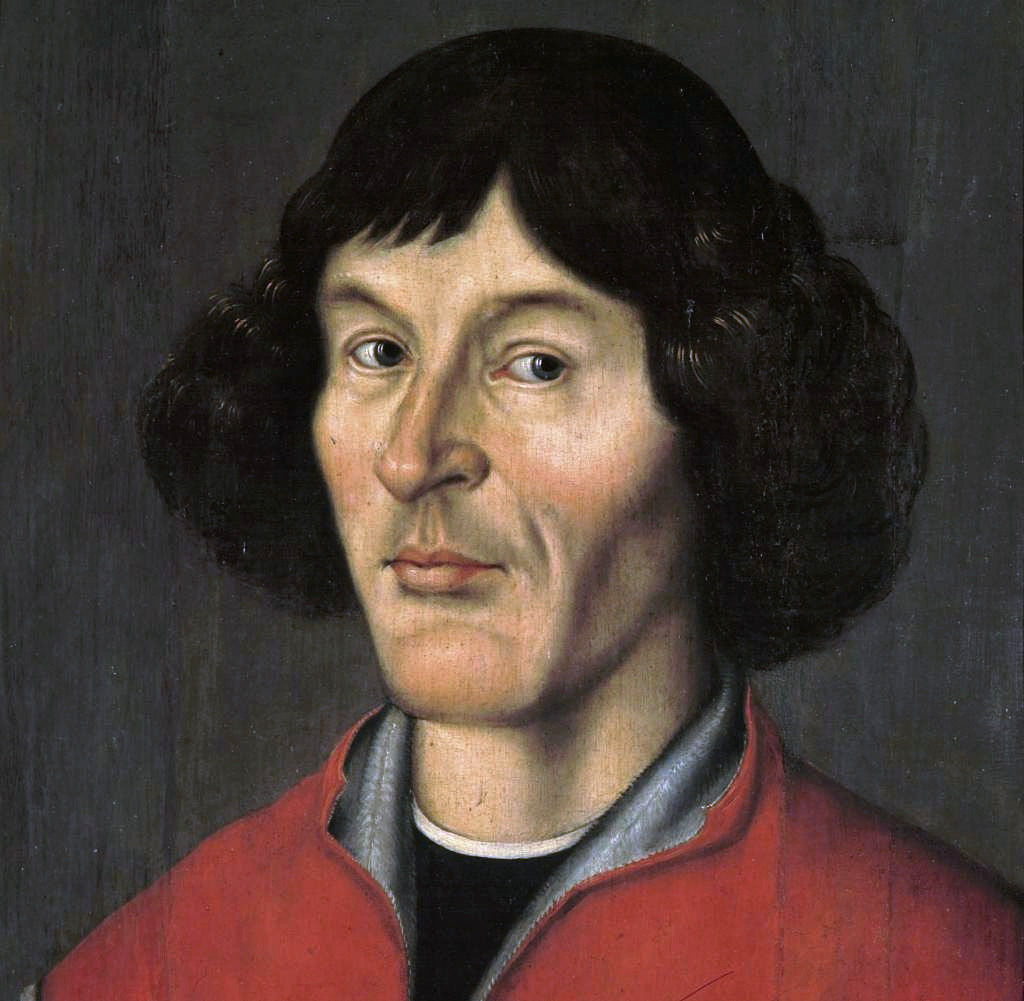
Galileo’s observations of Venus’s phases and sunspots further weakened a simple Ptolemaic cosmos. They did not by themselves uniquely prove Copernicus: a Tychonic arrangement could also account for Venus’s phases. The question of Earth’s motion remained bound to mechanics, astronomy and the interpretation of scripture.
In the Letter to the Grand Duchess Christina, Galileo argued that passages of scripture should not be used to override demonstrated natural knowledge. He worked within a Catholic intellectual world while challenging authorities inside it. The 1616 injunction against defending heliocentrism as physical truth constrained how he could write.
The Dialogue Concerning the Two Chief World Systems stages three speakers across four days. Its form lets arguments about moving Earth meet objections in the reader’s hearing. Galileo’s proposed tidal proof, however, was wrong; tides are not generated by the combined daily and annual motions he described.
After publication in 1632, the Roman Inquisition tried Galileo and in 1633 found him vehemently suspect of heresy. He recanted and lived under house arrest. The trial cannot be reduced to a timeless duel between science and religion; patronage, censorship, prior instructions and the book’s claims all belong to the record.
From house arrest Galileo continued work on mechanics, aided by correspondents and pupils including Vincenzo Viviani and Evangelista Torricelli. Two New Sciences, printed in Leiden in 1638, treats the strength of materials and local motion. Its inclined-plane reasoning slows falling motion enough to compare elapsed times and distances.
The relation he argues for is precise: from rest under uniform acceleration, distance grows as the square of elapsed time. Try doubling the time in the thought experiment; the distance becomes fourfold. Later physics would refine his assumptions and methods, but this move from an observed descent to a mathematical relation remains the book’s accessible hinge.