The bicycle, the motorway and the radical monopoly
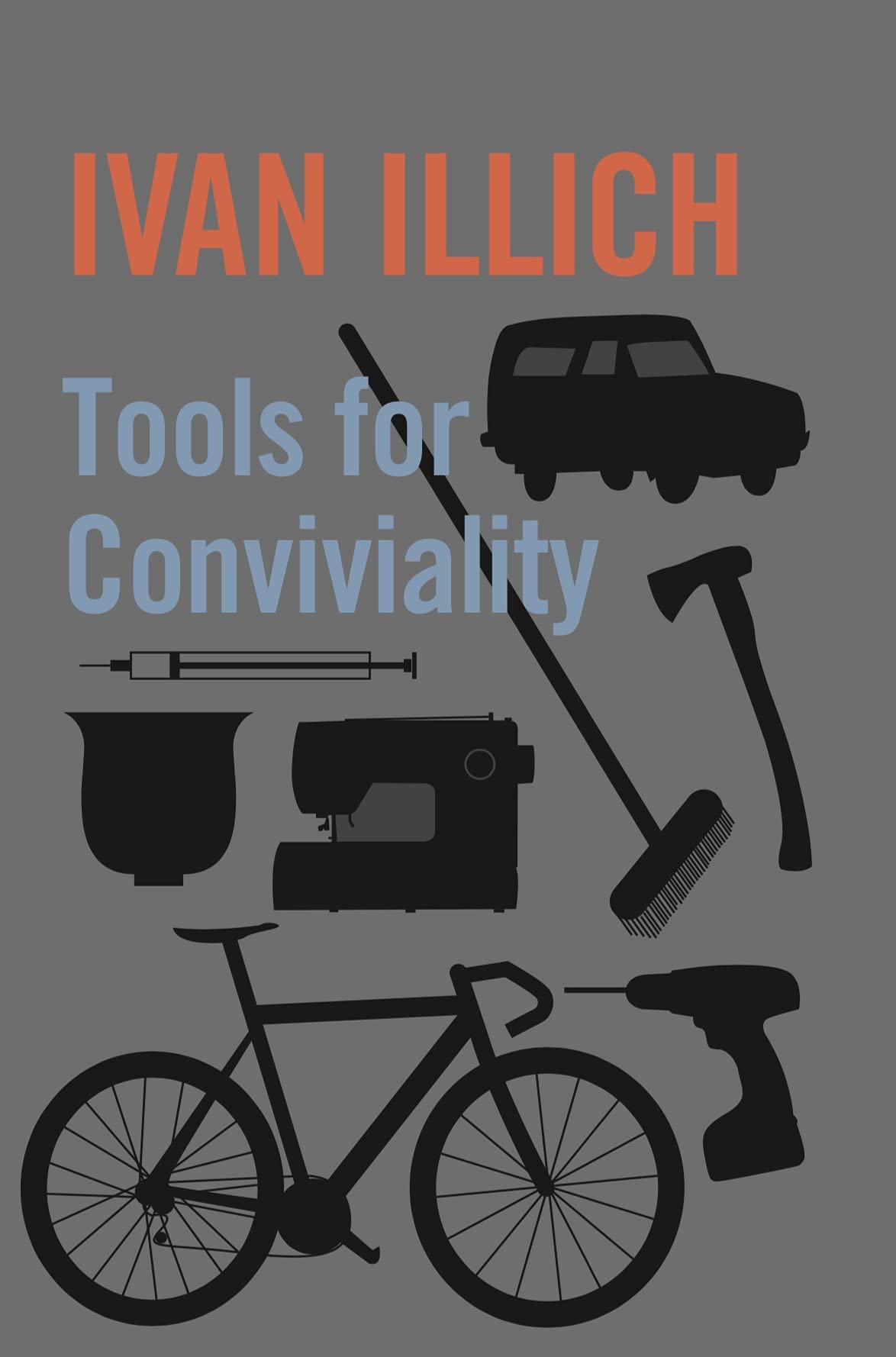
Tools for Conviviality generalises the school argument into a test for anything people use. Illich begins by saying that people need more than to be supplied with things: they need “the freedom to make things among which they can live, to give shape to them according to their own tastes, and to put them to use in caring for and about others.” He chooses the word conviviality “to designate the opposite of industrial productivity,” meaning “autonomous and creative intercourse among persons, and the intercourse of persons with their environment.” His idea of a tool is deliberately wide: factories and school systems count as tools, as do hammers. In our paraphrase, a convivial tool is one a person can power, understand and steer for their own purposes. “Hand tools are those which adapt man’s metabolic energy to a specific task”: pocket knives, looms, pedal-driven sewing machines, or a whole bicycle system of pushcarts and three-wheeled rickshaws with repair stations along the road. His own gloss is that “Most tools today cannot be used in a convivial fashion.”
The bicycle makes the test plain, and the car is its opposite. In our gloss, a bicycle takes its energy from the rider, can be mended by the rider, goes where the rider chooses and leaves the street usable for everyone else; a car, in his account, rebuilds the street around itself. That is the passage to read for “radical monopoly.” Ordinary monopoly, he says, is one firm controlling a product: a thirsty man restricted to one brand of soft drink “still remains free to quench his thirst with beer or water.” Monopoly becomes radical when one type of product rules out the alternatives to it. “Cars can thus monopolize traffic. They can shape a city into their image — practically ruling out locomotion on foot or by bicycle in Los Angeles. … That motor traffic curtails the right to walk, not that more people drive Chevies than Fords, constitutes radical monopoly.” It is, he adds, a different harm from burning petrol or killing people on the road: “Cars create distance.” The same structure, he says, can be seen in schooling and in medicine: “Radical monopoly exists where a major tool rules out natural competence.”
The medical case in this book is a threshold in time. About 1913, he writes, a patient first had “more than a fifty-fifty chance that a graduate of a medical school would provide him with a specifically effective treatment”; he places a second watershed about 1955, after which the profession’s harm, not its benefit, grew with each new increment of control. He also says it is “not strictly necessary to this argument to accept 1913 and 1955” as the dates, which is a fair warning that the numbers are illustrative rather than measured. What he asks for is political rather than technical: limits on tools “established and governed by political process rather than by decisions by experts.” The book’s influence on early personal-computer builders, notably Lee Felsenstein, is documented in a 1995 interview with him by Kip Crosby. The Guardian’s obituarists observe that his writing was easily caricatured on the right and disliked on the left for its attacks on the welfare state.