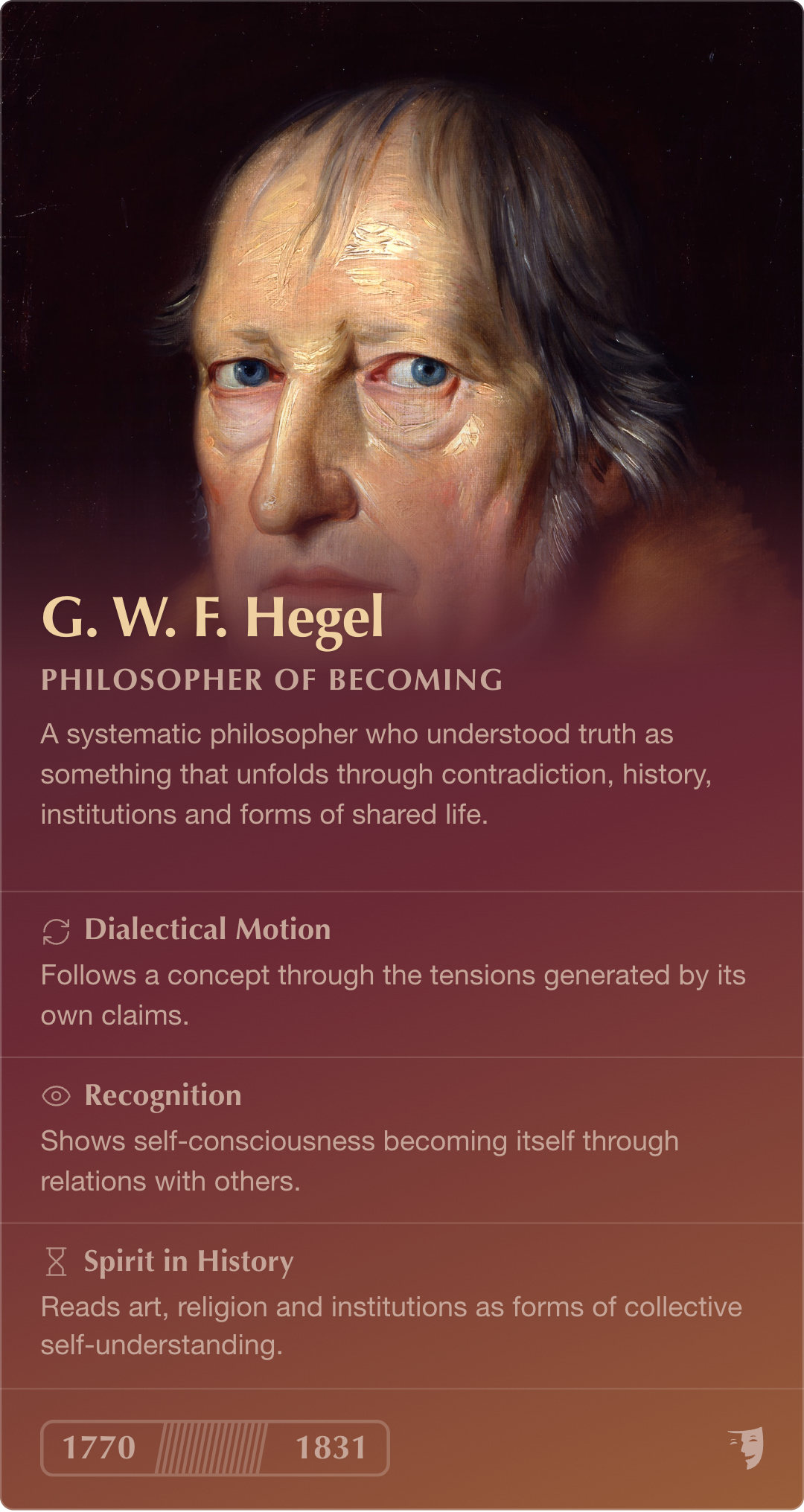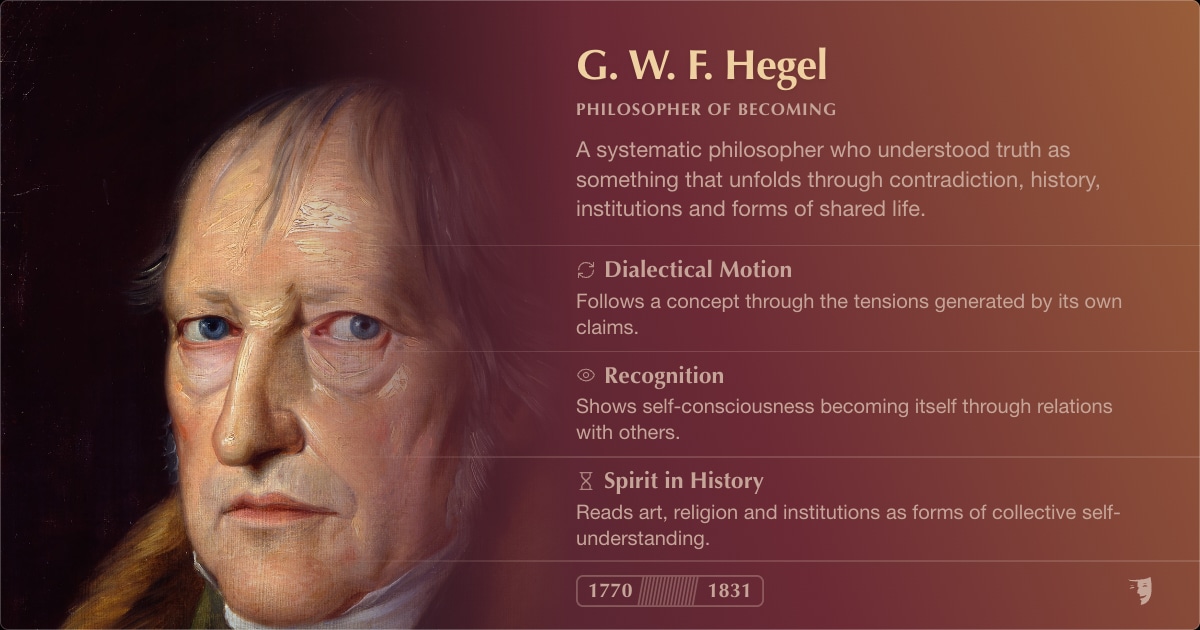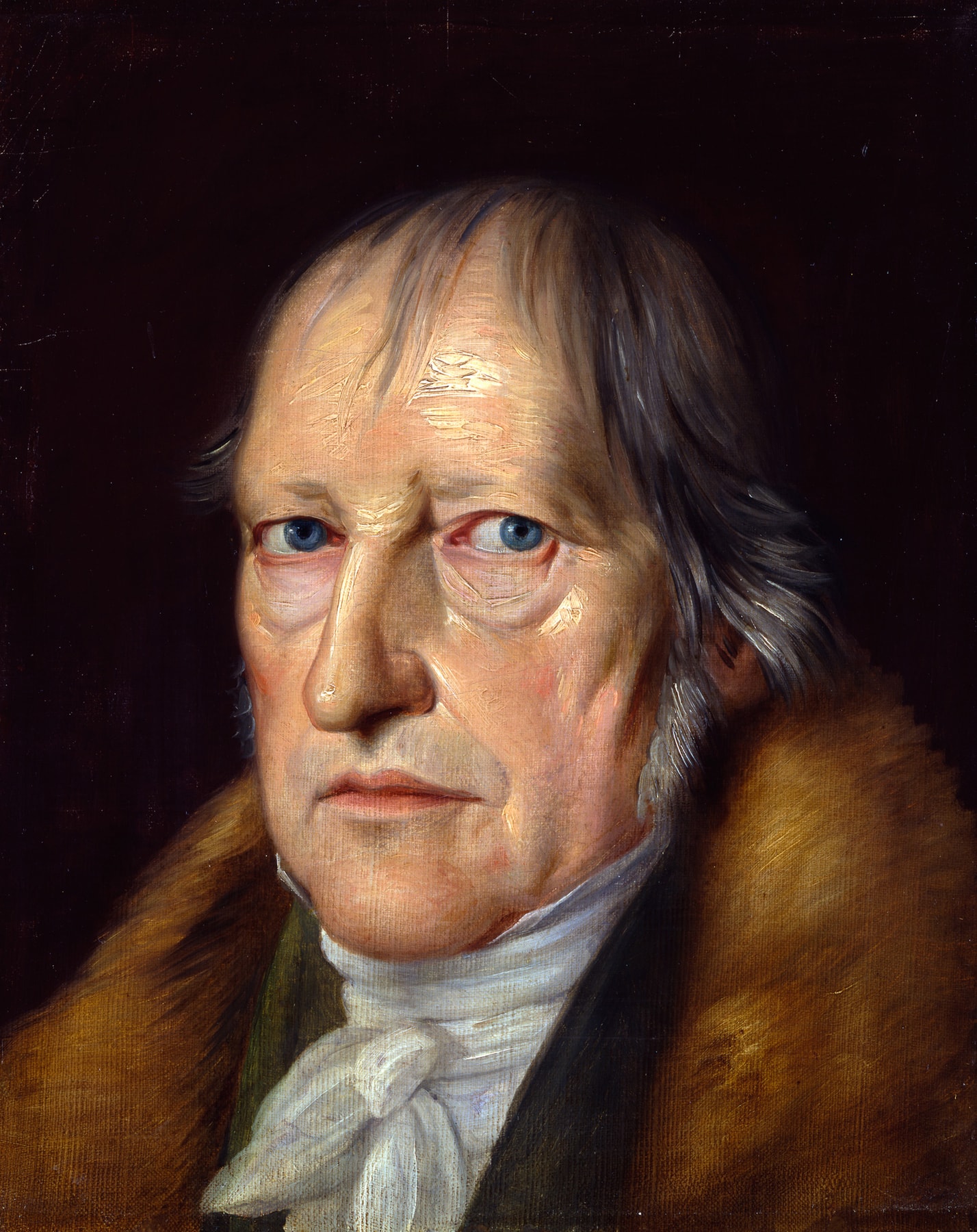
Portrait of G. W. F. Hegel.

G. W. F. Hegel

Philosopher of Becoming

A systematic philosopher who understood truth as something that unfolds through contradiction, history, institutions and forms of shared life.

Dialectical Motion
Follows a concept through the tensions generated by its own claims.
Recognition
Shows self-consciousness becoming itself through relations with others.
Spirit in History
Reads art, religion and institutions as forms of collective self-understanding.
G. W. F. Hegel

Philosopher of History, Freedom & Spirit

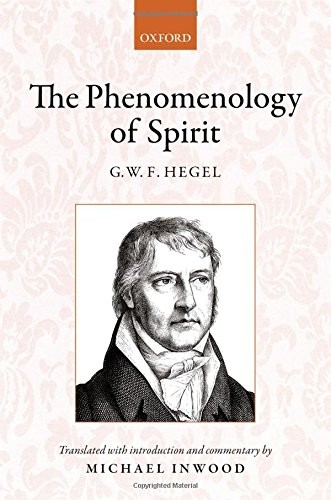
Start herePhenomenology of SpiritConsciousness tests its own claims through experience, recognition, conflict and historical forms of life.Explore the edition
1770–1801

From Stuttgart to Jena

Born in Stuttgart, Hegel studied theology at Tübingen with Hölderlin and Schelling. Tutoring posts in Bern and Frankfurt preceded his move to Jena, where post-Kantian philosophy and revolutionary Europe shaped his first mature work.

1812–1817

Logic and the shape of a system

In Nuremberg Hegel published the Science of Logic, then at Heidelberg the Encyclopaedia: logic, nature and spirit presented as an interconnected philosophical system.

1818–1821

Freedom becomes institutional

At Berlin, Hegel became an influential lecturer. The Philosophy of Right asks how freedom takes objective form in property, morality, family, civil society and the state—a work whose claims about modern institutions remain vigorously disputed.

1831 and after

The lectures outlive the lecturer

Hegel died in Berlin in 1831. Students and editors assembled lecture courses on art, religion, history and the history of philosophy, making influential books whose editorial layers must be remembered.

Principal works & lecture cycles

Texts to read freely