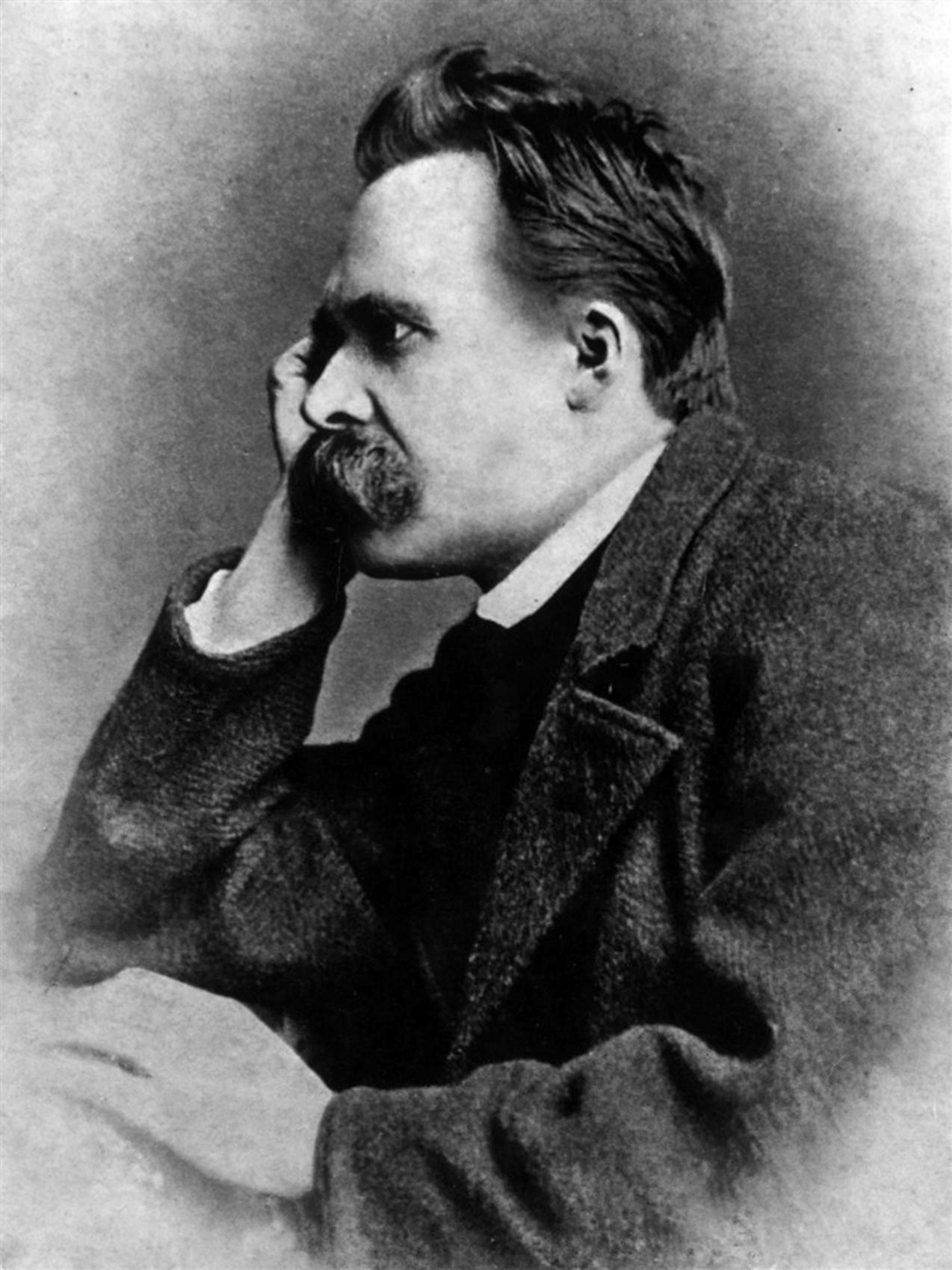
A professor at 24, invalided out at 34, he wrote his books drifting between Alpine and Mediterranean towns until he collapsed in Turin in 1889. His sister then sold a misleading Will to Power.
Philosophical Hammer
Taps the idols to hear which ones ring hollow.
Genealogy
Digs up the grubby history behind a morality that claims to be eternal.
Eternal Return
Asks if you would live this exact life again, forever, with no edits.
Enter Nietzsche through the books he actually published, not the slogans later extracted from them. Start with the literary experiment of Zarathustra, then move to the sharper arguments of Beyond Good and Evil and Genealogy while keeping translation, revision and his sister’s archival interventions in view.
1844
A minister’s son
Friedrich Nietzsche was born in Röcken into a family of Lutheran ministers. After his father’s death, he grew up in Naumburg and received an exacting classical education at Schulpforta, writing music as well as studying Greek and Latin.
At Leipzig, Schopenhauer’s philosophy and Richard Wagner’s music offered competing models of art, suffering and cultural renewal. Nietzsche’s later work would grow through arguments with these early attachments rather than from a single dramatic conversion.
1869–1872
The young professor
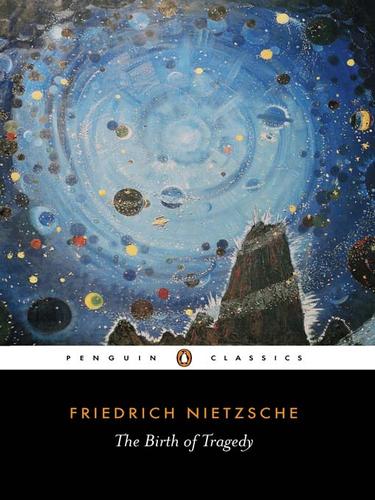
At twenty-four he became professor of classical philology at Basel. The Birth of Tragedy brought Greek drama into conversation with Schopenhauer and Wagner, dividing the arts between Apollonian form and Dionysian force.
Classicists attacked its evidence and method; Nietzsche later supplied a self-critical preface. That troubled reception is a useful first lesson in reading him: even his own books become objects of revaluation.
Erwin Rohde, Carl von Gersdorff and Nietzsche in Friedrich Henning’s Naumburg studio in October 1871. The young professor appears within a circle of friendship, rather than as the solitary figure of his later reputation. It is a posed photograph, not a record of a philosophical discussion.
Source & credits
Friedrich Henning · Public domain (historical photograph; Commons rights statement) · Full frame; resized and converted to WebP.
Poor health forced Nietzsche to resign his university post in 1879. Human, All Too Human had already broken with Wagnerian cultural prophecy for an aphoristic, psychological style; Daybreak and The Gay Science continued the experiment while he travelled between Alpine and Mediterranean towns.
The aphorisms do not form a bag of detachable quotations. Their sequence, voice and revisions matter, as does the pressure Nietzsche applies to his own earlier certainties.
1883–85
Thus Spoke Zarathustra
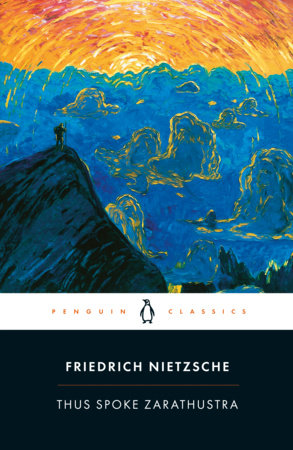
A wandering teacher speaks in stories, parables and provocations. Nietzsche uses this strange literary form to explore self-overcoming and the challenge of affirming life.
Read slowly. Follow the images, question the voice, and return to passages that refuse to settle into a single meaning.
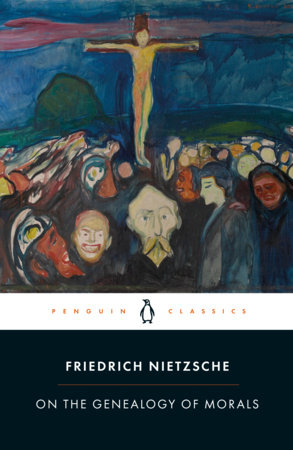
After Zarathustra, Beyond Good and Evil and On the Genealogy of Morality examine how values acquire authority through language, institutions, bodily drives and history. Genealogy’s three linked essays are the clearer deeper route for readers testing what the dramatic prophet leaves unresolved.
A collapse in Turin in January 1889 ended Nietzsche’s productive writing life; its medical cause remains uncertain. After his death in 1900, his sister Elisabeth Förster-Nietzsche shaped the archive and promoted a misleading compilation called The Will to Power. Modern critical editions return readers to dated manuscripts, published books and their actual variants.