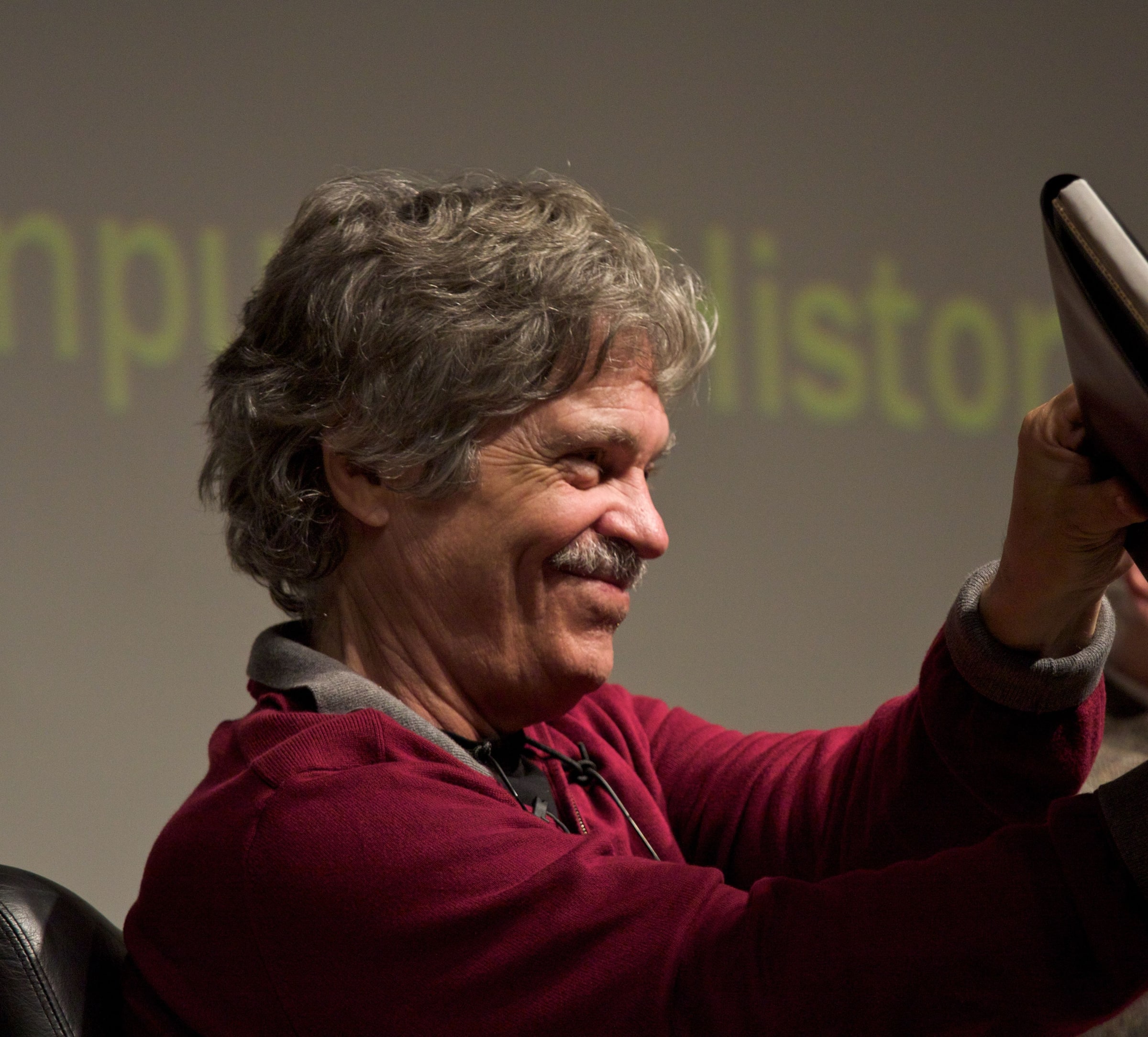
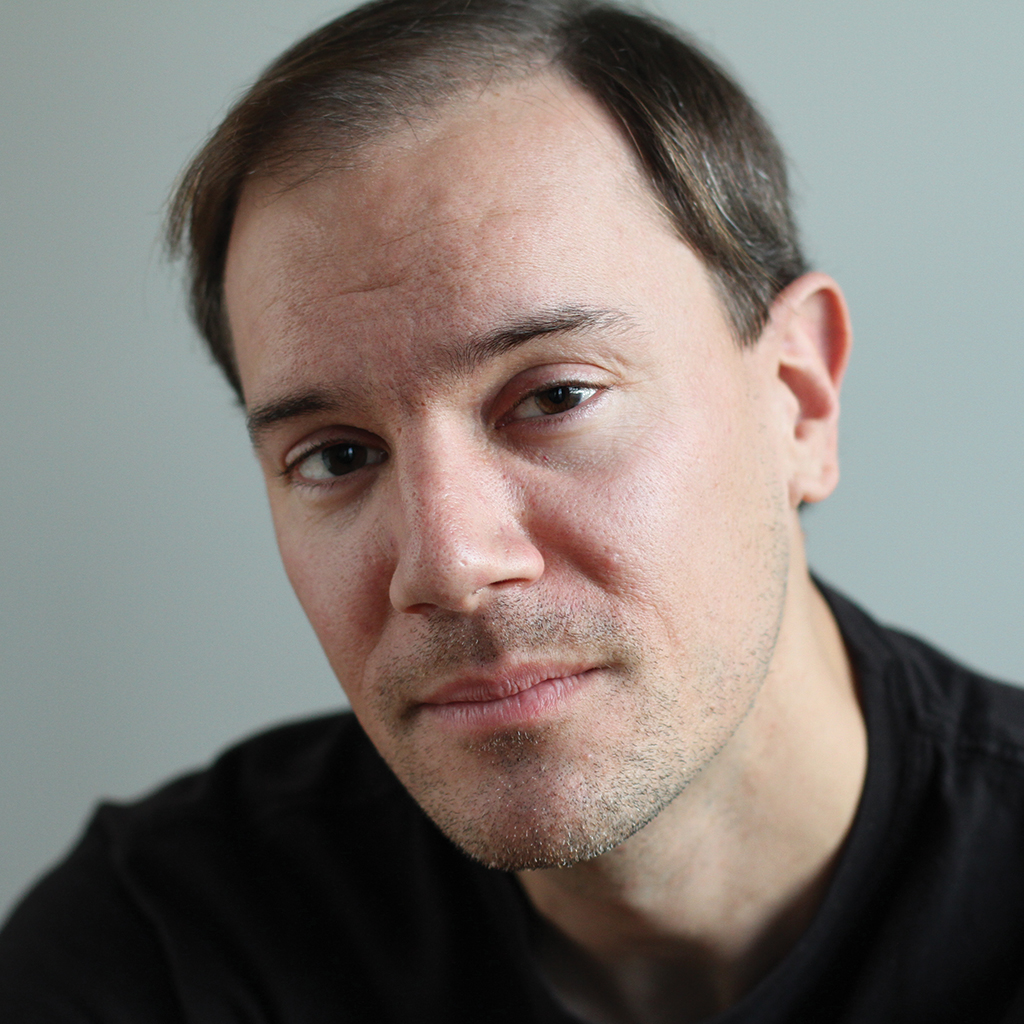
Portrait of Douglas Engelbart.

Douglas Engelbart

Augmenter of Intellect

A Navy radar technician who read Vannevar Bush and took up his question for life. In 1968 he showed the mouse, linked text and live video collaboration in one stage demo.

The Demo
Runs live shared editing and video between a San Francisco stage and SRI.
Chord Keyset
Fires commands from a chord pad in one hand, the mouse in the other.
Bootstrapping
Runs his own lab on the tools it is building.

Douglas Engelbart

Engineer & Pioneer of Human Augmentation

History of computing · Augmenting the human Start hereThe 1968 demonstrationStart here to see NLS used for linked documents, collaborative editing and remote video by Engelbart’s team. Then read the 1962 report: it explains why these capabilities belonged together as an augmentation system.Watch the indexed demo

Douglas Engelbart wanted people to become better at tackling problems together. His laboratory built a working environment for that ambition: linked documents, shared screens, commands, a mouse and habits of collaboration. The famous 1968 demonstration is an entrance to a longer experiment in how teams learn.

1925–1962

Choose the difficult problem

Engelbart grew up near Portland, Oregon, studied electrical engineering and served as a Navy radar technician in the Philippines. There he encountered Vannevar Bush’s As We May Think. Radar had shown him information on a screen; Bush’s essay posed a different question about people working with knowledge. He completed a doctorate at Berkeley and joined Stanford Research Institute in 1957.

In his 1962 report Augmenting Human Intellect, the unit of design is not a computer alone. Engelbart describes an H-LAM/T system: a human supported by language, artifacts and methods in which they are trained. The report’s example of a writing machine shows why that matters. Easier copying and rearranging would let a writer try new ways of composing, which would change the work done with the tool.

The research programme followed from that interplay. If tools change methods and methods suggest better tools, a team can deliberately improve its own capacity to address difficult problems. The report is the best route into the purpose behind the devices that later became famous.

Augmenting Human IntellectStart here for the framework behind the famous devices: people, tools, language, methods and training treated as one evolving system. The 1968 demo then becomes evidence of a programme, not a gadget parade.Read the report
1968

A future demonstrated together

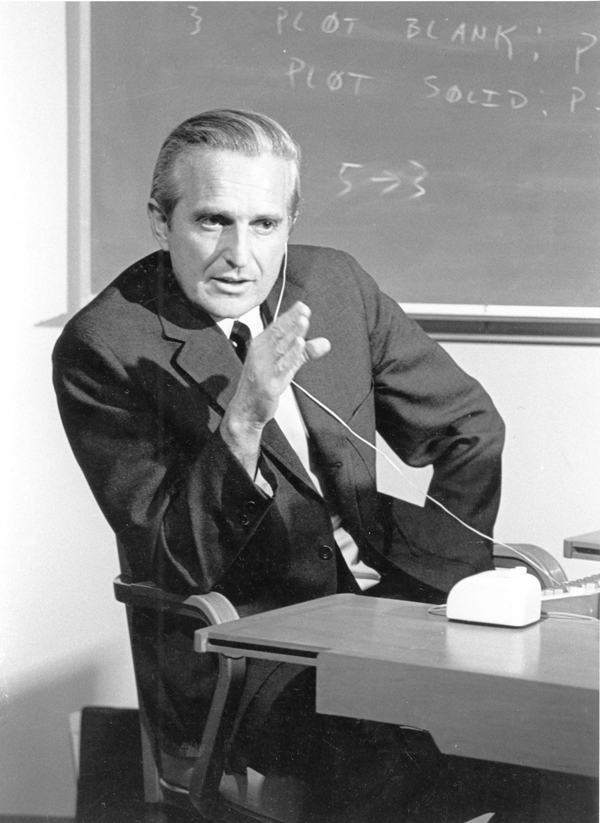
On 9 December 1968, Engelbart and the Augmentation Research Center linked a San Francisco stage to the team at SRI and demonstrated the oN-Line System, or NLS. A document could be outlined, rearranged, linked to another passage and viewed in different ways. A mouse and chord keyset helped a trained user move through commands; shared editing and live video joined colleagues across the distance.

Bill English engineered the display and communication system for the event and co-developed the mouse with Engelbart. Bill Paxton, Jeff Rulifson and many other ARC colleagues built and operated the environment. The performance worked because the software, hardware, network and people worked together. Watch how a change to one document can become shared work, not just how a pointer moves.

NLS was also the laboratory’s own workplace. The team used its tools to organise the continuing research, putting Engelbart’s proposed cycle of improvement under practical pressure. The indexed recording gives the reader a route into both the demonstration and the contributions of the people behind it.

The 1968 demonstrationStart here to see NLS used for linked documents, collaborative editing and remote video by Engelbart’s team. Then read the 1962 report: it explains why these capabilities belonged together as an augmentation system.Watch the indexed demo
A wooden SRI mouse prototype with one red button, exposed wheel and cable.
A three-button mouse and five-key chord keyboard in a Computer History Museum exhibit.
1969–2013

Getting better at getting better

After the demonstration, ARC operated the ARPANET Network Information Center, using online documents as a shared resource for a growing network. That ambitious service also exposed a limit: NLS required training and substantial computing resources, and new users did not always find its many commands easy to master.

Funding and staff changed. SRI sold the ARC project to Tymshare in 1977; its remaining team continued NLS as Augment, but the original laboratory’s momentum and scope diminished. Engelbart’s aim of improving collective work did not vanish when particular parts of the interface travelled into other products.

In 1988 Engelbart and his daughter Christina founded the Bootstrap Institute, later the Doug Engelbart Institute, to keep developing the organisational side of the idea. He died in 2013. Return to the indexed 1968 recording, prepared by the institute with Bret Victor, and then to the 1962 report: the archive itself now invites readers to move between a working example and the question that gave it purpose.
Demonstrations & voice

Reports & archives