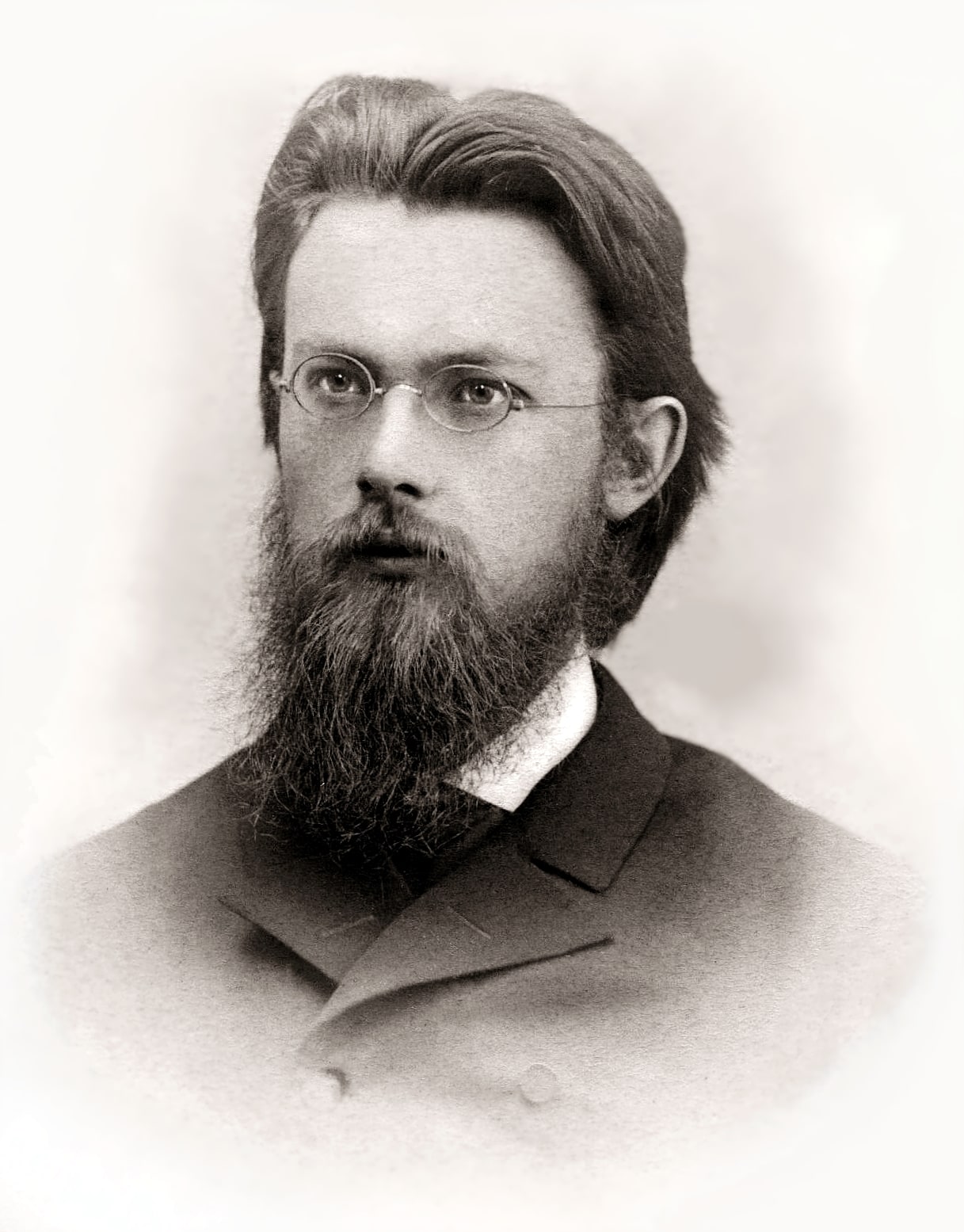
Bucky Fuller was thrown out of Harvard twice, went broke at thirty-two and spent the next half-century turning that collapse into a legend he kept on file. Along the way he built a house hung from a mast, a three-wheeled car that killed its driver, a world map with no ‘up’ and the geodesic dome, and he took more credit for some of it than his collaborators thought he had earned. His own archive, now at Stanford, is the best tool for checking the stories he told about himself.
1895–1922
Thrown out of Harvard, twice
Richard Buckminster Fuller was born in Milton, Massachusetts, on 12 July 1895, into a long line of New England nonconformists; the best known was his great-aunt, the Transcendentalist Margaret Fuller. His father died when he was a boy, and Stanford’s archivists describe the family as genteel but short of money.
Harvard admitted him in 1913 and got rid of him twice. By his own later account he ‘cut classes and went out quite deliberately to get into trouble’; the Buckminster Fuller Institute says he socialised to excess and missed his midterms. He was sent to work with mill machinery in Canada, readmitted in the autumn of 1915 and dismissed again. He never took a degree.
He married Anne Hewlett on his twenty-second birthday, 12 July 1917, and spent 1917–1919 in the US Navy, including officer training at Annapolis. The Institute credits him with a winch for pulling downed seaplanes from the water in time to save their pilots; his biographer Alec Nevala-Lee, according to Daniel Luis Martinez’s review in The Nation, could find no credible source for that rescue-device story. Stanford’s finding aid says a rescue boat became ‘his Harvard and Yale’. Anne, it adds, has had too little credit for keeping his working life afloat for sixty-six years.
Their first child, Alexandra, died in 1922, aged about four, after polio and spinal meningitis. Fuller, his New York Times obituary reported, began drinking heavily.
1922–1928
The lake, as he told it
From 1922 he ran the Stockade Building System with his father-in-law, the architect and muralist James Monroe Hewlett. Their joint patent, granted in June 1927 (US 1,633,702), shows how it worked: light fibrous blocks were stacked as walls, concrete was poured into their hollows to cast columns and beams, and the blocks stayed in place, notched to take the floor beams. The Institute’s chronology credits the company with 240 building operations. By 1927 it was failing; Hewlett sold his stock and the new owners dismissed Fuller. Hewlett, Martinez notes, never recovered his investment.
Fuller’s version of what came next became the founding scene of his public life. Out of work in Chicago in 1927, he said, he went to the shore of Lake Michigan meaning to end it, and was told, by himself or by a voice depending on the telling: ‘You do not have the right to eliminate yourself… You belong to the universe.’ He then stopped drinking, cut himself off from old associates and for more than a year did not speak, ‘even to my wife’. He came to call himself Guinea Pig B, the subject of an experiment in what one penniless individual could do for humanity, and insisted: ‘I am not being messianically motivated in undertaking this experiment.’
His own files do not bear the drama out. Jonathon Keats, who worked through the Dymaxion Chronofile for his 2016 book You Belong to the Universe, found ‘nothing in the Dymaxion Chronofile to suggest that Fuller attempted suicide’ and reads the night by the lake as a fable produced in retrospect; the Irish Times reported that other scholars of the archive had reached the same view. Stanford’s finding aid, written by the archive’s keepers, still says the business failure and Alexandra’s death ‘nearly pushed Fuller to suicide’. The record supports a ruined firm, a dead child, heavy drinking and real distress. It does not support the voice or the year of silence. Read the lake as one of Fuller’s most durable designs: a story built to turn a breakdown into a beginning.
His first post-crisis design was a house hung from a central mast, with outer walls of continuous glass. He called it the 4D House. In 1928 he offered his patent rights to the American Institute of Architects, which turned them down. When a department store displayed the model, its advertisers renamed it with a coinage from ‘dynamic’, ‘maximum’ and ‘tension’, and ‘Dymaxion’ was trademarked in his name. Later the word was stamped on a car, a bathroom, a map and grain-bin shelters.
In 1933, in a Bridgeport, Connecticut, workshop shared with the yacht and aircraft designer William Starling Burgess, he built the Dymaxion car: twenty feet long, teardrop-shaped, three wheels, front-wheel drive and a single steering wheel at the back. The Institute claims eleven passengers, 90 mph and 30 mpg. Popular Science, drawing on Nevala-Lee, records the rest: a wobbling rear wheel, severe tyre wear and lift at speed that made it hard to steer. The partnership was tense from the first day.
In October 1933, in Chicago during the Century of Progress fair, the first prototype overturned. The driver, Francis Turner, was killed and two passengers were seriously hurt. Fuller’s account, repeated in his obituary, was that another car hit it. Nevala-Lee, reconstructing the crash from newspapers, official records and Fuller’s own notes, concluded that it rolled on its own for want of basic safety engineering, a flaw Fuller conceded in private correspondence. Either way the backers fled. Three cars were built and none went into production.
Studies of world industrialisation for Fortune in 1938 fed the Dymaxion map. Life printed it on 1 March 1943 as a cut-out: the globe projected onto a cuboctahedron of six squares and eight triangles, each face bounded by great circles so that scale holds true along the edges (US Patent 2,393,676, filed 1944, granted 1946). That first version still broke continents at its seams. The familiar ‘one island in one ocean’ map is the 1954 icosahedral Airocean edition, drafted by Shoji Sadao and published by Student Publications of the School of Design at North Carolina State College in Raleigh, with the icosahedron’s twelve corners set in open sea so that no continent is cut. Every projection sacrifices something; Fuller gave up north-up to keep the land whole.
Round shelters made from Butler grain bins, the Dymaxion Deployment Units, housed radar crews in harsh wartime postings. He also worked for Washington’s economic-warfare agency, though Stanford’s archivists note that the mechanical engineering division his biographers say he headed does not appear on its organisation chart. Then came the Wichita House, built with Beech Aircraft in 1945–1946 from wartime aluminium alloys and again hung from a central mast, about four tons by its restorer’s count. Only two prototypes were made. The investor William Graham grafted one onto his Kansas ranch house in 1948, which Fuller said ‘forever grounded this aeroplane’; the Henry Ford Museum acquired it in 1991 and restored it.
Marion Post Wolcott photographed this adapted grain-bin shelter in Kansas City in May 1941. Built by Butler Brothers and promoted through Fuller’s Dymaxion Deployment Unit work, it is a different experiment from the later Wichita house.
Source & credits
Marion Post Wolcott · Public domain (rights statement: https://commons.wikimedia.org/wiki/File:Dymaxion_House_-_LOC_8c14943v.jpg#Licensing) · Full frame; WebP conversion; resized.
Fuller arrived at Black Mountain College in North Carolina in the summer of 1948 as a stand-in architecture teacher, with, in W. Patrick McCray’s phrase, ‘an Airstream trailer full of geometrical models’. It was the summer of John Cage and Merce Cunningham; Fuller acted in the college’s English-language premiere of Satie’s The Ruse of Medusa, alongside Cunningham and Elaine de Kooning, with Cage at the piano and sets by Willem de Kooning.
His class set out to raise a large hemispherical dome from strips of Venetian blind. The slats were too weak. Instead of rising, the frame sagged and lay down, and it went into college lore as the Supine Dome. Fuller said he had expected the materials to fail and that you succeed when you stop failing; that is his framing of the day. In 1949, when he returned to direct the summer institute, students built a dome that stood, using stronger materials: accounts mention aircraft tubing, and McCray mentions metal curtain rods from a Woolworth’s in Asheville.
A student from 1948, Kenneth Snelson, spent that autumn in Oregon making small studies in which rigid pieces floated apart, held only by taut lines. In June 1949 he brought Fuller his plywood X-Piece. In Snelson’s 1990 letter to the engineer René Motro, Fuller was ‘quite struck with it’, asked to keep it, announced the next day that ‘the configuration was wrong’, and was later photographed holding a structure Snelson had built. Fuller named the principle tensegrity and went on to patent it, and spoke of ‘my tensegrity’ as he spoke of ‘my octet truss’. Snelson’s name is on neither patent. His credit reached the public record only when he contacted the curator of Fuller’s 1959 Museum of Modern Art show. Snelson granted that Fuller coined the word. Kirkus, reviewing Nevala-Lee’s biography, sums up the pattern: Fuller carried students’ discoveries ‘to the next school on his list’.
The geodesic dome patent was filed in December 1951 and granted on 29 June 1954 (US 2,682,235). Its idea is simple to state. A triangle cannot change shape unless one of its sides changes length, so a sphere divided into triangles carries loads as push and pull along its struts rather than as bending. Fuller’s patent sets the struts along great circles, so that a ‘three-way grid’ produces ‘substantially uniform stressing of all members’. In practice the sphere is reached by dividing the faces of a twenty-sided icosahedron into smaller triangles and pushing their corners out to the surface. The more finely you divide, the rounder the dome, but the more strut lengths you have to make.
He was not the first to build one. Walther Bauersfeld’s test dome for the first Zeiss planetarium, 16 metres across, went up on the roof of the Zeiss works in Jena in 1922–1923. Orsolya Gáspár’s 2022 study of Bauersfeld’s notebooks shows he compared subdivision methods almost thirty years before Fuller. Fuller’s patent does not mention him. What Fuller and his teams added was the industry: kits, light alloys, paperboard and plywood versions, and a pitch to the clients who needed them.
Those clients were mostly corporate and military. The first commercial dome, for the Ford Motor Company in Dearborn, came in 1953. Radar domes followed along the Arctic Distant Early Warning line, then Marine Corps trials and trade-fair pavilions packed with American consumer goods, from Kabul in 1956 to Moscow in 1959. A paperboard dome won the Gran Premio at the 1954 Milan Triennale. The work ran through Geodesics Inc. and Synergetics Inc., the patent attorney Donald Robertson, the architect T. C. Howard and, from the late 1950s, an architecture partnership with Shoji Sadao. The campuses mattered too: Stanford’s archivists note that MIT, Yale, Cornell, Princeton and North Carolina State supplied ‘skilled and enthusiastic students’, materials and contacts that an independent inventor could not otherwise afford.
The US Pavilion at Expo 67 in Montreal shows how it all went together. Fuller and Sadao designed the dome with Geometrics Inc.; Simpson Gumpertz & Heger did the structural design; Cambridge Seven Associates designed the exhibition platforms inside it. The sphere was 250 feet across and 200 feet high. Its frame was two layers of steel tube, triangles on the outside and hexagons on the inside, tied together by a lattice of connecting struts. The tube walls were thinner near the top, where the loads are lighter. Acrylic cells closed it in, and triangular sun-shades were meant to move on a programmed schedule, at twenty-minute intervals in the engineers’ studies, to keep the displays in shade. The shading never worked as planned. In May 1976, sparks from welding during maintenance set the acrylic skin alight, and it burned away in about half an hour. The steel lattice survived and has housed an environment museum since 1995.
The US Pavilion at Expo 67, Montreal, photographed by Laurent Bélanger in May 1967. Triangles face outward, hexagons inward; the acrylic cells that closed the frame burned away in 1976, leaving the steel lattice that stands today. The Minirail ran straight through the dome.
Source & credits
Laurent Bélanger · CC BY-SA 3.0 · https://creativecommons.org/licenses/by-sa/3.0 · Full frame; WebP conversion; resized.
The Expo pavilion before construction15 December 1966
Lyndon Johnson reviews a model of the US pavilion for Expo 67 in the Oval Office, 15 December 1966; Fuller stands second from right. The pavilion was designed with Shoji Sadao. The model records a proposal being presented before the completed building.
Source & credits
White House Photo Office · Public domain (rights statement: https://commons.wikimedia.org/wiki/File:Lyndon_Johnson_reviews_Expo_67_pavilion_model.jpg#Licensing) · Full frame; WebP conversion.
From 1959 Southern Illinois University in Carbondale gave him a research professorship and a base for an inventory of world resources and the World Game, a simulation of how to share the world’s resources so that everyone has enough. In 1962–1963 Harvard, which had twice expelled him, made him Charles Eliot Norton Professor of Poetry. The counterculture adopted him and his domes; the Whole Earth Catalog said it was inspired by him. Domes went up by the thousand on rural communes. The same structure had shielded radar stations ten years earlier.
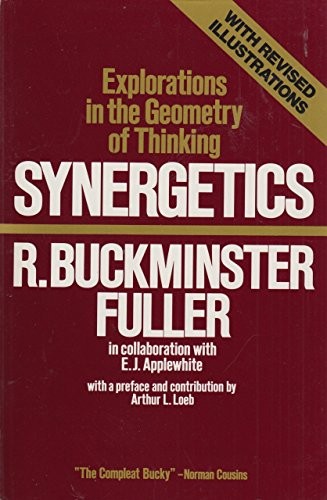
Operating Manual for Spaceship Earth (1969) is the short form of his case. Earth is a ship with finite stores and a crew that has to learn to run it: ‘Now there is one outstandingly important fact regarding Spaceship Earth, and that is that no instruction book came with it.’ Synergetics (1975), written in collaboration with E. J. Applewhite and with a preface and contribution by Arthur L. Loeb, is the long form. It is a numbered treatise that rebuilds geometry from what it calls ‘Universe’s minimum structural system: the tetrahedron’, not from the cube.
The private life ran on the same expansive terms. Reviewers of Nevala-Lee’s biography report a serial philanderer who stayed married to Anne until both died. Pradeep Niroula, writing in the Los Angeles Review of Books, relays that Anne told him she did not mind ‘his fooling around with secretaries and heiresses’. The same reviewers describe a man who welcomed wartime budgets for experiment and invented epiphanies for his own story.
Fuller at the first public showing of his domed-city proposal at a community meeting in East St. Louis in 1971, photographed by Steve Yelvington. The architectural image behind him is a proposal, not a city that was built.
Source & credits
Steve Yelvington · CC BY-SA 4.0 · https://creativecommons.org/licenses/by-sa/4.0 · Full frame; WebP conversion; resized.
Fuller kept everything. From the 1920s, by Stanford’s account, he gathered his papers and every clipping about his work into what he called the Dymaxion Chronofile: correspondence, business and legal records, family letters, and Anne’s letters refiled in their original envelopes. Other accounts date the system to 1915 or 1917, and childhood material back to 1895 sits in it, so sources disagree about where it begins. After the war it grew to take in drawings, blueprints, models and recordings of his talks. Stanford bought the whole archive in 1999 (collection M1090): about 1,300 linear feet of paper and some 2,000 hours of audio and video, with the Chronofile proper about 270 feet of it. The finding aid suggests his may be the most thoroughly documented life of any private citizen.
The Chronofile was a monument and a method at once. It let him compose his life as a sequence of experiments, and it lets a reader check his stories against the paper. That is how the lake, the silent year and the seaplane winch have been put in doubt. The man who built a legend also kept the evidence against it.
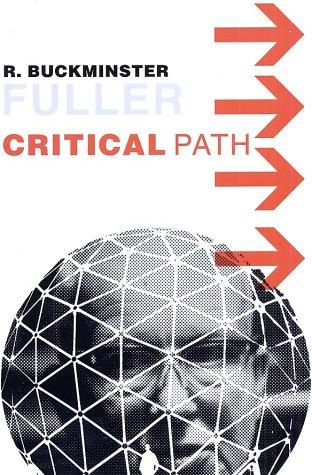
The late books turned the archive outward. Critical Path (1981) braids autobiography, an inventory of planetary resources and a programme for design-led change; its cover names a collaborator, Kiyoshi Kuromiya, as ‘adjuvant’. Grunch of Giants (1983) names its target in an acronym: the Gross Universal Cash Heist of corporate power. Their confidence that comprehensive design could outrun politics, power and inequality is the claim most in need of testing.
On 1 July 1983 Fuller died of a heart attack in Los Angeles at Good Samaritan Hospital, where Anne lay critically ill. She died about a day and a half later. They had been married for sixty-six years.