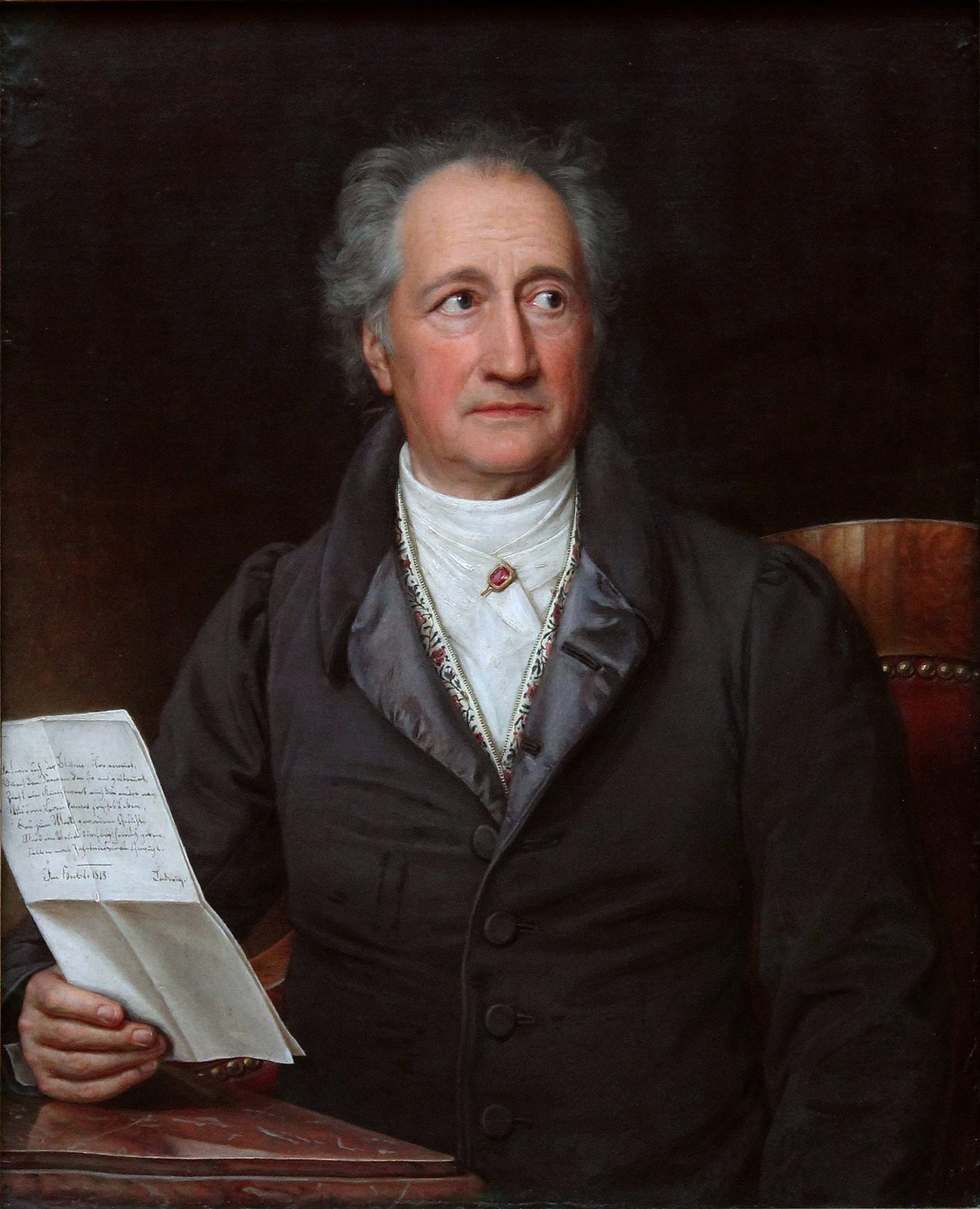
Goethe wrote across six decades without staying in one literary age. The urgent letters of Werther, the theatrical education of Wilhelm Meister, the perceptual experiments of Theory of Colours and the vast late Faust ask different versions of the same question: how does experience become form?
1749–1775
Letters before a life at court
Goethe grew up in Frankfurt in a household with books, languages and social ambition. He studied law in Leipzig and Strasbourg. In Strasbourg, Johann Gottfried Herder opened a path toward folk song, Shakespeare and a more forceful German literary voice. The young lawyer’s writing began to press against polite dramatic rules.
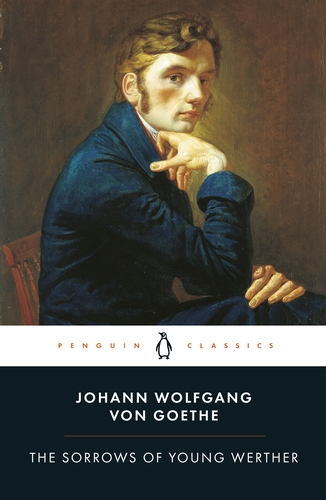
Götz von Berlichingen made history feel unruly on stage, and The Sorrows of Young Werther made private feeling a European event in 1774. Werther is built from letters, so readers receive his perceptions before they can fully test them. Charlotte Buff and a friend’s death informed the fiction, but Werther’s ending belongs to Goethe’s construction, not a documentary transcript of those lives.
Duke Carl August invited Goethe to Weimar in 1775. The poet took real administrative work in roads, mines and finance while writing, directing and collecting observations of nature. Court service gave him influence and a practical acquaintance with institutions; it also reduced the time and freedom he felt he needed for large works.
Charlotte von Stein became a close correspondent and important intellectual presence. Drafts of Iphigenie, Egmont and Faust grew amid these duties. Goethe’s attention to plants and landscape was not an eccentric hobby beside the literature: changing forms in nature sharpened his interest in what a person might become over time.
1786–1794
Italy changes the scale
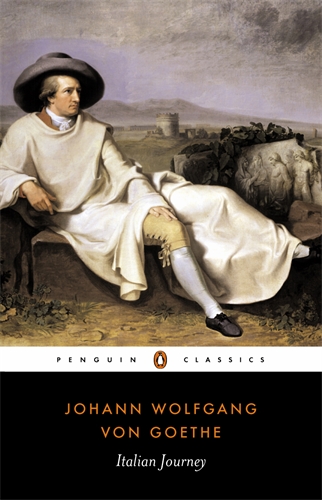
Goethe left Weimar for Italy in 1786 and stayed nearly two years. Classical art, architecture, light and botany gave him new standards of proportion and observation. He revised Iphigenie auf Tauris and worked on Torquato Tasso; the later Italian Journey is a retrospective shaping of notebooks and letters, published in 1816–17, not an untouched diary from the road.
Back in Weimar, he lived with Christiane Vulpius, whom he married in 1806. Their son August survived to adulthood. The move toward classical form did not erase his earlier intensity; it made him seek a frame strong enough to hold it. His Metamorphosis of Plants, published in 1790, treats plant organs as transformations in a series, a method of patient comparison that echoes through his writing.
Friendship with Friedrich Schiller became a working exchange: the two discussed manuscripts, edited for journals and tested ideas about classical drama. Their correspondence accompanied Goethe’s final work on Wilhelm Meister’s Apprenticeship, published in 1795–96. The book follows a young man through a theatre troupe, mistaken attachments and encounters that resist the simple promise that talent alone will make a life whole.
Goethe’s direction of the Weimar theatre joined literary thought to rehearsals and audiences. The poems and ballads of these years moved through collaborative venues too. Schiller’s death in 1805 closed a particular conversation, but Goethe kept revisiting the works it had helped him finish and reconsider.
Faust, Part I appeared in 1808 after decades of starts. Its change of scene and register lets a scholar’s longing become a bargain, then Gretchen’s tragedy. The drama asks readers to see both the force of Faust’s striving and the damage done by his unequal power. Elective Affinities followed in 1809, turning a chemical term into a risky analogy for relationships rather than a license to excuse choice.
Goethe’s Theory of Colours appeared in 1810. He observed coloured edges, shadows and afterimages and objected to Newton’s account of light; the objection did not replace modern optics. His notebooks and devices still show a rigorous concern with the experiencing eye. Poetry and Truth, begun in these years, made his youth into a crafted narrative with its own limits as evidence.
Late Goethe kept moving between forms: the West-Eastern Divan answered the Persian poet Hafiz, with Marianne von Willemer contributing to its Suleika poems; Wilhelm Meister’s Journeyman Years returned to education through work, institutions and fragments. He had become an author with a large archive and a public role, yet the work remained experimental rather than a simple summing up.
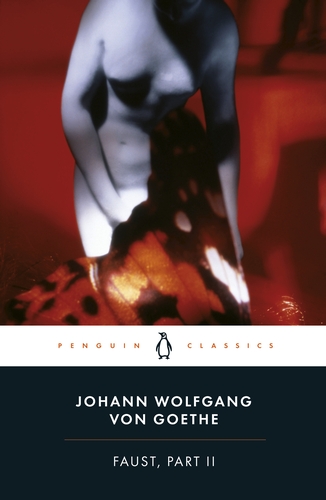
He completed Faust, Part II near the end of his life; it appeared after his death in 1832. Its five acts move through finance, empire, classical antiquity and a land project with human costs. Readers can start with Part I’s intimate tragedy, then see how the sequel enlarges the wager to a whole society. Goethe died in Weimar, leaving not a single system but a record of sustained revision.