Roland sets the slug-horn to his lips
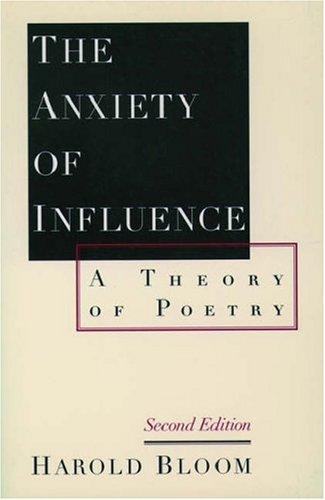
Bloom wrote the sequels fast. A Map of Misreading and Kabbalah and Criticism both appeared in 1975, and by 1976 he had published four books in three years on the poetics of influence, prompting Christopher Ricks’s line in The New York Times Book Review: “Bloom had an idea; now the idea has him.” Kabbalah and Criticism took the sixteenth-century Kabbalah of Isaac Luria, as explained by Gershom Scholem, as a model of how a tradition reads itself. A Map of Misreading refined the ratios, pairing them with figures of rhetoric and psychological defences, then tested the whole map on one poem: Robert Browning’s Childe Roland to the Dark Tower Came.
Browning was a Shelleyan to begin with: at twenty he published Pauline (1833), a confession that hails the dead Shelley as “Sun-treader — life and light be thine for ever.” Childe Roland appeared in Men and Women in 1855. Its knight has hunted the Dark Tower so long that his heart leaps at “finding failure in its scope”; he crosses a poisoned, dying landscape and, at the tower, sees ranged on the hills “the lost adventurers my peers”, everyone who failed before him. The poem ends: “Dauntless the slug-horn to my lips I set, / And blew. ‘Childe Roland to the Dark Tower came.’” Bloom had given the poem an essay of its own in The Georgia Review (Fall 1974, “How to Read a Poem: Browning’s ‘Childe Roland’”), and the book chapter “Testing the Map: Browning’s Childe Roland” is where he runs his map over it. What follows is his own wording wherever it is in quotation marks.
He does not read the quest as a plain failure. He reads the poem “as a revisionary text, on the model of our map of misprision.” The opening swerve, the first ratio, clinamen, “is marked rhetorically by the trope of irony, imagistically by an interplay of presence and absence.” The closing stanzas, the knight’s sudden recognition and the blast, he calls “a transumptive scheme or figure of a figure, which undoes the figurative assertions of Roland throughout the entire poem before them”: transumption, or metalepsis, is the trope he pairs with the sixth ratio, apophrades, the return of the dead. Its effect on time is the whole point: “Roland is belated, the last of the Band, and yet of his belatedness he now makes (and breaks) an earliness, at the apparent expense of his life.” The dread that drove the quest, in his phrase, was the “sympathetic antipathy (as Kierkegaard called his concept of Dread)” of failing as his precursors failed, and so “Roland has triumphed by failing precisely as his precursors failed, and by recognizing and so knowing that their ‘failure’ was a triumph also.” There is no villain outside the knight: “There is only Roland himself to serve both as hero and as villain.” We have read these passages, not the whole chapter, so the page does not guess at how Bloom assigns the middle ratios (tessera, kenosis, daemonization, askesis) to the poem’s stanzas.
Shelley enters at the horn. A sentence of Bloom’s about the end of the poem names Shelley’s Ode to the West Wind “and perhaps of all Shelley’s poetry,” and the next has Roland at last seeing himself “as what he is, the solitary poet-quester, the penseroso so dangerously internalized as to have become anti-natural or antithetical.” He makes Roland “the culmination, akin to Tennyson’s Ulysses,” of a line of Romantic wanderers: “Wordsworth’s Solitary in The Excursion, Byron’s Childe Harold, Shelley’s poet-wanderer in Alastor and in Prince Athanase.” Then the horn: “Undefeated by his total knowledge, he abandons the world of romance and enters prophecy, by setting the slug-horn of the tragic, suicidal, too-early Romantic poet Chatterton to his lips. What he blows is his poem, as we have to read it, the trumpet of a prophecy because of its transumptive relation to Romantic prophecy.” (“The trumpet of a prophecy” is Shelley’s phrase, from the Ode’s last lines, where he asks the wind to make him that trumpet.) Bloom adds a pun of his own: “fool” goes back to the Latin follis, “bellows”, so a fool was originally a windbag, and the root bhel, to blow or swell, “gives a triumphant twist to Roland’s final act of blowing his slug-horn.” In the medieval Song of Roland the horn-blast is a signal to friends, at the cost of almost the hero’s last breath; Childe Roland’s friends are “disgraced and dead,” and only his heart has been wounded “by the blind foolishness of questing for failure.”
Bloom also puts the doubt against himself. Having read the poem on his map, he says, “two large questions remain unanswered”: what the theoretical basis is for the division between the ratios, tropes, defences and images, and “how comprehensive and useful can our map be, anyway?” Critics pressed such questions harder than he did. John Hollander, reviewing the first book in 1973, found that Bloom “alludes, adduces and evokes texts, but never explicates”; the Browning chapter is the place to judge, text in hand, whether the map explains the poem or the poem merely accommodates the map.
The most productive answer came from feminist critics. In The Madwoman in the Attic (1979), Sandra Gilbert and Susan Gubar took Bloom’s Oedipal drama of sons fighting poetic fathers and asked what happened to a nineteenth-century woman writer who had no mother-precursor to fight. Her problem, they argued, was not an anxiety of influence but an “anxiety of authorship”: doubt that she could write at all. Others objected to the gender bias of the Freudian model outright. Helen Vendler, who called Bloom the foremost critic of her generation, kept the insight and dropped the combat: “Every poem is an answer to an anterior poem.”