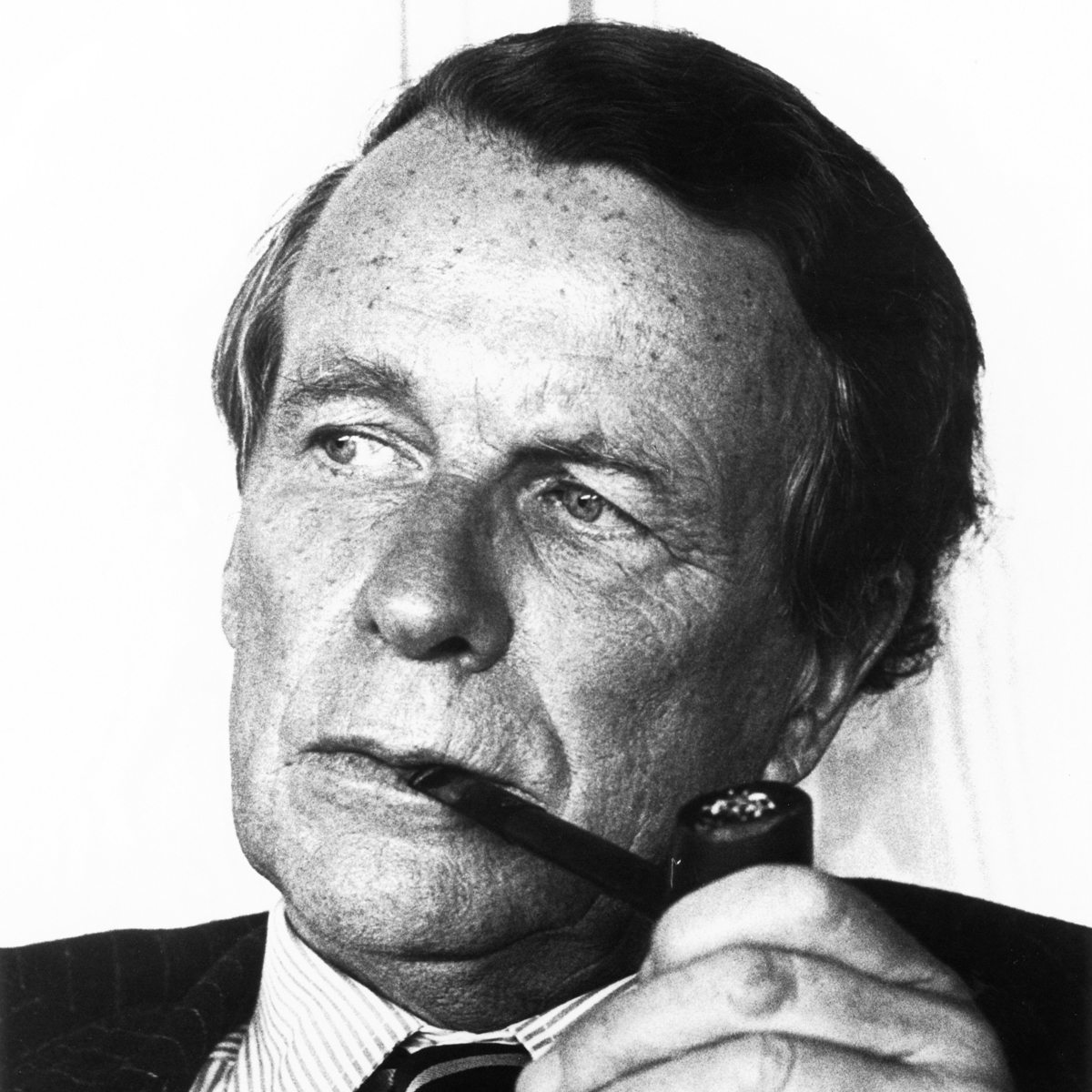
Ogilvy’s advertisements invite a second look: a man in an eye patch, a quiet car whose clock can be heard, a soap bar described through its cream. Each turns one researched detail into a public promise. His career also made a method—and a substantial agency—out of that habit.
1911–1938
Selling before Madison Avenue
David Ogilvy grew up in Britain, attended Fettes and Oxford on scholarships, and left university without a degree. He worked in a Paris hotel kitchen, then sold AGA cookers door to door. The shift mattered: the salesman had to discover what a household needed, explain a complicated object plainly and face a refusal in person.
His manual for other AGA salespeople made the work teachable. Francis Ogilvy showed it to Mather & Crowther, where David entered advertising. The manual is a useful early document, though the readily available text comes through a much later edited collection. The lesson was already visible: copy should help a customer decide rather than merely display the writer’s ingenuity.
Mather & Crowther sent him to the United States in 1938. At George Gallup’s Audience Research Institute, Ogilvy studied what audiences noticed and remembered. He then worked in British wartime intelligence and briefly farmed in Pennsylvania after the war. These were different jobs, but each required judging how people actually behave rather than how a persuasive person wishes they would.
In 1948 he opened a New York agency with support from Mather & Crowther and an American partnership; its early name included Hewitt and Benson. The later single-name legend can hide those backers and colleagues. Ogilvy brought an unusually explicit mixture of salesmanship, research and writing to the new office, but its campaigns would require photographers, account staff, clients and a growing creative department.
1951–1959
An image opens the door; a fact keeps it open
The Hathaway shirt campaign placed a black eye patch on its model. Its unresolved visual question drew attention to a garment that might otherwise have looked ordinary. Ogilvy called this story appeal; the visual did work that an abstract boast could not. The agency’s surviving campaign reproductions show how a recognisable character could recur across advertisements.
For Rolls-Royce, he read technical material for weeks and found the detail that at sixty miles an hour the loudest noise came from the electric clock. The headline offered a precise sensory test, while hundreds of words below supplied further features. In his own account he describes this as product homework, not a sudden revelation. Its persuasive precision still deserves checking against the product and the period rather than accepting every campaign claim as independently audited fact.
The agency made recurring promises for Schweppes, Guinness and Dove. A product’s character, Ogilvy argued, was built by what it was, how it was packaged, its price and the style of its advertising. The Dove cream proposition made one product difference legible; the Schweppes campaign used the company’s own Commander Edward Whitehead as its face. These choices show how research and theater could meet without pretending to be the same thing.
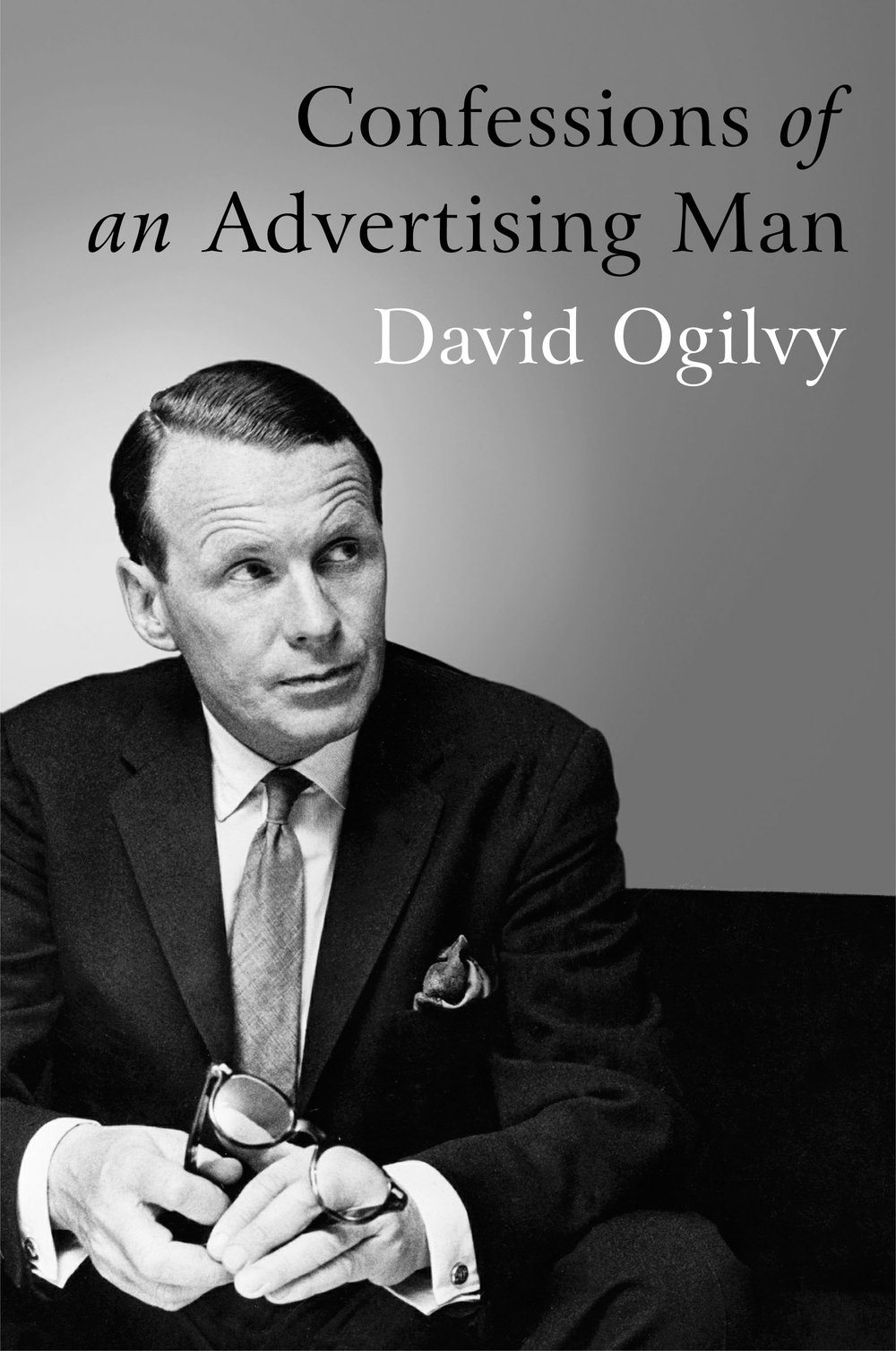
His 1963 Confessions of an Advertising Man converted early office experience into a portable set of lessons on winning clients, writing advertisements and managing a creative business. It is lively and useful, but its rules are the judgments of a participant selling his own approach. Read the book beside actual advertisements and ask which claim about a consumer, product or result the artifact itself can support.
A worldwide agency and an argument with the industry
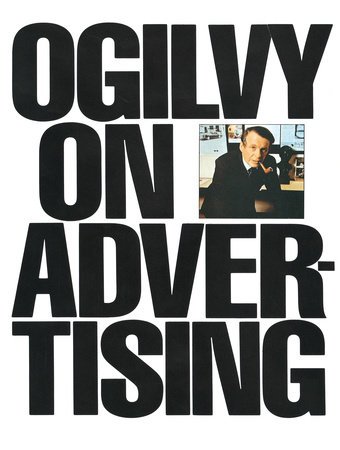
As the agency grew internationally, Ogilvy’s role moved between copywriter, manager and public advocate for research. He resisted campaigns that entertained without making a product clear; he also distrusted a committee’s tendency to dilute an idea. In Ogilvy on Advertising he names Claude Hopkins, Raymond Rubicam and George Gallup among his debts, and he acknowledges that brand image and the creative revolution did not begin with him.
The book’s most useful sequence starts with the product, competitors and consumers’ language, then chooses what the product does and for whom. His own Rolls-Royce example makes the chain visible. Yet he also admits that research cannot reliably predict which idea will last, and his sales numbers are often his own account. The productive tension is between evidence as a discipline and the uncertain judgment required to make an advertisement.
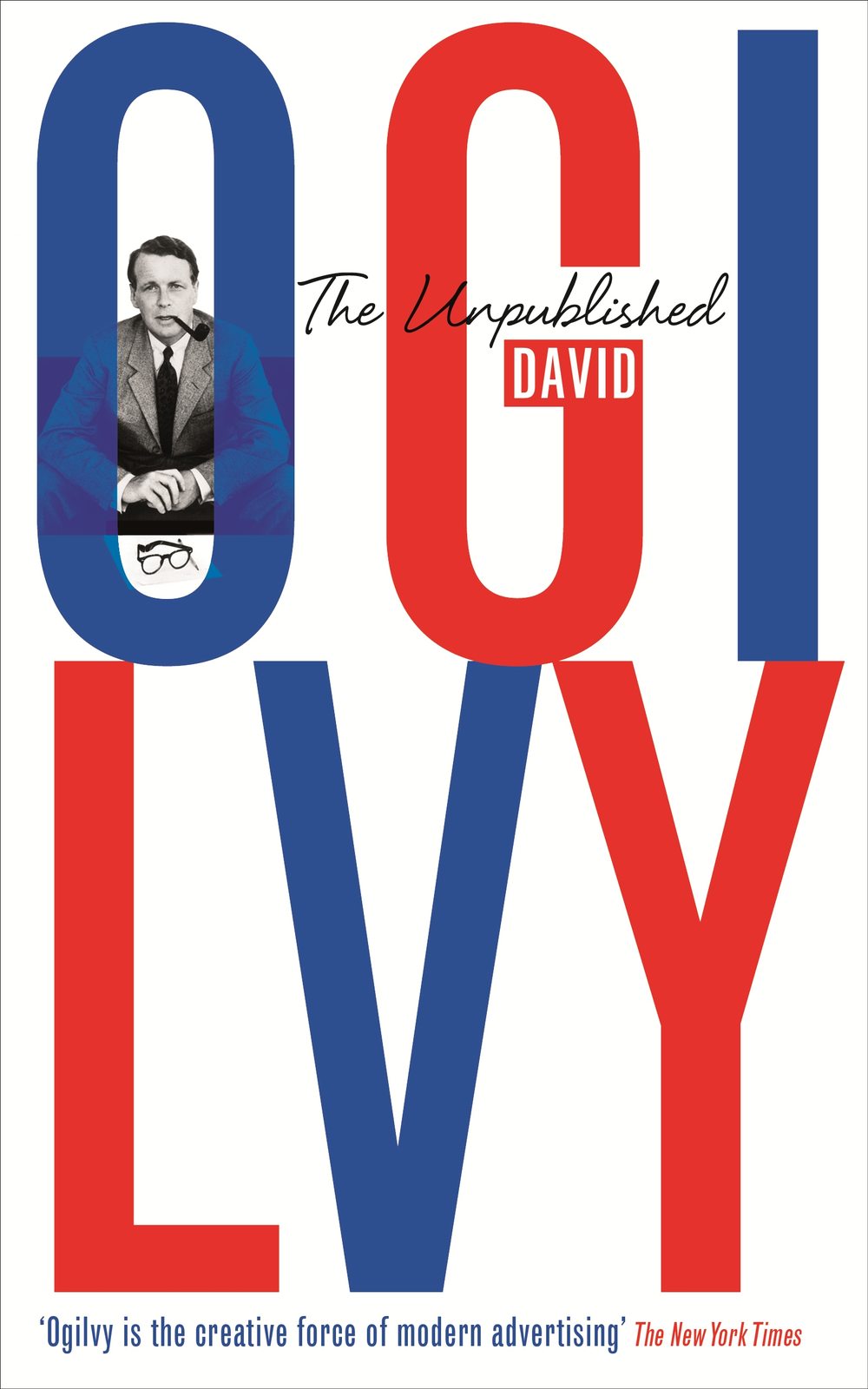
After formal retirement he continued writing, advising and participating in the agency’s international life. The Unpublished David Ogilvy, first assembled by family and colleagues and later reissued, gathers memos, speeches, letters and interviews. Its private communications let readers see an office culture in motion instead of treating the celebrated campaigns as solitary acts.
Ogilvy died in 1999. The most durable part of his example is neither a fixed list of rules nor a claim that all good advertising is measurable in the same way. It is a practical question: what does this product genuinely offer, and can the advertisement make that offer interesting and intelligible to the person it hopes to reach?