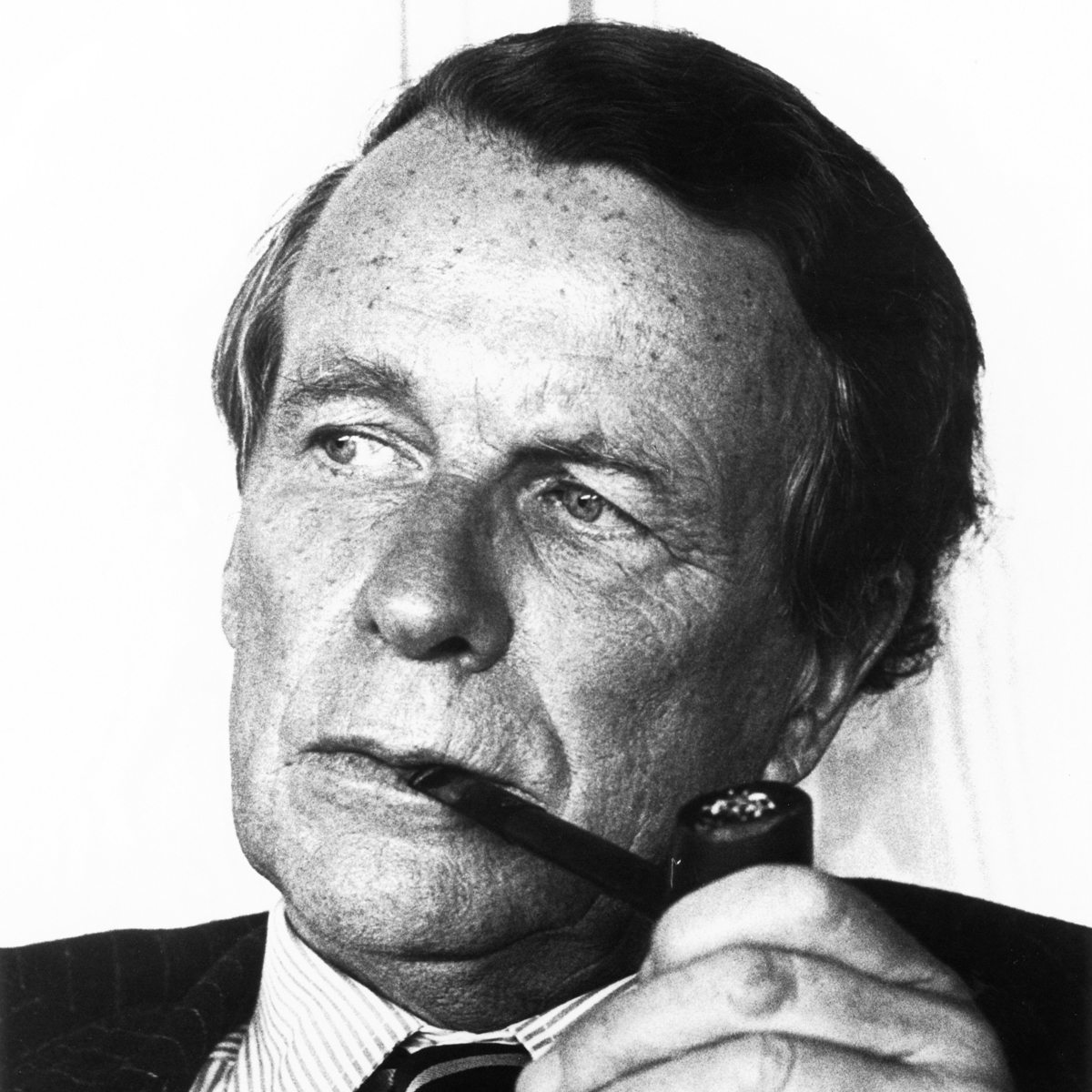
Bernbach made room for advertising that trusted a reader’s intelligence. At DDB, a tiny Volkswagen could occupy a wide white page, and a rental company could admit it came second. Close working partnerships between writers and art directors gave those product facts a surprising, memorable form.
1911–1947
A writer learns the limits of formula
Born in New York, Bernbach studied at New York University and began in the mailroom of Schenley Distillers during the Depression. An advertisement he drafted there opened a path into copywriting. He later worked around the 1939 New York World’s Fair, served in the Army during the war and joined Grey Advertising. These settings taught him both the mechanics of commercial persuasion and the way large organisations could smooth away an unusual idea.
At Grey, where he rose to creative leadership, he wrote a 1947 letter warning management that technique and agency size could displace substance and imagination. The surviving text is commonly read through later transcriptions, so it is best treated as a document of his argument, not as a prediction that research or craft would become useless. He was defending the judgment needed to make the message memorable.
Bernbach founded Doyle Dane Bernbach in 1949 with Ned Doyle and Maxwell Dane. Their roles differed: Doyle handled accounts and client service, Dane administration and promotion, Bernbach creative direction. The firm began small, taking Ohrbach’s department store from Grey. It gained a place where the client, the creative director and the people making each advertisement could work close to one another.
Phyllis Robinson became copy chief and wrote much of the early work with art director Bob Gage. Their Ohrbach’s and Levy’s campaigns showed that a discount shop or bread brand could speak with wit and particularity. Bernbach paired writers and art directors from the beginning of a problem instead of handing copy to an illustrator at the end. Robinson’s recollections make clear that this was a demanding culture of critique, not merely permission to be playful.
Volkswagen brought a difficult assignment: the Beetle was small, visually odd beside American sedans and carried an origin in Nazi Germany that postwar marketing could not simply wish away. The campaign met the first two problems directly. In Think Small a tiny car sits high in a broad blank field. The compact headline asks the reader to revise an assumption about size before the copy begins its case for economy and practical design.
Julian Koenig wrote the copy and Helmut Krone art directed the advertisement under Bernbach’s supervision. Their work used scale, silence and a modest verbal command together; the layout is an argument, not decoration around one. Bernbach’s creative direction and the agency’s client relationship enabled it, but assigning the line or page to Bernbach alone would erase the people who made it.
The Avis campaign began with a fact the client could have concealed: it was behind Hertz. Copywriter Paula Green turned that weakness into We Try Harder, a promise that a challenger had reason to care about clean cars, working heaters and each customer’s experience. Helmut Krone art directed the campaign. Robert Townsend at Avis had to accept the premise and make the service match the words.
The One Club’s account of Green and Krone shows the work moving through discipline, revision and a real client relationship. The campaign is often filed under Bernbach’s name because he led DDB; its distinctive claim and execution belong specifically to those collaborators. There is a useful limit here: a truthful admission in copy persuades only as long as the company gives customers reason to believe the promise.
DDB expanded nationally and then across the Atlantic, including an office in West Germany connected to the Volkswagen account. Bernbach remained identified with creative judgment as the agency grew into a major business. Robinson, Green, Koenig, Krone, Gage and other writers and art directors carried the work into print and television. Their individual careers show that the agency’s method was generative but also difficult to reduce to a single founder’s style.
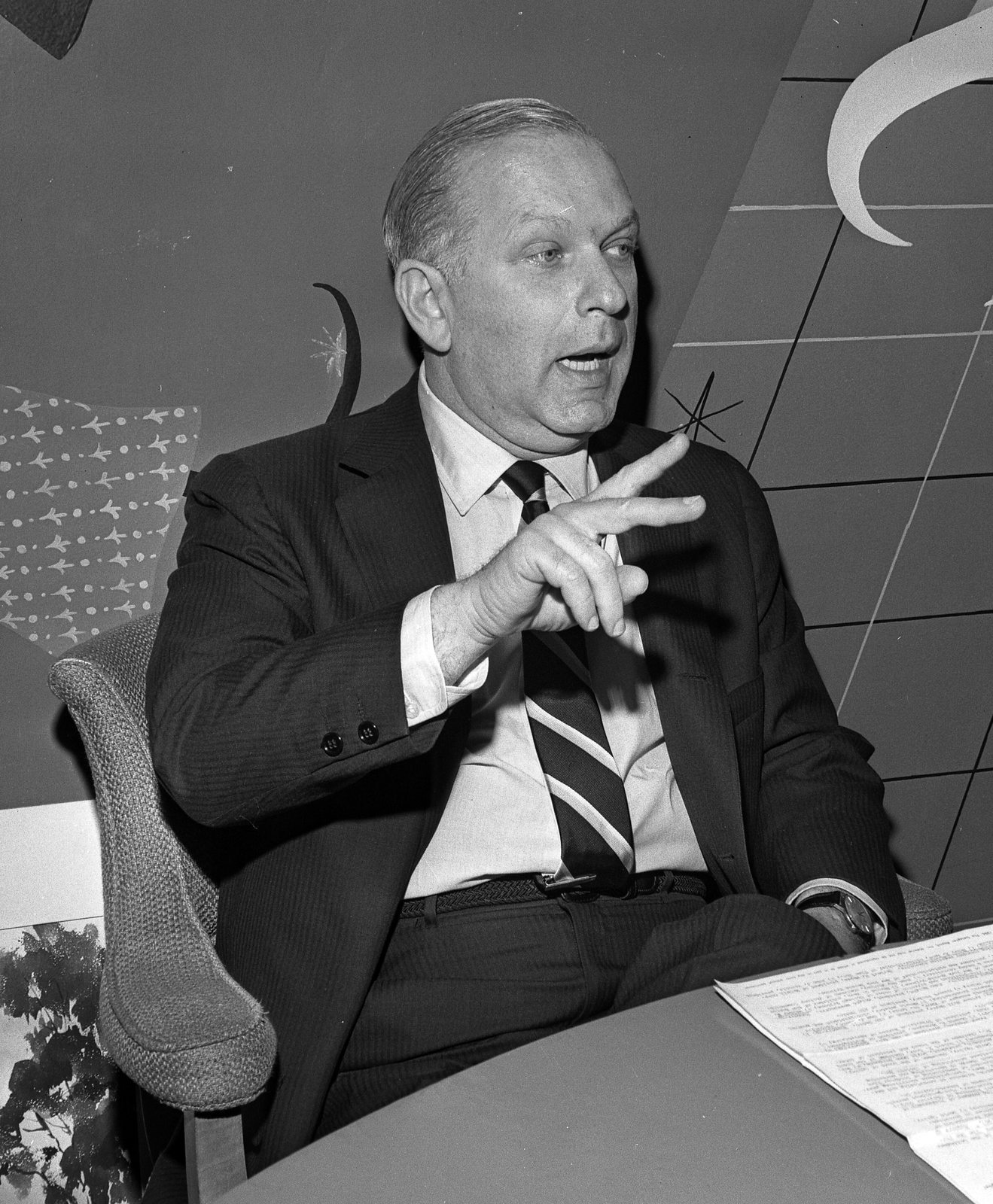
He did not treat originality as a license to mislead. At a 1964 press conference, photographed by the Los Angeles Times, Bernbach objected to cigarette advertising as selling sickness. Yet advertising as a profession still sets the terms of what a product’s “truth” will include. His best campaigns are worth studying both for what they disclose and for how carefully they select the facts that serve a client.
1976–1982
An idea survives through people
Bernbach stepped back from the chief executive role in 1976 and died in 1982. His legacy is often compressed into a slogan about the creative revolution. The fuller record is more instructive: three founders divided a business, an exacting copy chief recruited and mentored writers, art directors shaped pages with the same authority as words, and clients accepted public claims that other agencies might have hidden.
Begin with Think Small, then read the One Club’s oral histories of Robinson and Green. They return the celebrated advertisements to the working relationships that produced them. The surprise in a DDB ad was rarely a trick pasted over a product; it was a product fact arranged so plainly, and with such deliberate craft, that the reader could see it afresh.