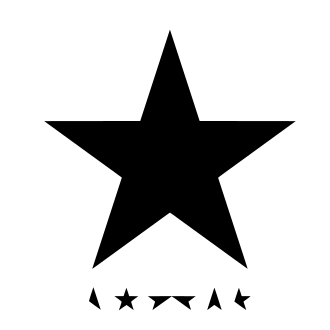
David Jones from Brixton became Ziggy and the Thin White Duke, praised fascism in his 1976 cocaine years and later took it back, rebuilt in Berlin and released Blackstar two days before dying.
Persona
Invents a rock star, plays him, then kills him off.
Berlin Method
Lets Eno and Visconti turn songs into texture and instrumentals.
Blackstar
Releases his farewell record two days before he dies.
Bowie made a voice into a place where identities could be tried on and transformed. The changes are most vivid when heard in the company of the musicians who helped make them.
1947–1968
Before Bowie
Born David Jones in Brixton, he learned saxophone, moved through bands and adopted the name Bowie to avoid confusion with Davy Jones.
The early recordings are valuable because they do not yet know the familiar destination. Styles are attempted, voices tested, names changed. Listening backwards from the famous work can make a career sound inevitable; listening forwards restores some of its uncertainty.
1969–1973
Major Tom and Ziggy
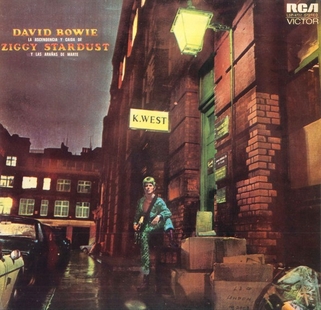
Space Oddity made alienation audible as transmission. With the Spiders from Mars and producer Ken Scott, Ziggy Stardust joined songs, costume and concert into one unstable persona.
The songs make distance intimate. Major Tom is separated from the people listening for him; Ziggy turns performance into both an attraction and a trap. Mick Ronson and the Spiders from Mars give the theatrical conception musical force. A persona becomes persuasive because a band can make it sound alive.
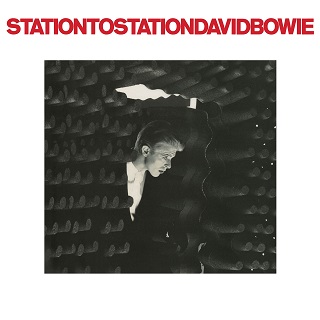
Bowie shifted through Diamond Dogs and Young Americans toward Station to Station. The work expanded musically while his life became increasingly damaged by cocaine and isolation.
In 1976 he was quoted as saying that “Britain could benefit from a fascist leader”, told Cameron Crowe in Playboy “I believe very strongly in fascism”, and was photographed in May outside Victoria station with a raised arm that some read as a Nazi salute; he said he was waving. In Melody Maker in October 1977 he called these “glib, theatrical observations”, said “I am not a fascist” and blamed the period’s instability on drugs; he later called the mid-1970s the darkest days of his life.
The changes were not only costumes. Rhythm, phrasing and the space around the voice altered the emotional possibilities of the songs. Hear Young Americans beside Station to Station: the movement between musical idioms is exhilarating, while the personal damage of the period resists an easy story of glamorous reinvention.
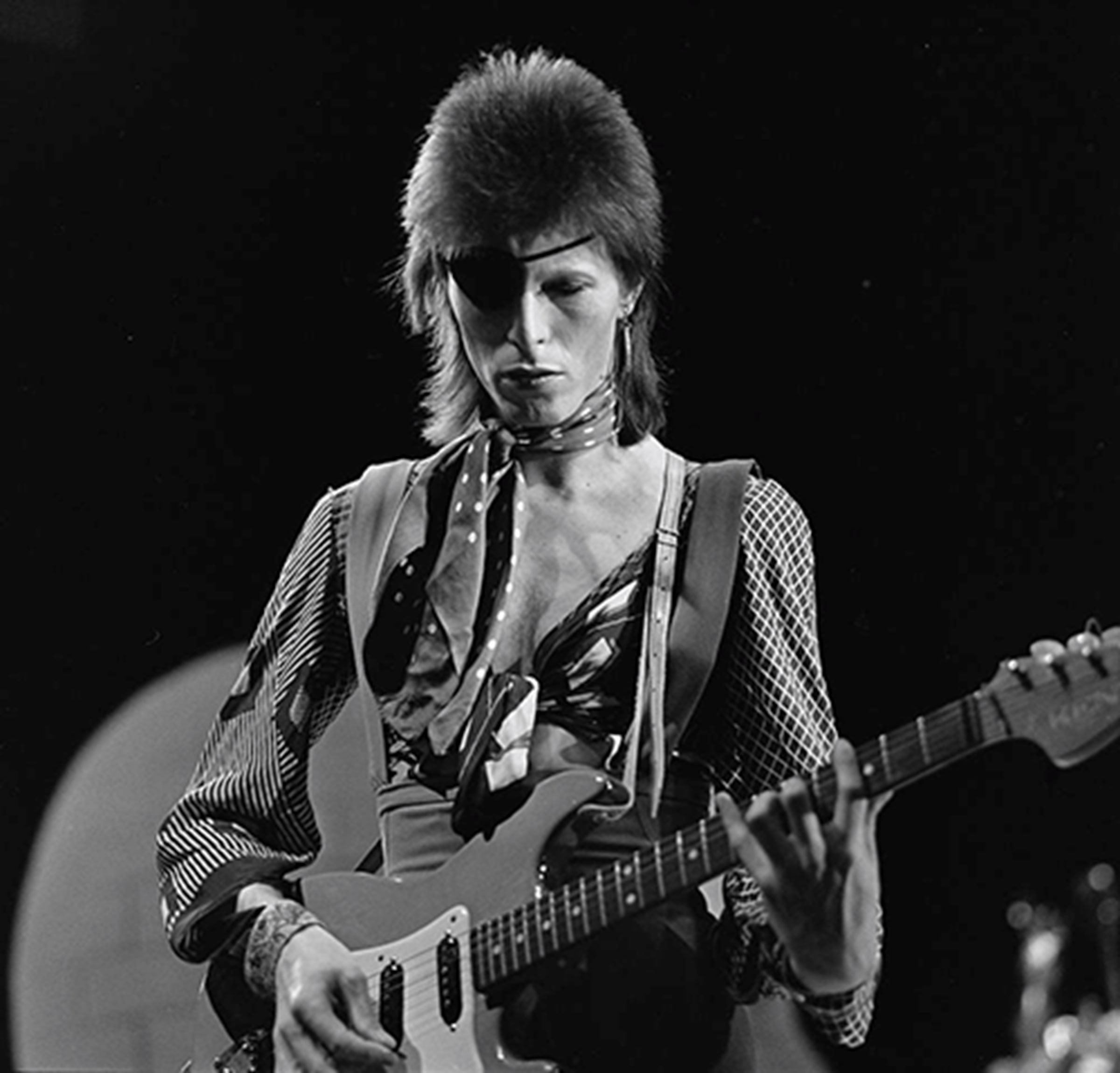
Bowie during the filming of Rebel Rebel for AVRO’s TopPop on 15 February 1974. Guitar, costume and television staging show the performance being made, at the beginning of the period described here.
Source & credits
AVRO / Netherlands Institute for Sound & Vision · CC BY-SA 3.0 NL · resized and converted to WebP
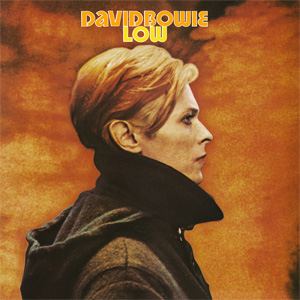
Working with Tony Visconti and Brian Eno, Bowie made Low, “Heroes” and Lodger. The records’ authorship is specific and collaborative: Bowie wrote and performed at their center; musicians and producers shaped their sound.
Low and “Heroes” make room for instrumental passages and textures that ask to be inhabited rather than decoded. Tony Visconti’s production and Brian Eno’s contributions are central to that sound. The collaboration shows reinvention as something made with others, through arrangements, performances and the treatment of a recording.
Let’s Dance brought a new mass audience. Later decades ranged through bands, electronic work and acting; after a long recording pause, The Next Day and Blackstar arrived with renewed precision. He died on 10 January 2016, two days after Blackstar’s release.
The final albums reward hearing them as made objects as well as biographical events. Blackstar’s ensemble, led by saxophonist Donny McCaslin, gives the music a restless physical presence. Across the catalogue, a useful question is not which persona was the real Bowie, but what each combination of voice, song and collaborators made possible.