Thirteen scripts before a foot of film
As soon as the resignation was announced, Christopher Parsons of the Bristol Natural History Unit asked about the big natural-history survey they had talked about for years. Attenborough wanted it told as a story, the story of evolution: fish move into swamps, need to get onto dry land, grow legs, and the next problem becomes the next programme. Not everyone liked it. In his 1997 account, one senior producer called the plan “old fashioned, 19th century”, said it would make the unit “the laughing stock of the zoological world” and refused to take part, then changed his mind a month later. Another objected that following evolution in order meant the first episode would be about “green slime”. It was, more or less, and it worked. Thirteen 50-minute episodes also filled one of the BBC’s 13-week scheduling quarters.
The method was his. “I wrote 20 or 30 page scripts for all 13 programmes before we shot a foot,” he told the BBC archive, written “with no consideration of cost or practicability”. Each script went to one of the series’ directors, who checked it as a story, and to an outside expert, who checked the science. For the amphibians that was Bunty Grandison of the Natural History Museum, who replaced his textbook examples with unpublished finds and the researchers who could lead a crew to them. Then the scripts were “dismembered into their various locations and reassembled geographically”, so one Australian trip could cover coral for the first programme and kangaroos for a later one. He scripted even linking phrases such as “but on the other hand” before the shot they followed existed, which is how a sentence could start on one continent and finish on another. His own crew, cameraman Maurice Fisher and recordist Dicky Bird, filmed his pieces to camera. Specialist cameramen in Australia and North America, whom no local network was paying to film wildlife, shot most of the behaviour. Parsons was executive producer, with John Sparks and Richard Brock as producers. Warner Bros. and Reiner Moritz co-produced; the series cost over £1 million, took three years and was shot entirely on 16mm colour.
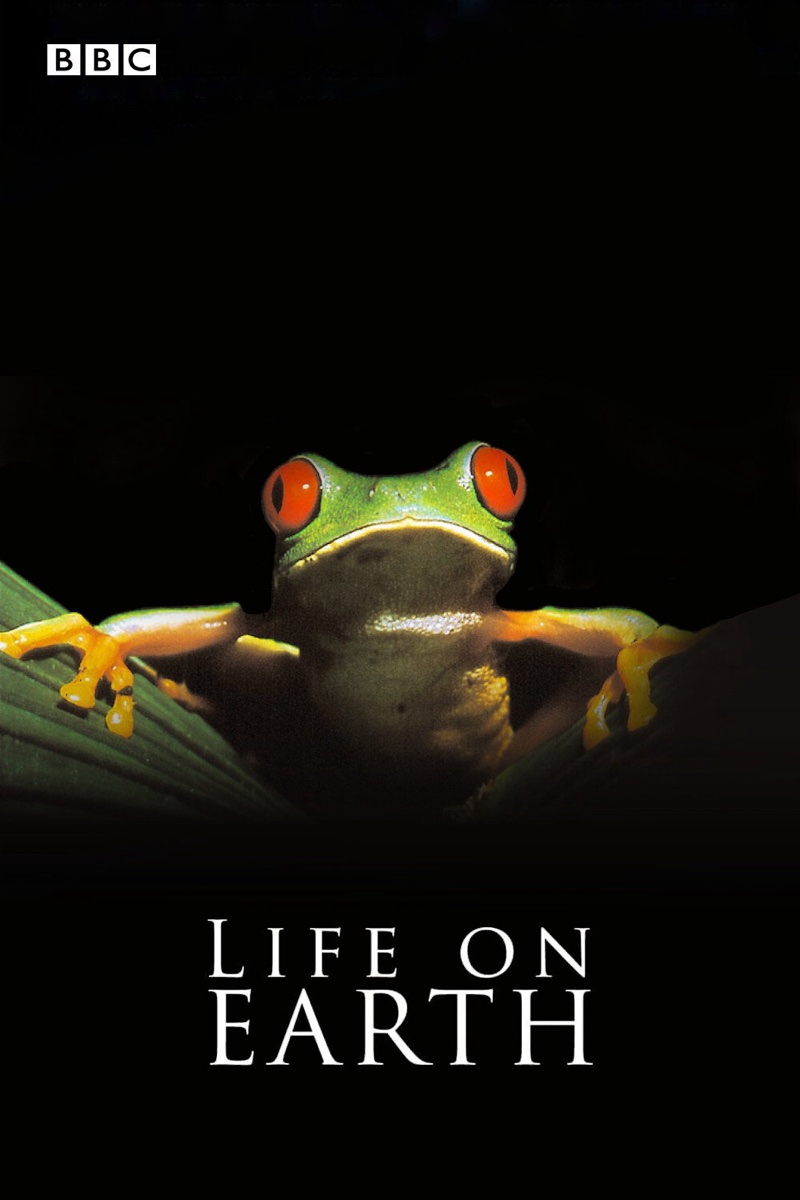
The best-known sequence was almost not filmed. Episode 12 needed Attenborough to explain the opposable thumb in front of apes. Sparks suggested the mountain gorillas Dian Fossey had habituated in Rwanda, and Fossey, too ill to come out, agreed. In Attenborough’s own account, he crawled forward to deliver the piece, found two young gorillas undoing his shoelaces, and then felt a female put her hand on his head; “it was paradise.” The crew had half a magazine of film left and were saving it for the thumb speech. Cameraman Martin Saunders shot “one or two shots just to give the boys a laugh in the cutting room”, and those scraps became the sequence. On the way out, soldiers fired over their heads, Saunders hid the exposed film, and Attenborough spent about eight hours in a barbed-wire enclosure, which he blamed on Fossey’s feuds with local people. The lion hunt in episode 11 came from planning, not luck: Sparks and Saunders noticed that lions in the Ngorongoro Crater stalked wildebeest from one patch near a marsh, and parked a Land Rover on an old termite mound to look down on it. Life on Earth ran on BBC Two from 16 January to 10 April 1979, averaged 15 million British viewers, and sold to more than 100 territories. Attenborough later said the book sold a million copies “quite soon”.