A ‘swindle’, Mad Love and a murder in Whitechapel
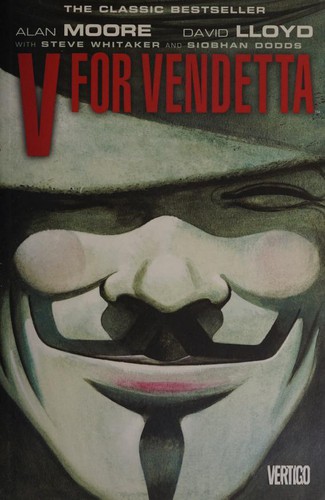
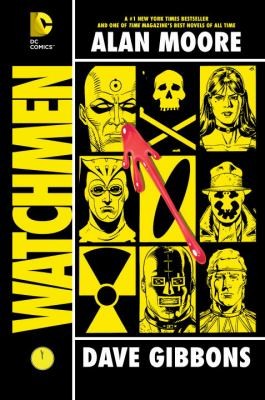
Moore and Gibbons had refused work-for-hire terms on Watchmen. Their contract, like Moore and Lloyd’s for V for Vendetta, said the rights would come back to the creators once DC stopped publishing the work. “We thought once the series was done, the book would go out of print and the rights would revert back,” Gibbons told Publishers Weekly in 2008. “We didn’t think the book would stay in print for 20 years.” The collected Watchmen has never gone out of print. Moore’s verdict, as he told the New York Times in 2006: “I said, ‘Fair enough. You have managed to successfully swindle me, and so I will never work for you again.’” DC’s side, from its president Paul Levitz in the same article: reversion clauses were routine in comics contracts, DC had honoured all its obligations, and “I don’t think Alan was dissatisfied at the time. I think he was dissatisfied several years later.” DC’s account of the break is that Moore objected to its plan to label adult comics “Suggested for Mature Readers”; there was also a quarrel over royalties on a Watchmen badge set that DC counted as promotional. By 1989 Moore had stopped writing for DC.
He went independent with his wife Phyllis and their mutual lover Deborah Delano, who together ran a small press called Mad Love. Its first book, AARGH, attacked the Thatcher government’s Clause 28 and sent its money to the Organisation of Lesbian and Gay Action; Shadowplay, drawn by Bill Sienkiewicz for the Christic Institute, laid out the CIA’s covert drug smuggling and arms dealing. Big Numbers was planned as twelve issues using fractal mathematics to describe big business arriving in Hampton, a thinly disguised Northampton; Sienkiewicz left after two issues in 1990 and it was never finished. A Small Killing (1991), drawn by Oscar Zárate, is a self-contained graphic novel about an advertising executive stalked by his boyhood self. Then Phyllis and Deborah left him, taking much of the money he had earned in the 1980s, and Mad Love folded.
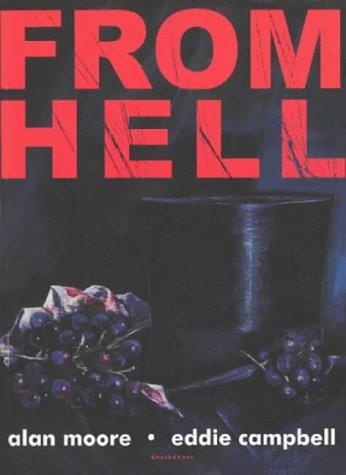
From Hell, drawn by Eddie Campbell, ran from 1989 in Stephen Bissette’s anthology Taboo, then in its own volumes from Tundra and Kitchen Sink, and was collected by Campbell’s own imprint in 1999 at 572 pages. Moore took Stephen Knight’s theory that the Ripper was the royal surgeon Sir William Gull, covering up a royal baby for the Freemasons, a theory since disproved many times, and used it as a frame, telling What DVD in 2002 that he “really didn’t want to put a toe into the inviting pool of ‘the truth’, because Truth is a well-documented pathological liar. Self-proclaimed fiction, on the other hand, is entirely honest.” The method was “holistic”: the murders seen as events inside a whole system of class, architecture, Masonry and the London of Nicholas Hawksmoor’s churches. An appendix, The Dance of the Gull-Catchers, followed in 1998.
Campbell was chosen for his detachment. Moore explained it with the old British boys’ comic Action, whose shark strip Hookjaw was taken over by an artist from girls’ comics: a severed arm on a beach, drawn in an unremarkable middle-distance shot with nobody reacting much, was “ten times more horrible” than the gory close-up. People who called Campbell’s pen scratchy, Moore said, missed that it puts sex, buying a candle at the corner shop and a ritual disembowelling in “the same absolutely credible world.” For Marie Kelly, the last victim, Moore said he “was going to have to go into that room in Miller’s Court with the reader, and stay there as long as the Ripper did”, because the usual Ripper treatments “verged on the pornographic.” He has called the scene a “ghastly nativity”: in the book, Gull says he has delivered the twentieth century.